With only about a month to go before the 2026 joint civil service examination, the preliminary sprint entered the hot phase and the backstage was asked every day: “can i get 120 points now?” “the same score, why do some jobs go in, or not?” “how much is the competition safe and what is the score?”
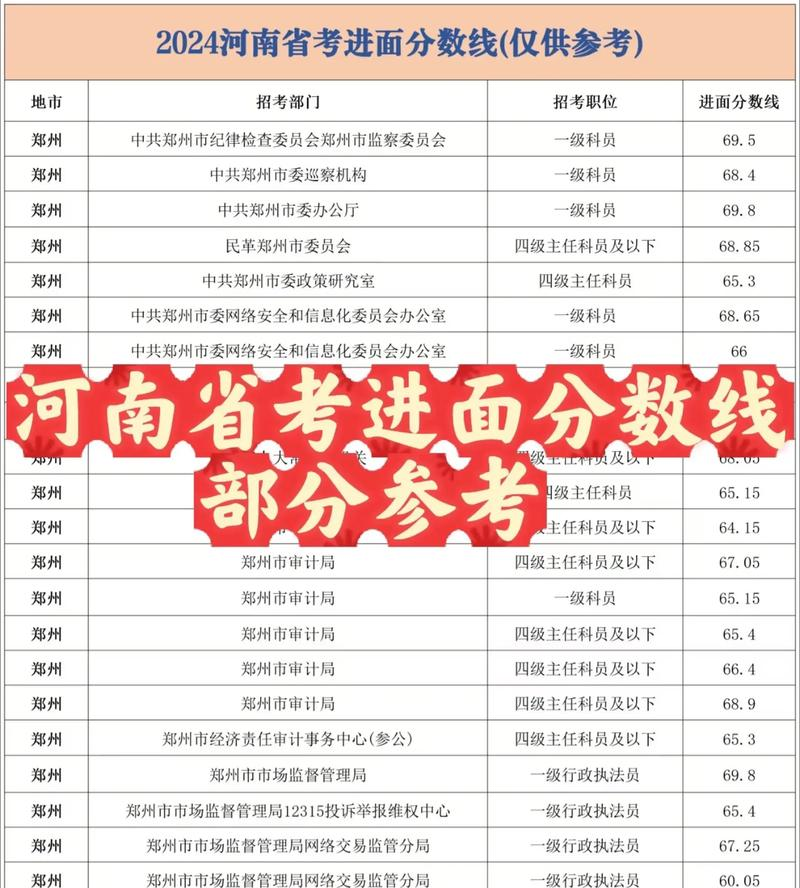
In fact, there is no “provincial uniform score line” for entry, and the number of job applicants and competitions, combined with geographical and job restrictions, will have an impact on the “security score” you need to achieve。
Today, let's see: in 2026, how many points are expected to progress under different competitive forces? What is the relationship between the number of applicants, the competition ratio and the score? Finally, we'll put in a recommendation for a targeted sprinting
Go in and look at the ranking, not the score
Many candidates are caught in the wrong spot: "i'm going to get 130," which is only promising, but it's not absolute, and it's related to the number of "effective competitors" in your job。
In simple terms: the provincial councils of the provinces of voivodship and cai cai usually define a minimum threshold of 90 points for public subjects, but this is only a “knock-in-the-door” line, which is the lowest score for your post (1:3 for one person, interview rate) and “three for the top three” for the post。
One example is the recruitment of one person for post a, 50 candidates and a maximum of 140 points for the written examination and a minimum of 132 points for the promotion; the same is true for post b, 20 candidates and a maximum of 128 points, with a minimum of 118 points. It is also 125 points, not numbered in a positions, and possibly in b positions。
The number of applicants and the competition ratio influence the “score volume level” of the job examination。
Number of candidates
The first thing you can do is look at the score threshold。
The greater the number of applicants, the greater the number of “effective competitors”, the higher the scores. This is also the underlying reason for the difference between 20-30 points in the movement of posts in the same region。
The number of single-person candidates corresponds to the number of candidates, which can be converted to a competitive ratio:
1. The number of applicants is as follows: progress scores are around 125。
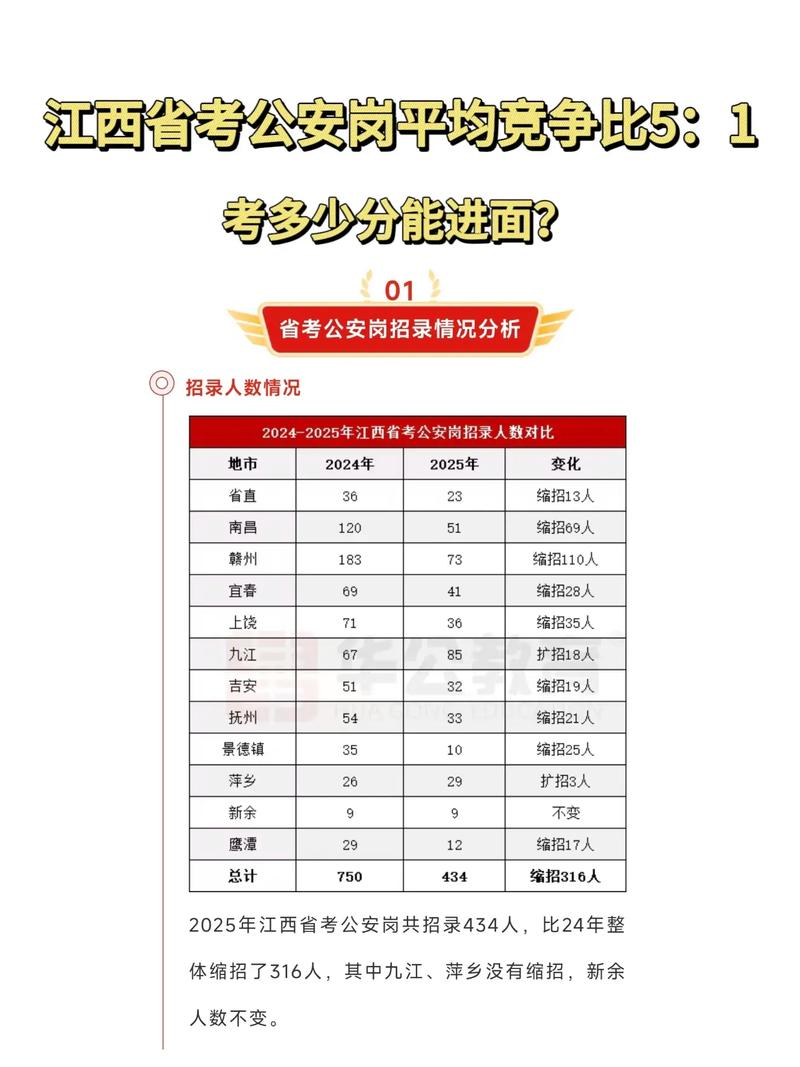
Many of these jobs are strictly restricted (e. G., cold-door professions, grass-roots work experience, special certificates, etc.), are least competitive and fit for mid-size, steady candidates, with a basic level of stability if the line is reached。
2. Registration of 20-60 persons: progress scores of approximately 125-130 minutes。
There is a certain demand for the basis of the written examination, the need for a balanced approach, the absence of serious bias, and the most common competition area in the examination。
3. Registration of 60-100 persons: progress scores of approximately 130-135 minutes。
The core posts in provincial capital cities are dominated by the requirement that the various modules of the candidates have no visible short board, that they have a strong combined strength, that they be targeted to break through the weak, and that they be stabilized at 130+, that they be performed well, that they be measured at least 65+, and that they be put on the entry list, that they be prepared with a focus on fine-tuning the discs and improving the efficiency of the scores。
4. More than 100 applicants: more than 140 points in advance。
Most of the posts in provincial offices, the new front-line/hot urban cores compete as “the fairy fights”, requiring candidates to have the best pen skills, with a certain amount of luck and a steady or even higher total of 140+。
Competition
More reflective of the level of competition for jobs is also a central indicator of the “difficulties of progress”。
Low competition ratio (<20:1) “licking out” friendly type。
Most of these jobs are in remote townships, with special restrictions (e. G. Grass-roots services, cold-door professions), are less competitive and generally have lower points of entry (about 125 points), and have a high probability of entry if they are carefully prepared to avoid being naked and watered。
Note: some of the posts in remote townships may have a five-year period of service and require confirmation of the job requirements prior to the examination to avoid subsequent difficulties. In addition, if the number of participants in such positions is less than 2:1 compared to the planned number, the interview eligibility line may be raised to 70 points, requiring advance preparation。
2. Competition ratio (20:1-50:1:): normal difficulty type (mainstream of the examination)。
This is the most dominant competition area for the provincial ces, mostly at the district and general municipal levels, with the entry scores concentrated at 125-135 points. Most of the candidates for such posts are “intermediate groups” that are carefully pre-screened, compared to “stability” and “failure” — studies and theories that are not highly biased, and that capture basic points and intermediate issues and make steady progress。
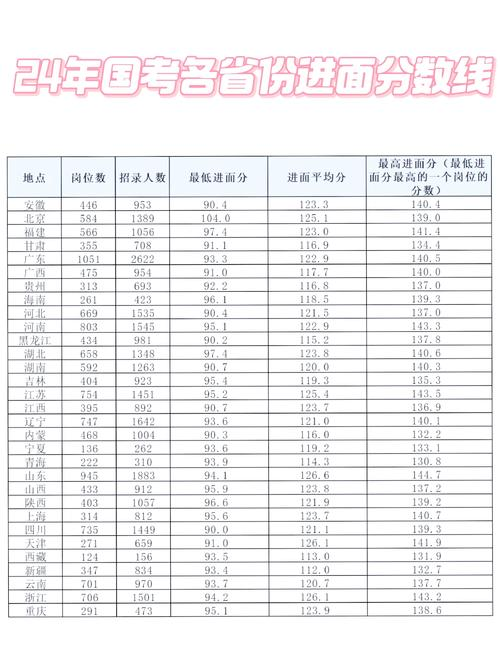
For example, in 2025, the overall competition for the provincial examination was 26. 58:1, with a corresponding score of about 125-130, which is highly consistent with the pattern of scores between the districts。
High competition ratio (>50:1) core type: “inner volume”。
Competition is 50:1 for a difficult position and 100:1 for a “hell of hell” position (e. G. Provincial authorities, core posts in popular cities, open-ended posts)。
In general, the number of such posts is more than 135, especially when they compete for >100:1, often close to 140 or higher. In yunnan, for example, the average number of “three-tier” jobs in 2025 was 135:1 and the score was more than 140; in huizhou, it was more than 100:1 and more than 160 points。
The competition for such jobs is long overdue, not “can we pass” but “can we score high” — it takes candidates to break through bottlenecks and measure and argue double points in order to emerge among many competitors。
Other influencing factors
The number of applicants, the competition ratio, and the correlation between progress and the number of candidates, which is only a summary of the figures for the calendar years, are certain to be random in themselves, and two more details will have a direct impact on the actual progression of the post, requiring particular attention:
The number of women candidates is slightly higher than that of men or women; the number of women candidates is slightly higher than that of men; the number of women candidates is slightly higher than that of women candidates; and the number of women candidates is higher than that of men。
(b) trends in recruitment: in 2026, there was a general contraction in recruitment of civil servants in the provinces, competition for posts was further intensified, and the rate of advancements was expected to increase slightly; at the same time, the examination was refined, differences in the test papers were further increased, some job scores were calculated in conjunction with the achievement of professional subjects, which did not meet standards, and could not advance even if the number of public subjects was higher。
Last month
I'd like you to prepare for the sprint
Determines its own “security score” based on the job competition。
If the job competition is <20:1: the target is 125+, 65+, 60+, focussing on the basics (words, judgments, data base) and ensuring that the basics are not lost and that the difficulty and high points are pursued when there is more effort。
If the job competition is 20:1 - 50:1: the target is 130+, 65+, 65+, emphasis is placed on filling the weaknesses, ensuring balance, avoiding delays and increasing the correctness of the middle-level。
If the job competition is >50:140+, 70+, 70+, 70+, emphasis is placed on overcoming the problem, raising the speed of the problem, fine-tuning the error, optimizing the response order and maximizing the total score。
Sub-module effort: last month, grab the "fast score" part。
In conjunction with the 2026 u. S. Examination, the classification was fine-tuned:
Line 1: prioritize the “fast, high” module. Language understanding (25-30), judgement reasoning (30-35) and data analysis (15-20), which account for about 70 per cent of the total score, are core points. Common sense has focused on the review of national policy and policy in the last year; the subject of quantitative relationship protection is not a problem。
2 comment: focusing on “general norms, logical hierarchies, text structure, translation of material into the original language”, avoiding “full but non-specified” and targeting job categories。
3 specialized subjects: specialized posts such as public security, political law, etc., need to focus on re-studying specialized subjects, ensuring that they meet the eligibility line and avoiding missed opportunities for advancement due to failure to meet standards in specialized subjects。
Avoiding errors: these errors make you “one point off”。
One of the questions will not be repeated: the real question is the core, but the blind brush does not sum up the wrong question, but only repeats the pit and the score is difficult to raise; it is suggested to repeat the error one-two hours a day, analyse the cause of the error and optimize the answer。
Discrepancies: many candidates feel that the theory is “lucky” and spends much of their time on measurements, that there is considerable space for the theory to draw points, and that, on the same basis, an additional five points in the doctrine can open the gap and stabilize progress。
3 naked tests/temporary tests: in 2026, competition for the ue examination intensified, the pre-qualification process became more professional, and it was almost impossible to land on a bare test or to prepare for it。
At the end
The civil service examination does not have a “fixed progress score” but has a “clear direction of effort”. The number of candidates and the competition are higher than the threshold of first sighting, but ultimately it's your ability to get in。
With only one month away from the written examination, there is no need to over-heavily worry about its current scores, with a focus on targeting, targeting and fine preparation. May every fellow student do his best in the exam, break into the interview and get to shore