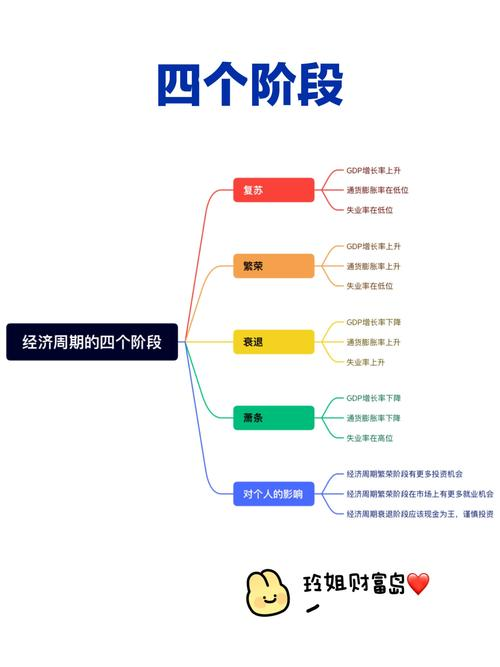
Economic cycle (business cycle): also known as business cycle, wind cycle, it refers to a phenomenon of cyclical economic expansion and economic retrenchment in the running of the economy. The fluctuations in gross national output, total income and total employment are the alternation or cyclical fluctuations between national income or the expansion of overall economic activity and austerity. In the past, it was divided into four phases of prosperity, recession, depression and recovery, which are now generally called recession, valley bottom, expansion and peak。
Under market economy conditions, entrepreneurs are increasingly concerned about the changing economic situation, that is, the “economic climate”. The good and bad performance of an enterprise is influenced both by its internal conditions and by its external macroeconomic and market environments. An enterprise is unable to determine its external environment, but it can actively adapt to changes in the external environment by improving internal conditions, making full use of the external environment and, to a certain extent, changing its small environment in order to enhance its viability and increase market ownership. Therefore, entrepreneurs must understand, manage and be able to tailor their responses to fluctuations in the economy, otherwise they will lose life in fluctuations。
Phases of the economic cycle
Two-stage approach
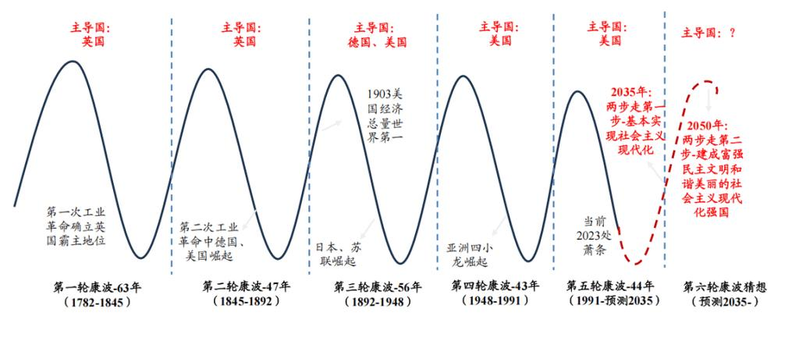
Economic volatility is characterized by widespread and simultaneous expansion and contraction of many components of the economy, usually lasting from 2 to 10 years. In modern macroeconomics, the economic cycle occurs when real GDP rises (extension) or falls (recession) in relation to potential GDP. Each economic cycle can be divided into two stages of upswing and downswing. The upswing phase is also called prosperity, with the highest point called peak. However, the peak was also a turning point for the economy, which then entered a phase of decline, namely recession. The recession was severe and the economy was depressed, with the lowest point of the recession known as the valley bottom. The valley floor, of course, was also a turning point in the transformation of the economy from decay, after which it entered an upward phase. From one peak to another, or from one valley to another, a full economic cycle. The definition of the economic cycle in modern economics is based on changes in economic growth rates and refers to the alternation of growth rates and declines。
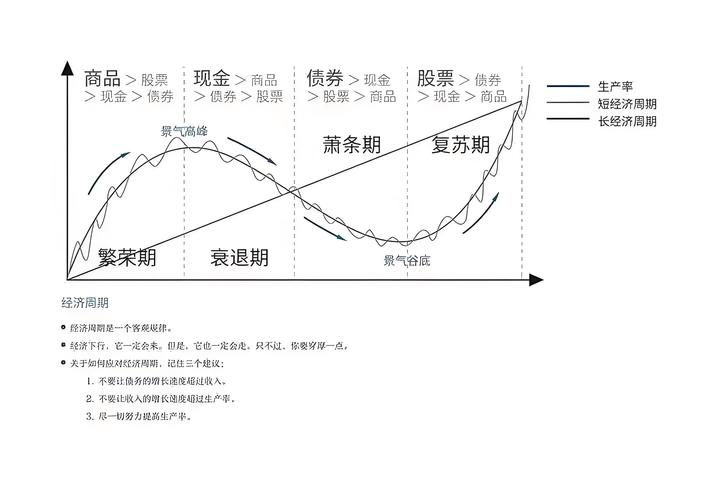
The expansion phase of economic cycle fluctuations is a season of increasing dynamism in the macroeconomic and market environments. At that time, market demand was strong, the order was full, the goods were well sold, production was rising, and capital was revolving. Enterprises are better organized in terms of supply, production, distribution and human, financial and material goods. Enterprises are in a more liberal and favourable external environment。
The contraction phase of economic cycle fluctuations is a season of increasing contraction in the macroeconomic and market environments. At that time, market demand was weak, there were insufficient orders, goods were stagnating, production was declining and capital was not working well. Enterprises encounter many difficulties in terms of supply, production, distribution and human, financial and material goods. Enterprises are in a worse external environment. The recession has both destructive and “automatic” effects. During the economic downturn, some enterprises went bankrupt and left the merchant sea; some were in a position to lose and find new solutions; and some were able to stand up against the harsh climate, stand firm in adversity and seek new survival and development. This is the law for the survival of “excellent” enterprises in a market economy。