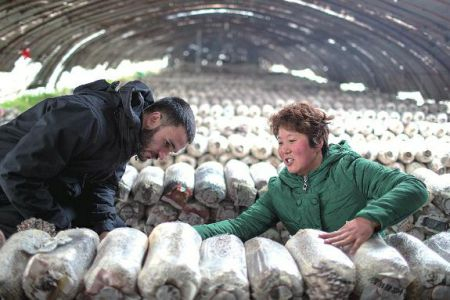

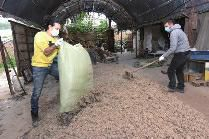

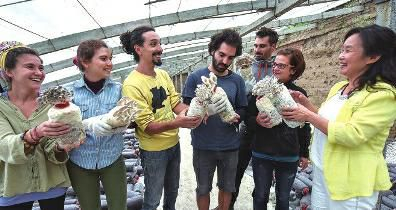
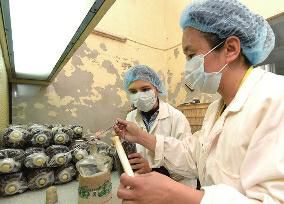
Friends from all over the world can always be seen at the food-bacterium cultivation base in the sianviang region, and nearly 70 foreign friends from more than 30 countries — the united states, russia, argentina, colombia, france, italy — have come a thousand miles to learn how to grow mushrooms。
In 1989, after graduating from the department of biology at the university of the north-west, she has been studying the promotion of fungi breeding and cultivation techniques. Using wheat straw, maize straw, peanut shells, etc., as raw materials for fungi production, she established the largest edible fungi base in the north-west of the region in the xianjuang region and local villagers, leading to over 20,000 people in over 5,000 households in the production of edible bacteria. The base was awarded by the sian city general trade union to the “reemployment base” and by the shaanxi province women's federation to the “starting employment base for female students”。
Vegetables are becoming increasingly popular for "extra" mushroom cultivation
Wang qian, a foreigner likes mushrooms and herbs, which are fermented cultivation. In china, there's a very rich variety of edible bacteria, mushrooms, almond mushrooms, golden needle mushrooms... These are clinker-planting processes that are mixed, bagged, inoculated until breeding, which is the main reason why the “foreigner” chooses to come to xi'an to learn food, medicine to breed, and planting techniques。
“vine food is becoming more popular and bacteria are becoming more popular. I'd like to add new varieties to my farm, so mushrooms are simple and environmentally friendly." the young man ivan of france was excited to say, “seen sian on the internet a particularly good way to grow mushrooms and travel to china to study.”
Learn to grow bacteria, experience the lives of chinese farmers
Miller, an american, studied chinese at northwestern university, and then mushroom cultivation. Miller likes to go to the mushroom growers' homes, chatting with them, working with them. He said he wanted to know how chinese farmers lived。
“the foreigners” have been in contact with them since the visas were valid for different periods (the longest three months, the shortest few weeks) and upon their return, she said, “catherine in australia has learned for more than a month, and then came home and built a shed on her farm and planted the first mushroom and kept me in touch.”
The foreigners who come to study are mostly young people who either want to inherit their family's farms, or who study agriculture-related subjects at universities, or who prefer the market for fungi as an option to start their own businesses. “we now have fewer young people in rural china who want to grow, and we need more love for agriculture and more knowledge of its young blood so that we can have a healthier future.” wang zhi said, “aliens are offered free of charge, and they don’t have to spend anything on studying, working and eating. Preparations are under way for the construction of new plants, and more foreign friends will study.”