In the process of development of high-yielding maize cultivation, there is never-ending controversy over two theoretical systems, namely, dense production and rare production. One believes that increasing the intensity of cultivation to increase the photo-energy utilization of the population is the key path to achieving a production breakthrough, while the other argues that safeguarding monogamous spaces and developing individual productive potential is the core logic of high-yielding cultivation. Indeed, the theoretical discussion of the actual conditions in the field is a piece of paper, the most productive of maize, which is always hidden in vast fields。
I. Enrichment of high-yielding and low-yielding theories nuclear
The core logic underlying high-yield theory is based on maximizing the use of group light energy. According to the theory, maize production is essentially the result of the accumulation of group dry matter, which is dependent on the capture and conversion of light energy for photocooperative use. To a certain extent, increased planting density can effectively increase the field area index, reduce the leakage of light energy, and allow a significant increase in the total number of photocolumn products on a unit land area. At the same time, the intensive planting model is more compatible with the characteristics of condensed varieties, which typically have the characteristics of compact strains, foliage, strong voltage resistance and small male ears, which can reduce shade competition between plantations under high-density conditions and guarantee group ventilation. At the theoretical level, the intensive production model, through the concept of “group-to-individuals” has broken the ceiling of single production, providing technical support for scale and mechanized high-yielding cultivation。
In contrast, the theory of rare high productivity focuses on the full release of individual growth potential. The theory states that the growth and development of maize plantations requires adequate nutrients, moisture, light and space resources, and that when planting density is too high, there will be intense competition between the plants for resources, leading to the disruption of individual growth, in the form of a decrease in the number of specks, a decrease in the weight of thousands of grains, an increase in the level of debris and even a reversal. A proper reduction in planting density would provide a relaxed growth environment for single-ton maize, promote the growth of roots, strewn thickness and sprouts, and rely on the individual advantages of “big ears, multiple grains and heavy grains” to achieve high yields. The theory of rare high-yielding is more applicable to large, flat-spread varieties, which are large and have a strong single capacity to convert individual advantages into group yields under low-density conditions。
At the theoretical level, there is a scientific basis for each of the two systems, with a strong emphasis on group effects and a strong focus on individual performance. The difference between the two is essentially a trade-off between group and individual interests. However, theoretical models are often constructed under ideal conditions, and the complexity and diversity of environmental variables in field production dictates that high-yielding cultivation techniques cannot produce rigid theories and must be adapted to local conditions。
Ii. Field conditions: core variables determining the applicability of dense and rare planting
In daejeon production, factors such as variety characteristics, geopower levels, water fertilization conditions, climate environment, etc. Are intertwined and together determine the feasibility of dense or rare planting patterns. The actual conditions for leaving these fields are considered to be high yield, which is tantamount to fishing by fate。
(i) varieties characteristics are a prerequisite
Persistence differences among different maize varieties are the primary basis for choosing planting intensity. The morphological and physiological properties of the resistant varieties determine their high productivity potential at high density. These varieties are compact, small blades with small horns and a rational coronary structure that can guarantee the light demand for lower and medium leaves under group conditions; root roots are well developed and widely distributed, with a strong ability to reverse voltage and resist inter-plant pull from high-density cultivation; male branches are small, reducing nutrient consumption, and more photolytics are trans-shipped to fruit ears. For resistant varieties, reducing density can lead to waste of land and light energy resources and prevent them from taking advantage of their varieties。
On the other hand, the large, flat-stamped varieties are of a less resistant type, growing large and flat, with high planting density, severe depression in the field, deterioration of ventilation, and high risk of infestation and inversion. The logic of the high productivity of such varieties lies in maximizing the weight of a single ear, and only under low density conditions can a plant be provided with sufficient resources to form a pore full of seeds. As a result, the diversity characteristics directly delineate the boundary chosen for density, and the first step in field cultivation is to match the planting density to the variety characteristics。
(ii) physical base of ground power and water-composed conditions
Land fertility and water fertilizer supply are the material security that underpins the growth of maize communities and are key to the success of high productivity patterns. Enriched cultivation means an increase in the number of plants planted in a unit area and a geometric increase in demand for nutrients and moisture. If the plots are fertile, the soil organic content is high, nutrients such as nitrogen, phosphorus and potassium are sufficient, and there is a well-developed irrigation and drainage system capable of providing accurate water fertilizers based on the maize growth cycle, then the dense planting model will be able to take full advantage of the group and achieve high yields. Conversely, if plots are infertile and are not supplied with enough water, high-density cultivation leads to malnutrition and stunted growth and not only does not increase production, but rather reduces production due to higher rates of water-stealing and baldness。
Rare-planting models are more pragmatic for low- and medium-fertility plots. Low-density cultivation reduces group demand for water fertilizer, and limited nutrients and moisture can be concentrated in single plants, guaranteeing normal individual growth and development, thereby achieving the goal of "low input, steady output". Thus, the difference between the earth's power and the conditions of water fattening determines the direction chosen for field density, and the fact that fertile plots are well and well planted, as well as marginal plots, is the basic pattern of field production。
(iii) the climate environment is an important influencing factor
The impact of climatic conditions on maize density selection extends throughout the reproductive period. In areas with abundant light and high temperatures, maize light cooperation is efficient and dry matter accumulates, and an appropriate increase in density allows for the full utilization of light energy resources and increases in community production. High-density cultivation, in regions with low light and high rainfall, can exacerbate the depression in the field, leading to reduced photo-efficiency and disease, and is more necessary to reduce density and improve ventilation。
In addition, wind power is a climate factor that cannot be ignored. In wind-intensive areas, especially those with high typhoons and high-traffic weather, high-density groups of maize are significantly more exposed to inverted risks, and plantations are prone to fractures or falls, resulting in large-scale loss of production. Under the rare planting model, the plant is thick, the group is well ventilated, is more resistant to wind and adapts to windy climates. Therefore, differences in the climate environment require that field density choices be adapted and flexible。
Iii. Field practice: the key to the theoretical landing lies in supporting cultivation techniques
The competition between high-yielding and low-yielding theories ultimately needs to be validated in field practice, the success of which depends not only on density choices, but also on supporting farming techniques. Without the corresponding technical measures as safeguards, the best theory cannot be translated into real production。
(i) supporting technology systems for intensive cultivation
The promotion of highly productive models must be accompanied by sound cultivation management measures to address the risks associated with high density. First, seed handling and precision planting, the use of wrapping seeds to combat underground pests and pests, and the introduction of mechanized precision seeding techniques are needed to ensure a balanced distribution of plants and to avoid seeding failures and bullying. Second, water fertilization management should be strengthened by the implementation of a phased fertilization and water-saving irrigation, based on the pattern of demand for and demand for water for various reproductive periods in maize, with a focus on securing water fertilization during loudspeaker and slurry periods and promoting the development of oaks. Third, in order to enhance the green control of pests and diseases, high-density fields with high humidity and poor ventilation, prone to outbreaks of maize troubles, aphids and small and small-scale diseases, it is necessary to prevent the spread of pests and diseases in a timely manner by combining biological and chemical control. Finally, anti-voltage control can be achieved by spraying plant growth regulators, reducing the length of the base section, increasing the resilience of the tubers and reducing the risk of inversion。
(ii) accompanying technology systems for rare cultivation
Low productivity patterns also require technology to tap the potential of individual production. The first is deep tilling, improving the soil structure, promoting rooting, and providing a good soil environment for single plant growth. The second is scientific fertilisation, which is based on organic fertilisation, combined with potassium nitrogen phosphorus compound fertilisation, with emphasis on the promotion of fruit estration and seed granules during the pacing and oscillation periods. Third, weeding should be done in the field, avoiding competition for resources between weed and maize plantations, and it should be kept clean by combining chemical and artificial weeding. Fourth is the timely cultivation of soil, the improvement of soil aerobics and the prevention of the reversal of plants while promoting root growth. In addition, for some species with a high level of fragmentation capacity, it would be appropriate to retain the splits, increase the number of effective ears and further increase production。
Iv. Conclusion: fields are the only test of high-yield theory
The competition between high-yielding and rare-yielding theories of maize production is not a rivalry, but a technical path choice adapted to the conditions of different fields. The concentration of high production is not as high as it can be, nor the density of rare production as it can be. At the core of both are the coordinated development of groups and individuals, while the key to coordinated development is the organic integration of varieties, density, geo-energy, water fattening and management based on practical conditions in the field。
In the process of modernization of agriculture, the development of high-yield maize cultivation technologies has been a process of mutual reinforcement of theoretical innovation and field practices. Theoretical models built by scientists in laboratories need to be tested and modified in the field, and the practical experience of farmers in the field can provide fresh materials for theoretical innovation. Whether it is dense or rare, only those technologies that match the actual field are truly high-yielding; only those that can withstand the field tests are the scientific theories that guide production。
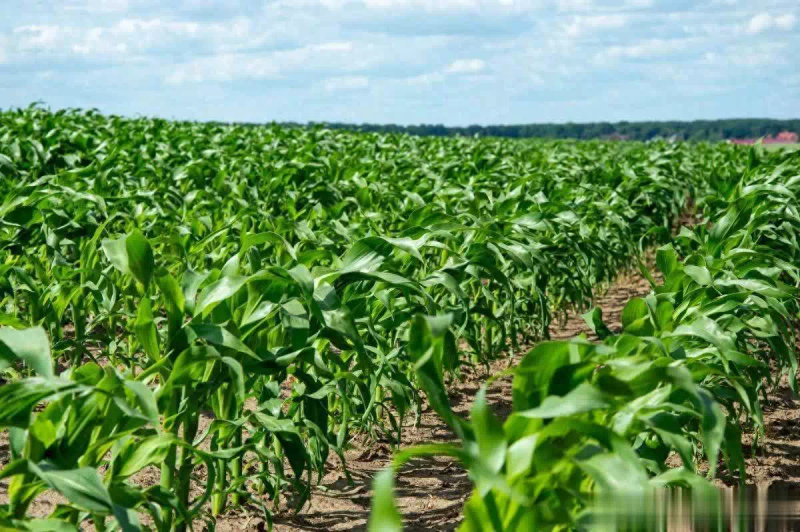
Wide-sighted maize fields, each growing corn and the output of each inch of the land, respond silently to the theory of dense and rare planting. The answer is not in a book, not in a laboratory, but in the field, where hope is born, in the practice of the farmers, which is adapted and well cultivated. In the future, with advances in breeding technology and increased levels of cultivation management, the technological boundaries of dense and rare planting will be integrated, and fields will always be the starting point and anchor for technological innovation in high-yielding maize。

2026, a new version of the fish game -- an infinite battle of gold coins
# corn is high #