Aspirin's ready
Experimental principles
Acetic anhydride aqueous acid
(aspirin)
Aqueous acid is heated under acidic conditions and can condensate to produce small amounts of polymers.
Experimental supplies
Instrument: triple neck bottles (100 ml), spherical condensers, pressure-reducing filters, stoves and voltage regulators, surface vessels, water baths, thermometers (100°c)
Medicines: aqueous acid (c. P.), acetic anhydride (c. P.), sulphuric acid, hydrochloric acid solution (1. 22), sodium saturated carbonate solution
Map of experimental devices
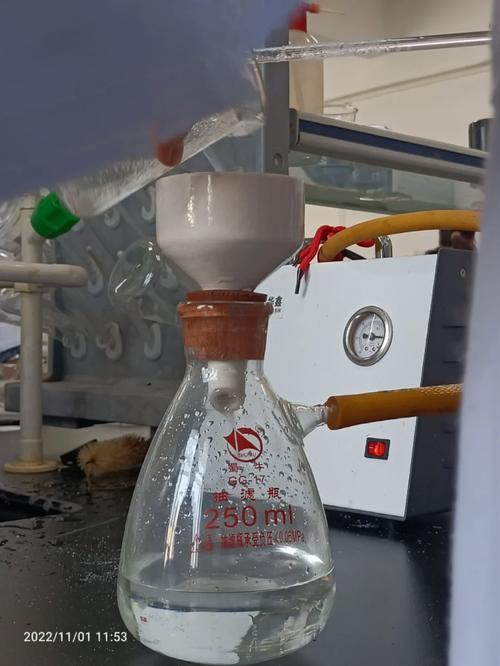
Figure 4-3-2 pressure-relief filters
Experimental steps
(1) aylization
Experimental devices: ordinary reflowers
Increment:
Aqueous acid: 4g
Acetic anhydride (new distillation): 10 ml
Enriched sulphate: 7 drops
Response temperature: 75 ~ 80 °c
Water bath temperature: 80-85°c
Response time: 20min
(2) crystal, filtering
Experimental devices: pressure-relief filters
Reagent use:
Distilled water: 100 ml
Ice-water bath cooling
Place 20min
(3) initial purity
Experimental devices; pressure-reducing filters
Reagent use:
Sodium saturated carbonate solution: 50 ml
Saltic acid solution: 30 ml
Crystal analysis: ice-water cooling
(4) reproduction
Experimental devices; regular reflow devices
Pressure-reducing filters
Reagent use: 95% ethanol
Water
(5) quantification, calculation of collection rate
Attention
(1) acetic anhydride is toxic and highly irritating and should be taken in a manner that prevents direct contact with the skin from inhaling large quantities of vapour ... The heating is best handled in the ventilation cabinet, and the material should be fitted with a condenser as soon as possible with a condenser and pre-connected with cooling water within the condensing tube.
(2) the reaction temperature should not be too high, otherwise the by-products will increase ...
(3) as aspirin is micro-solved in water, the amount of water used to wash crystals is smaller and the temperature is lower to reduce product losses.
(4) enriched sulphate is highly corrosive and should avoid touching skin or clothing.
Aspirin chemical name acetylic acid, white crystal, melting point 135°c, micro soluble in water (at 37°c, 1g/100gh20).

As early as the 18th century, people had extracted aqueous acid from the willows and found it to be dethermal, pain- and inflammation, but it was irritating the oral and gastrointestinal mucous membranes
The acetic anhydride reaction produces acetyl acid, or aspirin, which has the same pharmacological effect as aqueous acid. In recent years, scientists have also discovered the role of aspirin in the prevention of cardiovascular disease, and this has been given high priority.
This experiment uses strong sulphate as a catalyst for aqueous acid and acetic anhydride. It's about 75 degrees c.
Aspirin reacts to sodium bicarbonate to produce sodium sodium water soluble salt, while by-products of impurity cannot act with alkaline, which can be removed from the sodium carbonate solution when purified.
Add 4g aqueous acid and 10ml new distilled acetic anhydride to dry cylindrical flask, with a slow drop of 7 drops of sulphate in vibrating, with a normal reflow mechanism in figure 4-3-1 for reference. After water flow, the oscillation reaction fluid dissolves the aqueous acid. And then heat the water bath, control the bath temperature between 80 and 85 degrees, reacts to 20m.
Take out the bath and add 2 ml distillation water to the spherical condensation tube to decompose excess acetic anhydride.
After a bit of cooling, remove the condenser... Pour the reaction fluid into a cup filled with 100 millimeters of cold water, cool it with ice-water baths, place 20 centimetres.
Placing rough products into 100 ml cups, adding 50 ml saturated sodium carbonate solution and mixing until carbon dioxide-free bubbles are produced. Pressure-reducing filtering, removing insoluble impurities. Leaching into clean cups, adding 30 ml hydrochloric acid solution with a mix. Aspirin is crystallized. When the cup is sufficiently cooled in ice-water baths, decompression filters
Placing rough products into 100 ml cone bottles, adding 95% ethanol and appropriate water (about 3 ml95% ethanol and 5 ml water per grams), installing spherical condensing tubes, warm and vibrating in water baths until the solids are fully dissolved. Remove the cone condensed tubes, remove the cone bottles, drop them slowly to the point where the water has just been mixed, cooling down.
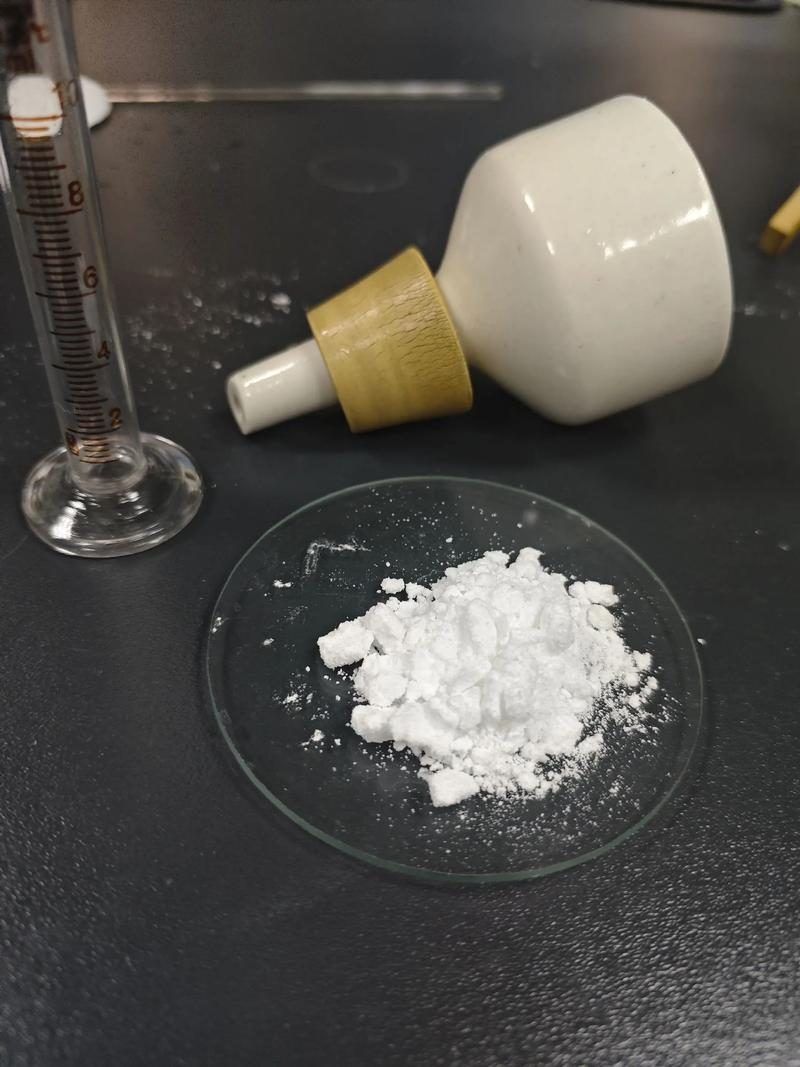
Move the crystal carefully onto a clean surface vessel, dry it, and calculate the rate.