


On this winter break, dad bought a collection of "the economics of xue-mixed comics" and asked me to read it on vacation. At first, i had a little fun. I was on vacation. Sometimes they open books before they go to sleep, thinking that economics is an incomprehensible principle, but cute comics, interesting cases that attract me at once. Unlike the hard-worded interpretation in the textbooks, every economics knowledge point in the book is accompanied by a vivid cartoon depiction of a vivid image of the person, a simple scene, which makes abstraction visible and felt。
The most impressive thing in the book is the concept of opportunity costs. Mr. Xue said that when we choose, the best option to give up is the opportunity cost. And that's what made me think about the end of the term. I wanted to go to the school programming competition, and i wanted to study the language finals. With only that much time, i chose to prepare for the programming competition, which resulted in a second-class prize, but a five-point drop in the language scores. If i think about the “opportunity cost”, the “best option” i gave up might be to get better results in the language. But i don't regret it, because programming brings me a special sense of accomplishment. Now i know what i'm giving up more clearly when making choices。
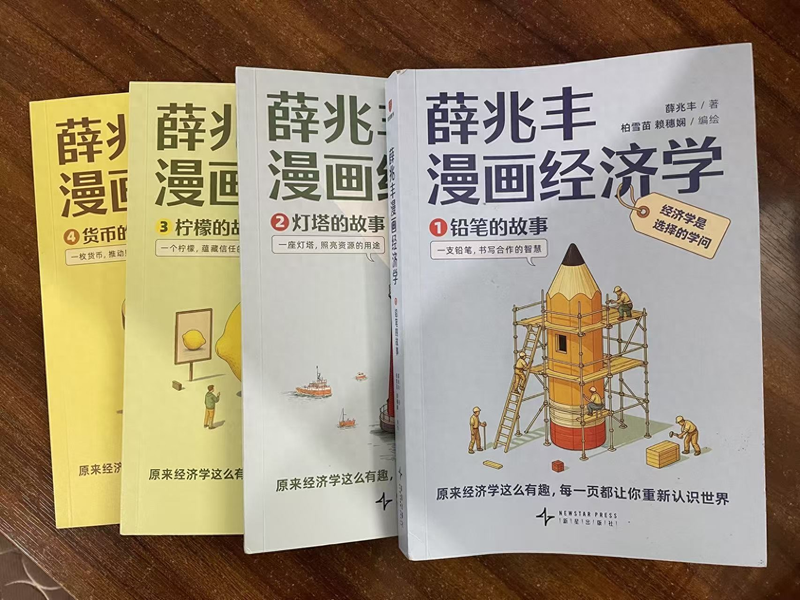
The book also helped me solve a pocket money problem. Mom gives me 30 bucks a week. I always buy snacks as soon as i get them. The word “scarce” in the book tells me that money is limited, but my desire is infinite. So i started making plans: $10 for stationery, $15 for favorite books and $5 for snacks. I also found a secret -- putting the money in a nice can, watching it grow, happier than spending it right away. That's economics helping me become a little housekeeper。
After reading these books, my greatest gain was not to remember a few terms, but to learn a new way of thinking. I used to see a milk and tea store lined up and thought, "wow, so many people," and now i'm like, "why do you want to spend time in line?" isn't this place particularly delicious or cheaper? And that's from "seeing" to "thinking the door."。
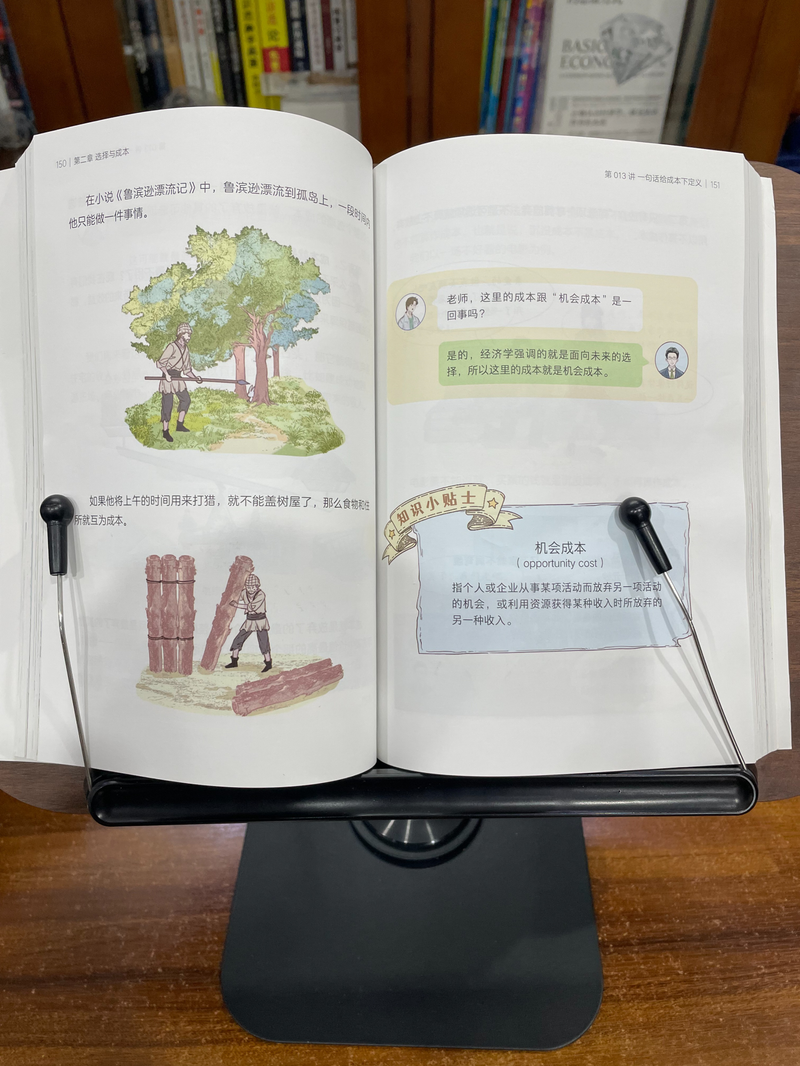
After reading this book, i learned not only a lot about economics, but also about observing life with different eyes. I would like to share my book with you and, in this process, to achieve a real upgrading of thinking。
Economics didn't make me a minor, but it made me more aware of how to make a smart pupil. It's as clear as a mathematical formula and as interesting as a detective story. This cold break, it seems like i have completed a small upgrade of my mind — and now i'm having a problem and i'm going to ask myself, “why”, not just “what”. I guess that's growing up。
I know that my understanding of economics is still modest, but i would like to continue to study and explore with this curiosity and thought. I also know that there is still a long way to go to be a true economist, but i will keep this curiosity about the world, looking at life, analysing problems with economics, from passive acceptance to active thinking, from cognitive to rational analysis。
I also hope that, through my sharing, i can make more students fall in love with economics, discover the mystery of economics in life, learn to solve practical problems with knowledge, and join me in the struggle for thinking and the use of “small economists” to light up the future with the power of thinking。



