Mqzi-10/2 anxym
Mqzi-10/2 anxym
Msalca25*75
Why do scale valves need scale valve amplifiers? First, we need to understand the logic and structure of the scale valve。
The operation and control of hydraulic valves is carried out by mechanical volume in the form of force (power rectangular) or transposition (angels), which can be performed manually, gas, mobile, liquid, electric and its combination. Electricity control is generally used, electricity is converted from electro-mechanical (e-m) energy exchange units to the machinery required to control the movement of machinery, and the scale valve machine (e-m) is usually a proportional electromagnet with sufficient output power and shift。
Proportional valves typically consist of valves, valve cores, double springs and proportional electromagnetic magnets, which are in fact an electromagnetic ring whose output power changes linearly with the input of the current, which converts the current to the force that acts on the core of the valve in order to overcome the spring's impact, thereby controlling the movement of the core, the flow or pressure of the opening-size valves formed by the core and the valve。
Proportional magnets must have sufficient currents in order to export over spring power and liquid power, with different manufacturers having a ratio of electromagnetics, usually with a current value of 600-3000 ma for maximum degree transfer, whereas standard industrial control signals are usually 0-5v/0-10v/-5-+5v/-10-+10v or 0-20ma/4-20ma current signals, and control belt load capacity is weak enough to boost proportional electromagnetic metal. The scale valve amplifier acts as a signal match, receiving a weak control signal and exporting the current required for the proportional magnet, while the scale valve amplifier incorporates the necessary components, such as dead zone adjustment/gain adjustment/ ramp time/fibration regulation. The internal electron screw pipe with the iron core is called electromagnetic. When an iron core is inserted inside the electro-heavy pipe, the core is magnetized by the magnetic field of the electro-heavy pipe. Magnetized steel cores have also become a magnet, so that the magnetism of the screw pipe is significantly enhanced by the confluence of two magnetic fields. In order to make the electromagnetic magnets more magnetic, iron cores are usually made into hooves. However, attention should be paid to the opposite direction of the upper circle of the hoove core, with a clockwise on one side and a counterclockwise on the other. If the circle is the same, the magnetic effect of the two coils on the iron core will be offset against each other so that the iron core is not magnetic. In addition, electromagnetic cores are made of soft iron, not steel. Otherwise, once magnetized, the steel will remain magnetic for a long time without being able to retreat, and its magnetic strength and weakness will not be controlled by the size of the current, without the advantage of the electromagnetic magnet。
Summary of electromagnetic ratio
The electromechanical conversion unit of the electro-magnetic as a proportion control element of the electron ratio, which is designed to convert the current signal transferred to the proportional control amplifier into force or transposition. It is the most widely applied electromechanical converter in electron ratio control technology. The properties of the proportional magnet and the reliability of work have a significant impact on the electron ratio control system and components and are one of the key components of the electron ratio control technology。
The electron ratio control technology imposes certain requirements for proportional electromagnetics, notably:
1) the one-power feature of a horizontal shift, i. E., the output of the electro-magnet during the proportional active work schedule is constant when the current of the wire is constant。
2) have good linear properties, smaller dead zones and demurrage。
3) the steps respond quickly, with high frequency。
Structure and working principles of proportional electromagnetics
Although there is currently a large variety of electromagnetics in the domestic and foreign markets, their basic structure and rationale are broadly the same。
As can be seen from figure 1, the typical high-pressure-resistant ratio electromagnets consist mainly of conductors, cortex, shell, polar boots, wires, pushers, etc. The following two segments of the guidance are conductive magnetic material and the middle is welded with a non-conductive magnetic material (separated magnetic ring). The fuse has sufficient stress resistance (about 35 mpa silent pressure). The directional front and polar boots are combined to form tubed polar boots with cone ends, the relative size of which determines the shape of the proportional electromagnetic steady-state characteristic curve. Configure concentric screw pipe-like control wires between the fuse and the shell. The front end of the cortex is fitted with a pusher for output power or position shift; the back end is fitted with a zero-modification structure consisting of springs and bolts to adjust to a range of proportional electromagnetic properties。
Proportional electromagnets are generally wet current control and, compared to general straight current magnets, acquire the basic absorbent properties, i. E., horizontal monopolistic properties, which differ substantially from the normal straight current electromagnetic properties, as a result of special structural designs that form a special magnetic path。
The magnetic circuit of the proportional electromagnet is divided into two parts Φ1 and Φ2 near the working gas gap, as shown in figure 3 (a). In one of the magnetic tracks, the zoo1 comes from the base of the polar boots of the front end-covered basin, along the axis to the working airspace, into the cortex, and goes back to the front-covered polar boots through the guidance segment and the magnetic shell, producing an axle thrust (end face) f1; in the other, zoo2 through the side of the basin to the side of the cavity of the cavity of the cavity (front leg of the guidance), the zoo2 goes through the working gas gap to the collide with the zip-1 to produce an additional force of the axis f2. This particular form of magnetic circuit is formed mainly by the use of an amphibious ring structure, which forms a pelvis of polar boots around a cone. Therefore, geometric shapes and sizes of basins require optimal design and experimental research to determine them. As a result of electromagnetic activity, the f1 and f2 are combined to achieve a proportional gravitational shift of electromagnets. In the area of work, electromagnetic f, in relation to the transfer of the title iron, is basically horizontal
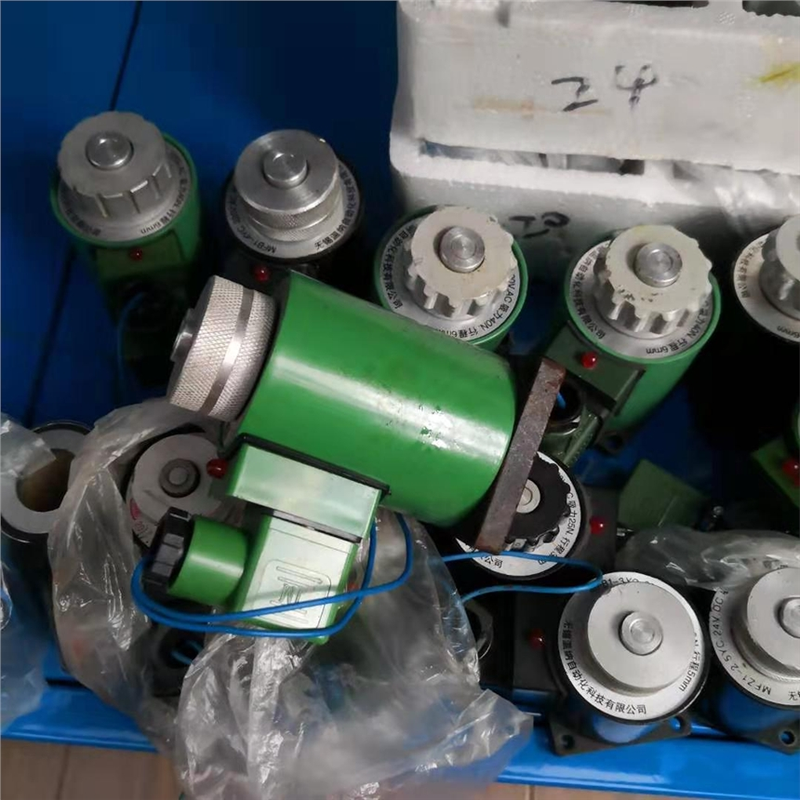
Mqzi-10/2 anxym
Mqzi-10/2 anxym
Sta32
Sdas20