[in the general context of mems development]
The use of micro-manufacturing technologies is extremely permeable, while applications such as networking, smartphones (mobile terminals), medical care and health care are in great demand for micro-manufacturing technologies in the coming years. Major technological developments have evolved from single micro-nutrients to micro-nuclei systems, whose technical elements include, inter alia, multifunctionalization, intellectualization and integration. In the case of technology-driven micro-manufacturing technologies, new materials (e. G. Graphite), new structures and integration with nano-, biological, information, etc. Have been introduced into the relevant scientific structures, and new devices and systems have emerged, leading to the development of micro-manufacturing technologies, with cross-disciplinary and diversity features。
Silicon pressure sensor
The following briefly describes the history of the development of silicon micropressure sensors, which went through four phases: the invention phase (1945-1960): silicon micropressure sensors originated in the united states. In 1945, mr. C. S. Smith discovered the inhibitive effects of silicon and zirconium, giving semiconductor materials similar properties to traditional mechanical pressure sensors. Pressure sensors based on this principle bind transformers to metallic film and transform force signals into telecommunications signals for measurement. The minimum size of this phase is approximately 1 cm. The technological development stage (1960-1970): with the development of silicon diffusion technology, technicians select suitable crystals on the silicon crystals (001 or 110) to spread the resistance directly on the crystals, and then process them in dents on the back to form thinner silicon elastic film called silicon cups. This form of silicon cup sensor has the advantage of small size, light weight, high sensitivity, good stability, low cost and easy integration, and has achieved metallic-silic crystals, offering possibilities for commercialization. Commercialized centralized processing stage (1970-1980): on the basis of the silica proliferation theory, the various directional corrosive techniques of silica have been developed into a silica-specific processing technique that automatically controls the thickness of the silica membranes, notably the v-shaped cell method, the auto-suspension method, the auto-suspension method of the anode oxide method and the auto-suspension method of micromechannel control. Because of corrosiveness on multiple surfaces, thousands of silicon pressure membranes can be produced at the same time and integrated plant processing patterns are achieved, with further cost reductions. (1980-present) micromechanical processing: nanotechnology, which emerged at the end of the last century, made micromechanical processes possible. Structured pressure sensors can be processed by computer control through micromechanical processes, and their width can be controlled within the micrometre class. This technology can be used to process, cortex, strips, membranes, and bring pressure sensors into the micrometer phase. "micromachined presure senses: review and recent development."
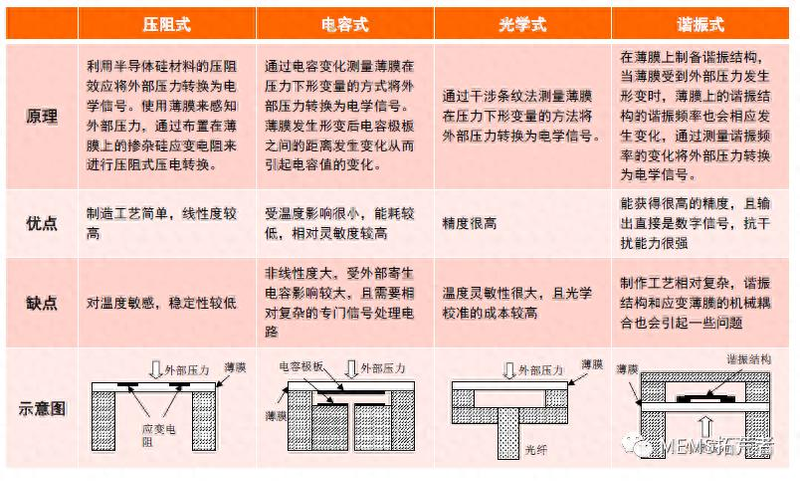
The classification of silicon micropressure sensors can broadly be divided into four types of pressure sensors, such as pressure retardation, capacitive, optical and tuning, the main rationales, advantages, disadvantages and graph below。
The silicon pressure sensor market
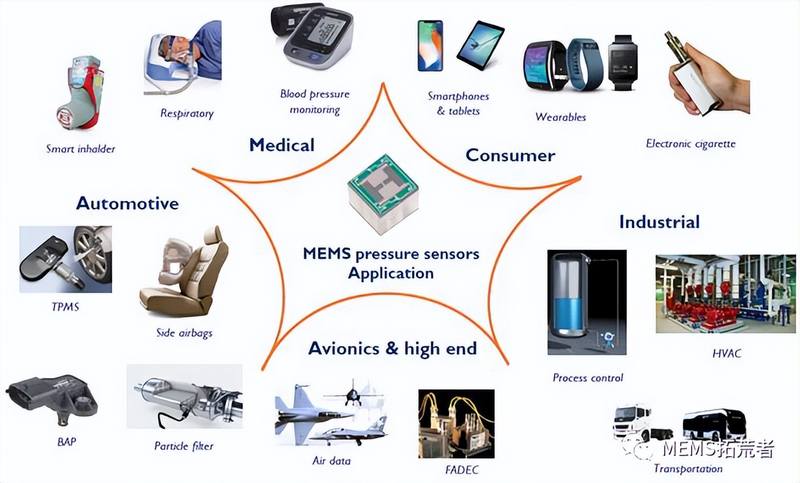
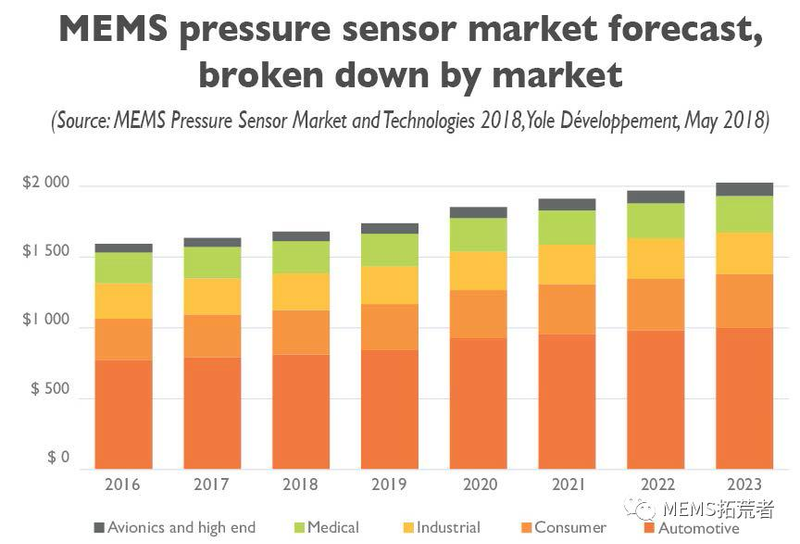
According to the latest report of yole développement, the mems pressure sensor market is expected to grow at an annual rate of 3. 8 per cent, to reach an overall market size of $2 billion by 2023. The automobile industry is the oldest and largest market for mems pressure sensors. Thanks to the rapid spread of pressure sensors in high-end smartphones and tablet computers in recent years, the consumer category market has now become the second largest pressure sensor market. The health and industrial markets have not changed significantly at the end of their application, so they are growing at a smooth pace. Air electronics and high-end applications continue to be the niche market for pressure sensors, but the fastest market growth has been demonstrated by the active aircraft market and the replacement of traditional technologies by mems pressure sensors。
[silica pressure sensor related product introduction]
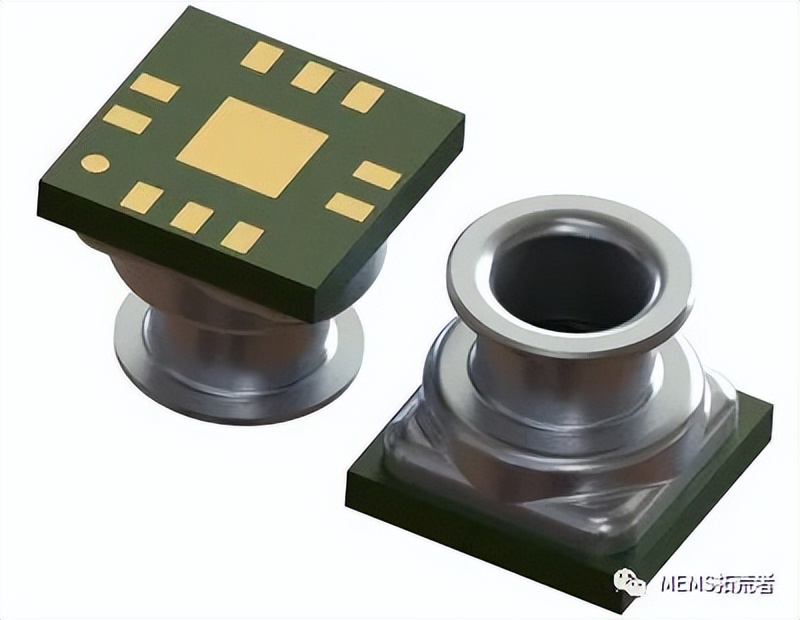
Ultra-small silicon pressure sensors for meaning semiconductors use innovative mems technology to provide ultra-high pressure resolution, with super-heavy and thin envelopes. The device, using vensons technology with the meaning of semiconductor, can be fitted to a pressure sensor on a single silicon chip without the need to bind the chip and achieve the highest level of reliability. This vensen technique is primarily used to detect changes in pressure through flexible silicon film covering the aerobic cavity, in which the air gap is controlled and the pressure is defined. The thin film of the new product is very small compared to the traditional silicon microprocessed film, and the built-in micromechanical brake structure prevents pressure from destroying the thin film. This film includes mini voltage electrical resisters whose value changes with external pressure. Pressure sensors monitor changes in silica film resistance, modify deviations using temperature compensation methods, convert detected change information into binary bit data, and transmit data to the equipment master processor via an industrial standard i2c or spi communication interface。
Important technical characteristics of the mems pressure sensor series for the meaning semiconductor include advanced temperature compensation performance that allows applications to remain stable at the time of environmental change, absolute pressure ranges of 260 to 1260 hpa covering all possible applications (from the deepest mine to the summit of mount everest), low power consumption of less than 4 ma, and pressure noises less than 1 pa rms。