Importance of the energy situation and development of energy-saving paints
With china's rapid socio-economic development and increasing energy consumption, however, our per capita energy reserves are well below the world average, and energy shortages will become more acute. Thus, in recent years, the state has actively promoted the development of energy-efficient products in various sectors in order to slow down energy consumption and sustain the rapid and sustainable development of the chinese economy。
The amount of energy consumed as a result of energy losses in buildings has increased in recent years. Building paints, as an important building material, are important for saving resources and promoting sustainable socio-economic development by introducing energy-efficient paints。
Status of energy-efficient paints
With advances in science and technology, the emergence of various energy-efficient materials has contributed to the development of energy-efficient paints. Among them, thermal insulation temperature coatings, which are typical of energy-efficient paints, are of general interest and have developed significantly in the industry. The main function of insulation temperature coatings is to prevent the spread of their own heat and the intrusion of external solar energy. Because of china's wide geographical reach and the different needs for heat insulation paints, the cold areas of the north require material with clear temperature effects and reduce the dispersion of their own heat in the interior, it is clear that the exterior heating material has a role in the north. The high light and temperature in the south make it necessary to have good insulation paints to prevent the intrusion of external solar energy。
Thermal insulation paints currently available on the market are divided into two main categories, one represented by a thick external temperature system that uses the barrier principle for reducing thermal transmission, which has a clear effect, as well as the traditional combination of silicate coatings, which uses thin coatings to reduce the amount of external solar energy intrusion. Thermal insulation systems use thick materials to develop earlier than thin insulation coatings, and there are now successful production enterprises and engineering cases, with thin insulation paints starting relatively late and with mixed effects on the market for the same product, but the prospects for southern market development are wide。
As the development of the hpc material has matured, the thinness is simpler to construct than the hpc system, the risk of cracking is low, and safety is high, with the following emphasis on analysis of thin layer insulation energy-saving coating techniques。
Tight insulation energy-saving coating technology
1. Reflecting insulation coatings
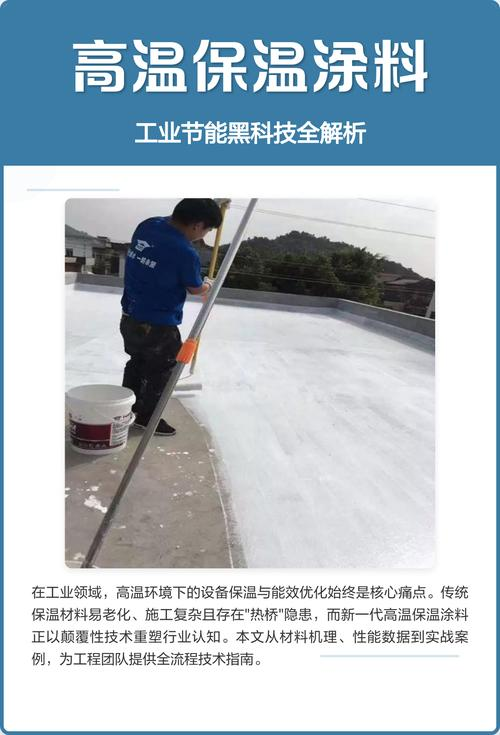
The solar spectral energy distribution curve shows that the majority of solar energy is in visible and infrared areas in the 400-1750 nm range. Within this wavelength, the greater the reflection of the coating, the better the insulation. High-reflective coatings, reflecting visible and infrared light, can therefore be produced by selecting materials with high reflectivity in the wavelength range for insulation purposes。
Early reflector insulation coatings are produced by selecting metal or metal oxide coatings with high reflectivity, reflecting solar heat for insulation purposes. Most of the reflective insulation coatings are solvent systems because they can stabilize in solvent-type coatings over a longer period of time and not in a water system. However, hydrosis is the trend and inevitable fate of paints. At present, combinations such as “empty porcelain” are used to form high solar thermal reflection paints with good temperature insulation. The reflection rate of hollow plume fillings on near infrared light is much higher than that of ordinary fillings. The main uses are glass and ceramics, which are similar to the reflection of ceramics, but the storage of ceramics is less stable and the temperature of hollow glass is more stable。
Radiation insulation paints
Radiation insulation paints that absorb solar rays and heat from buildings in the form of radiation are launched into the air at a certain wavelength, thus achieving good insulation and cooling effects. The key technology is the preparation of coating components with high heat launch rates. Studies have shown that a variety of metal oxides, such as fe2o3, mn02, c0203, cuo, have thermally high-launch characteristics of mixed substances with trans-crystal structures and are therefore widely used as fillers for insulation energy-saving coatings。
Radiation insulation coatings are different from porous low-insulation insulation materials such as glass cotton and foam plastics, which slow but do not block the delivery of thermal energy. During the day, solar energy continues to pass through the roofs and walls into indoor space and structures, and when thermal energy passes through, thermal energy is trapped even when the outdoor temperature declines. Thermal insulation paints, on the other hand, allow the absorption of heat radiation in the form of heat discharges, thus contributing to cooling indoor and outdoor at the same rate。
Vacuum insulation coatings
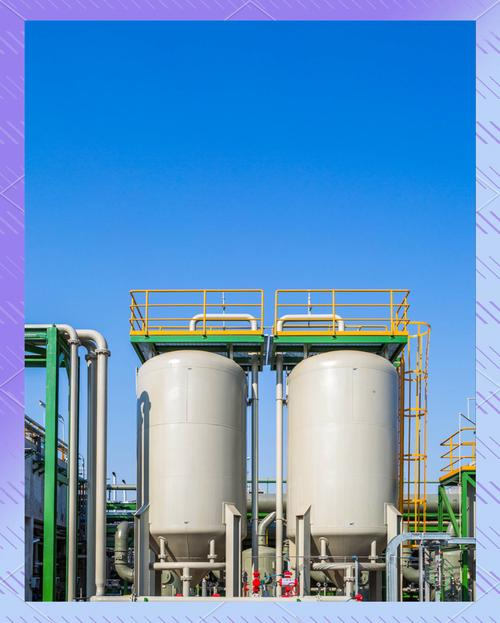
Thermal transmission takes place in three ways: conductivity, convection and radiation. Vacuum conditions completely eliminate both molecular vibration thermal and flow transfer modes, so that well-preservative coatings can be prepared using vacuum fill。
The results of tests conducted by the united states house laboratory on the use of vacuum ceramics for civilian buildings show that millions of vacuum ceramics reflect on average 86 per cent of sunlight within a wavelength range of 500-2500 nm, with at least 64 per cent savings in the use of air conditioning in the summer. Such paints were previously restricted to space products. In recent years, developed countries have applied them to civilian construction and industrial facilities。
4. Transparent insulation paints
Transparent insulation paints are a transparent insulation coating in visible light areas. Transparent insulation is achieved mainly by using semiconductor powders of the nanomethrin oxide series (ammonium oxide, thioxytin oxide, aluminium zinc oxide, etc.) which have a good pass rate for visible light and a very high reflection rate for infrared light areas。
For buildings with large windows and transparent roofs, car windows, etc., thermal radiation from solar light increases the use of air conditioning and wastes energy. The traditional solution is to use products such as metallic membranes for thermal reflection of glass and various types of thermal reflections for the purpose of cooling. However, there are also problems with these products, whose opacity and high reflectivity limit their use, such as photo contamination at high reflectivity. The emergence of nanomaterials provides new avenues for addressing the problem of transparent insulation。
5. Diversion of thermal insulation coating
It is well known that the conversion of zero degrees of ice to zero degrees of water requires the absorption of energy, and the conversion of zero degrees of water to zero degrees of ice requires the release of energy. In the process of this transformation, the temperature remained constant despite the energy transfer. Diversion coatings are thermal insulation of specific melting points (e. G., 25 degrees) with higher materials than thermal coatings on the surface. A fixed method allows this material to be wrapped in small pills and spread over the paint。
Thermal insulation of this coating depends on the size of the material compared to the heat, the size of the melting heat and the amount of use per unit area. The higher the heat, the greater the use of the area, the better the insulation。
It is defined as the internal energy absorbed or released when the unit mass object changes the unit temperature。
Melting heat is defined as the amount of heat to be absorbed by a crystal matter of the unit mass that becomes a liquid substance at the same temperature at the melting point. It is equal to the amount of heat released from liquid to solid at the melting point under the same pressure。
Promoting the development of energy-efficient paints
Because of the very close relationship between economic development and energy, the issue of energy is an important and strategic issue in real society. All sectors of society need to promote the development of energy-efficient products, and the paint industry, as one of the energy-intensive industries, has the responsibility and capacity to make a greater contribution to reducing energy consumption, conserving resources and promoting sustainable socio-economic development. Source: grand examination - architectural engineering