Overview
Plasma (also known as plasma) is one of the states of the substance and is its high energy. Its physical properties are different from those of solid, liquid and gaseous states. The plasma, like the gas, is not fixed in shape and volume and changes according to the packaging. Plasma has near-optimal conductivity rates and, in the case of magnetic fields, displays various three-dimensional structures, such as filaments, cylindricals and double layers, and can also be used to capture, move and accelerate plasmas, for example, mutation-to-magnetic plasma rockets。
The earliest meaning of plasma is to maintain electro-neutral ion substances as a whole, but in reality some substances that do not meet the original definition of electro-neutrality are also called plasmas, such as quark-gel plasmas. An intuitive description of plasma states that plasma is a fluid that is affected by the electromagnetic field and generally refers to a variety of ionized gases, but free electrons in solids or liquids can also be considered as a (non-neutral plasma) plasma, in addition to many fluids subject to the electromagnetic field. Plasma can be seen as a system consisting of a group of particles and can be studied mathematically。
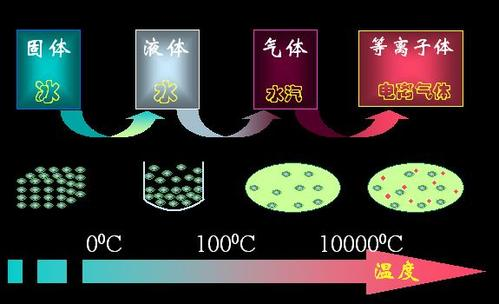
Plasma is the cause of one of the broadest physical formations
The universe is full of plasma, the most common physical phase, which can also be obtained through the processing of substances in other phase. Modern physics gives a detailed description of the transformation between gas and plasma, when a gas acts in experience of an external high temperature or a powerful electromagnetic field, when the free electronics inherent in the gas accelerate and impact on the neutral particles of the gas, separating the electrons in the neutral particles of the gas from their atomic nuclei into the free electrons, which are also ions due to the lack of electrons。
These separated free electrons will be accelerated by the field and will collide with other neutral particles, known as gas ionization processes. At this point, some of the particles in the gas will have more electrons than neutral states and become ion with a negative charge, while others will have less electrons than neutral states and become positive ion with a positive charge, while others will remain neutral. The gas following ionification becomes an electroneutral substance consisting of a variety of particles, including acoustic ion, animate electrons and neutral particles, in which the total amount of the charge of the anion is equal to the sum of the amount of the charge of the anion, which is known as the physical “ plasma”, at a time when the total charge of the substance on a large scale is zero, known as “equivalence”。
Plasma contains a number of non-neutral particles (loading fluids) that are free to move, combined with many non-neutral particles having electromagnetic powers and being subject to the electromagnetic forces of other non-neutral particles, that is to say, the interaction between non-neutral particles can occur without collisions, which also removes the many properties of the conductive and subject to electromagnetic forces. Substances that end up in plasma form can also be transformed into three other substances by transformation。
Plasma is the most common form of heavy matter in the universe, most of which is found in thin intergalactic space (especially intragalactic media) and stars. The ionosphere, which is 300 kilometres from the surface of the earth's atmosphere, is also in plasma form. The ionosphere is a gas from the more outer layers of the earth's atmosphere that absorbs solar radiation energy and is formed by light drift。
Nature
Definition of nature
Non-neutral plasma
Mathistic description
To give a complete description of the plasma state, it is in principle necessary to write down the location and velocity of all particles and to calculate the electromagnetic field within the plasma. However, this complex approach is generally unrealistic and it is not possible to measure the dynamics of each particle in reality. Thus, plasma physicists usually use simplified models, which can be divided into two main categories。
Fluid model
Fluid models use smooth quantities to describe plasma, such as density and average speed around a position (see plasma parameters). The simple fluid model consists of magnetic fluid mechanics, which combines the maxwell equation group and the navi-stox equation group and treats plasma as a single fluid that adheres to the equation group. A further step has been taken to provide a two-flow model that separates ion and electronics. Fluid models are relatively accurate when the frequency of collisions is high enough to allow the plasma to be distributed at a speed similar to that of maxwell boltzmann. Because fluid models typically describe plasma as a single flow with a specific temperature at each spatial location, it is not possible to describe the structure of plasma beams or double layers at which the speed changes with space, as well as any particle effects。
Dynamic model
Dynamic models describe the speed distribution function for each point of the plasma, so it is not necessary to assume the maxwell equation group. In collision-free plasma, such models are often required. Momentology models have two types: the first, setting grids on speed and position and indicating smooth distribution functions on grids; and the other, known as "particle in a cell", which describes the dynamics by tracking the trajectory of a large group of individual particles. The computational intensity of the kinetic model is generally higher than that of the fluid model. The frasov equation describes the dynamic state of the system in which the electron particles interact with the electromagnetic field。
In magnetic plasma, the gyrodynamic method can significantly reduce the computational intensity of a simulation that uses a fully dynamic model。
Basic parameters
Plasma parameters are a series of parameters describing the nature of a plasma. In general, the units are used as the basic units of parameters in centimetre-g-seconds, but the temperature is used as units of electronic volts, while the mass is used as units of multiples of proton mass. Here, k means wavelength, z means a charge state, k means a bolzmann constant, gamma means an insulation index and toad means a cologne collision. Plasma can be seen as a system of particles, so it can be studied statistically。
Temperature (average kinetic energy of particles)
Temperatures generally represent the mean kinetic energy of particles in a substance and are generally measured in electro-volts or kelvin. The temperature of plasma can be divided into electron temperature, ion temperature and neutral particle temperature. Electronics and other electrons in plasma are generally close to the thermal balance, so electronic temperature is well defined. However, the energy distribution of electrons and the maxwell-bernzmann distribution are subject to large deviations under the influence of ultraviolet light, high-energy particles or powerful electric fields, but despite this, electronic temperatures are still well defined. Thermal balance between electrons and other electrons is achieved faster than between electrons and ions due to wide differences in quality. Thus, the ion temperature can vary significantly between the electron temperature, where the ion temperature is close to room temperature, while the electron temperature can reach several thousand degrees celsius or more. This is particularly common in weak ion plasma。
High cryogenic plasma
Plasma can be classified into two categories — high temperature plasma and low temperature plasma — according to their relative ratios of electron temperature, ion temperature and neutral particle temperature. In high-temperature plasma, electron temperature, ion temperature and neutral particle temperature are at the same level, i. E. Thermal balance; in low-temperature plasma, the electron temperature is higher, while the ion temperature and neutral particle temperature are much lower than the electron temperature, sometimes close to room temperature。
The definition of a high temperature plasma is:
Te is electron temperature, ti is ion temperature and tgas is neutral particle temperature。
The definition of cryogenic plasma is:
Number of particles density
Ionity
Ionity refers to the proportion of the ioned molecule (ion) in the total number of plasma molecules, which is mainly influenced by the temperature of the substance, the higher the temperature of the substance. Plasma can be divided into cold plasma and thermal plasma, depending on the degree of ionization. The molecules in the thermal plasma are almost entirely ionized, while in the cold plasma only a small proportion of the ionizing molecule (e. G. 1%) is present. Note that “cool plasma” and “thermal plasma” may have different meanings in different literatures。
Ionity
It is clearly defined as:
Of these, ni is the mass density of atoms in the i-ionation state, and nn is the numerical density of neutral molecules。
Quantity density of electrons in relation to ionizing
“permatonium density” usually refers to the “quantity density of electronics”, i. E., the free number of electronics per unit volume. Quantity density ne of electrons and ionizing degrees
The relationship is:
Relationship between ionizing energy, electron temperature and ionizing
The saha ion equation describes the relationship between electron temperature, ionizing energy and ionizing, i. E. The ratio of electron temperature to ionizing energy determines the plasma's ionation (with weaker density also). The substance can only be ionated at relatively high electron temperatures; and at relatively low electron temperatures, the acoustic and electron are combined and plasma becomes gas。
For a gas consisting of an atom, the saha ion equation is:
Electricity
The power in space between charged particles is referred to as “plasma voltage” or “space voltage”. However, as a result of the derbaium layer, if electrodes are inserted into the plasma, the measured voltage is generally much lower than that of the plasma. Plasma is a good conductor, so its internal field is small. There is thus the important concept of “quite neutrality”, i. E., that in plasma there is almost the same quantitative density (ne=ni) of the acoustic and anion in a sufficiently large range, and that there is an uneven distribution of the charge at the deby length scale. In the special case where double layers are produced, the charge separation can be tens of times longer than deby。
In order to determine the size of the power and the field, one approach is to assume that the mass density of the electron meets the bolzmann relationship:
Peer-to-peer guidance leads to formulas for the electric field inside the plasma from its mass density:
Plasma is also likely to be non-neutral, e. G. Electronic beams contain only anion. Non-neutral plasma density is generally very low or very small, otherwise static power can exclude and disperse the plasma。
In plasmas studied in astrophysics, the debacht shield avoids the impact of the electric field on plasmas at large scales (over the debacht length). However, electric particles in plasmas can produce magnetic fields and are influenced by magnetic fields, such as the formation of double-shelf-charge separations of dozens of dbai lengths. Plasma dynamics, influenced by external and internal magnetic fields, are the subject of research in magnetic current mechanics。
Magnetic intensity
When the plasma's own magnetic field is sufficient to influence the movement of electric particles, it can be called "magnetic plasma". The usual quantitative condition is that a particle rotates at least one circle in the magnetic field before collisions with other particles: it is an electronic rotation frequency and an electronic collision rate. It is more common for electrons in plasmas to be magnetic, but not for ions. Magnetized plasma is not homogenous: it has different properties in parallel and vertically in the direction of the magnetic field. Although the plasma itself is small, the plasma moving in the magnetic field also produces an electric field:
Parameter range
The plasma parameters can vary between several orders of magnitude, but are clearly different in the parameters, but are quite similar in nature (reference plasma ratio (plasma scaling), whereas the table below only considers plasma with positive and negative power in the traditional bands, without taking into account special quark-gel plasma。
Complex phenomena
The plasma structure is intermittent in space, i. E. The distance between features is greater than the size of the feature itself, or even creates a fraction, and therefore cannot be expressed in smooth mathematical functions or in purely random processes。
Sung-seok
Whiteland currents are filamental structures that can be seen in plasma phenomena such as plasma lamps, aurorals, lightning, arcs, solar flares, supernova remains, etc. The current density of the string is higher and magnetic rope structures are created under the influence of the magnetic field. High-power microwave decomposition under standard atmospheric pressure also results in filament formation。
The self-focused effects of high-power laser pulses also produce filamentary plasma. Under high power, the non-linear portion of the refraction rate becomes important. Because the centre of the laser beam is brighter than the outer one, the refraction rate at the centre is higher than at the outer one, which allows the laser to focus further. As a result, the peak of brightness (fluent) increases and the laser beam produces plasma. The plasma has a refractive rate of less than 1, which disperses the laser beam. In the interaction between the self-focused effects and the dispersive effects of the plasma, the plasma forms a filamentary form that is as short as μm and as long as kilometre. The resulting filamentary plasma is characterized by low ion density due to the dispersive effect of the ionizing electron。
Spectrums and double layers
The nature of the plasma can change dramatically from one side of the film to the other (within a few debacht lengths) when these thin structures exist. The local charge separation in the double layer causes large power variations within the double layer, but does not produce any electric field outside the double layer. This separates the two layers of plasma of different properties and accelerates the ions and electrons。
Fields and circuits
The quasi-neutrality of the plasma means that any current in the plasma must form a circuit. This circuit also follows the laws of the kilhoff circuit and has electrical resistance and sense. In general, plasma circuits must be considered as a strong coupling system, i. E. The nature of an area is influenced by the entire circuit. Strong coupling and non-linearity can create complex phenomena. These circuits contain magnetic energy, which will be released in the form of heating and acceleration if the circuit is destroyed, for example because of plasma instability. This is usually the interpretation of heating in the corona. Plasma currents, particularly those aligned to the magnetic field (generally known as the whiteland current), are also present in the earth's auroral light and filamentary plasma。
Brethren structure
The formation of high gradient thins in plasmas separate areas of different properties such as magnetic strength, density, temperature, and form cylindrical structures such as magnetosphere, solar circle and solar circle electro-flow film. Hannes alvin wrote: “from a cosmological point of view, there is no more important new discovery in space research than the hysteria of the universe. In all universes that can be studied by in situ measurement methods, there is no `cell'. These currents divide space into areas of various properties, such as magnetic strength, density, temperature, etc..”
Critical ion rate
When there is a relative velocity between the plasma and the neutral gas, there is an uncontrolled ion reaction, which is called the critical ion rate. Critical ionization processes can transform the kinetic energy of fast-moving gases into ionizing and plasma thermal energy for a wide range of applications. Critical phenomena produce a rapidly changing structure in space or time and are typical features of complex systems。
Special complex phenomena
Dust plasma
Dust plasma contains small, charged dust particles, usually in space. Dust particles accumulate higher charges and interact with each other. The dust plasma in the laboratory is also called "complex plasma"。
Super-temperature plasma
Ultra-temperature plasmas can be obtained by human means, first by cooling neutral atoms below 1 mk using magnetic rays, and then by passing only sufficient energy to the outermost electrons of the atom with another laser beam, freeing them from the atom. The advantage of ultra-temperature plasma is that its initial conditions can be well set and adjusted, including size and electronic temperature. By adjusting the wavelength of the laser used for ionizing, the dynamic energy of the fugitive electron can be controlled. This kinetic energy is determined by a laser pulse bandwidth with a minimum of 0. 1 k. The ion produced after ionizing initially retains the original temperature of neutral atoms, but the temperature rises rapidly as a result of the so-called disorderly heating effect. Such non-balanced ultra-low temperature plasmas evolve rapidly。
Infiltration plasma
An impermeable plasma is a thermoplaste, which is similar in nature to an impermeable solid for gas and cold plasma and is capable of being pushed by other substances. The study group headed by hannis albin briefly studied impermeable plasma in the 1960s and 1970s and tried to use it in nuclear fusion reactions to isolate fusion plasma and reactor walls. However, they soon discovered that the external magnetic field in this grouping would cause the plasma to produce so-called twisting instability, leading to excessive heat loss to the furnace walls。
In 2013, a group of material scientists declared that they had succeeded in generating a stable, impermeable plasma without magnetic restraints, using only one sub-high pressure low temperature gas. While it is not possible to acquire the plasma nature by spectral method due to high pressure, it is clear from the indirect effects of the plasma on various nanostructure synthesis processes that this method of restraint is effective. They also found that the plasma and gas interface screens the ions after several dozen seconds of non-permeability, which may lead to a second heating mode (known as viscous heating). This pattern means that reactions can have different dynamics and produce complex nanomaterials。
Natural phenomena
The ion is the most common physical phase of the universe in mass and volume. Most of the visible light from space originates from stars, which are made up of plasmas whose temperature corresponds to radiation with greater visibility. More macrometrically, the vast majority of ordinary substances in the universe (i. E., heavy matter) are located in intergalactic space and are also made up of plasma, with much higher temperatures and major radiation x-rays. Nevertheless, if all types of energy other than ordinary matter are included, 96 per cent of the total energy density of the universe does not belong to ordinary matter (and therefore not plasma), but to cold and dark matter。
In 1937, hannes alvin argued that if the universe was filled with plasma, those substances would produce currents and thus create magnetic fields on the scale of galaxies。
Plasma phenomenon
Substances consisting of plasma
Comparison with other gases
Electroconductivity: the conductivity rate of gases is very low, e. G. The air is a good insulation, but decomposes into plasma when the field strength exceeds 3*10 6v/m. Plasma conductivity is generally very high and can be assumed to be unlimited in many applications。
2. Particle diversity: gases usually consist of only one particle, and all gas particles behave similarly and are affected by gravitational and other particle impacts. The plasma, on the other hand, has two to three different kinds of particles, such as electrons, ions, protons and neutrons, which can be distinguished by the positive and negative size of their charge and can vary at different speeds and temperatures. This creates some special wave and instability。
3. Velocity distribution: the collision of particles with gases allows the particles of the gas to be at a rate consistent with the maxwell-bortzmann distribution, where the higher-speed particles are very small. As the particles of plasma with a certain degree of ionizing do not often collide, the interaction in the form of collision is not significant, and the presence of external forces can cause the plasma to deviate far from the local balance and produce a group of particularly high-speed particles, so the maxwell-borzmann distribution is not appropriate to describe the speed distribution of plasma particles。
4. Interaction between particles: the interaction of particles in the gas is limited to between two particles and is manifested by collisions, which are rare. Plasma particles, on the other hand, can interact collectively and interact at large distances through electromagnetic forces, resulting in waves and other organized movements。
Apply