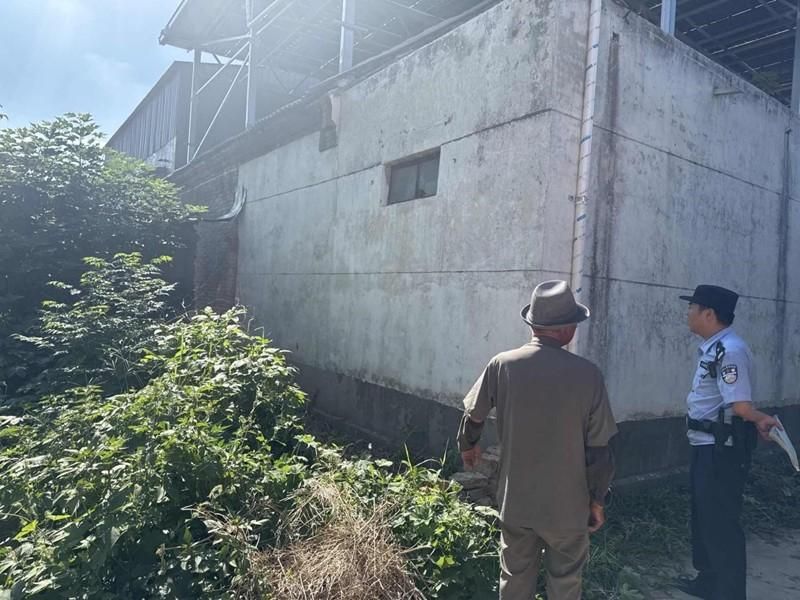
The author's brief: zhang waiman (1977-), female engineer, graduated from the university of transport in sian in 2000 and now works in combustion design at shanghai boiler factory ltd。
No. 5 zhang wai man: application of horizontal dilution techniques on 660 mw supercritical coal powder furnaces
49
1. 2 coal species analysis
As can be seen from table 1, the industrial data for the design of coal species are: 7. 30 per cent for total coal water, 11. 57 per cent for application-based volatilization, 26. 38 per cent for application-based ash, 22410 kj/kg for application-based low-grade heating and 4. 73 for fuel ratio (fixed carbon (fc)/volatilizer (vm)). The industrial data for the school nuclear coal species are 8. 00 per cent for all coal, 10. 31 per cent for application-based volatilization, 29. 56 per cent for application-based ash, 21010 kj/kg for application-based low-grade heat, 5. 06 for fuel (fixed carbon (fc)/volatilizer (vm)) and 629, for design of coal-based (td), 631, for design-based nuclear coal species, 613, ~638, which is a hard-to-fire plant. The rj designed for coal species is 2. 67, the rj for school nuclear coal species is 2. 68, and rj > 2. 5 ~ 3. 0 for design and school nuclear coal species is considered to be unburnable. Designed a fire-stability index (rw) of 4. 66 for coal
4. 58, rw > 4. 0~4. 66, which is a non-stable coal species. Designed a slag index of 1. 31 for coal species and 1. 156 for school nuclear species
2 theory of coal powder concentration combustion and state of technological development
According to the coal powder combustion theory and experiments, it can be shown that for each coal there is an optimal concentration of coal powder at which the lowest fire temperature (i. E., fire prone) and the lowest heat is required。
2. 1 effects of coal powder concentrations on combustion
The burning theory states that time, temperature and mixing are the three main factors influencing the rate of combustion. This argument is based on a certain concentration of coal powder, which, however, is often overlooked when analysing the success or failure factors of combustion technology. The combustion of coal powder shall be the main one, the reaction speed of which shall be determined mainly by two steps of oxygen diffusion, adsorption and surface reaction to the surface of the particles, in proportion to the surface area of the particles. Therefore, increasing the concentration of coal powder is equal to increasing the surface area of coal powder in a unit of volume, thus increasing the chemical reaction rate of combustion. Therefore, increasing the concentration of coal powder can significantly accelerate chemical reaction。
In fact, numerous theoretical analyses and experimental studies have demonstrated that coal powder concentrations have a significant effect on combustion when coal powder concentrations increase, the nox formed by coal powder combustion is reduced, coal powder gas flows are less hot, the temperature of the fire is lower, the time of the fire is shorter and the fire is earlier. Therefore, increasing the concentration of coal powder is very useful both for increasing fire stability and for reducing nox emissions。
There is a certain relationship between the concentration of a single wind and coal powder and the fire:
The fire temperature of the coal powder air mixture decreases with the increase in coal powder concentrations. (b) an increase in the concentration of wind and coal powder at a time, resulting in a decrease in the volume of air in a unit of volume, requiring a decrease in the heat of fire; (a) the increase in the concentration of coal powder, resulting in an increase in the total volatilization of coal powder and an increase in the concentration of the reactor, contributing to an increase in the rate of combustion reaction; second, the increase in the concentration of coal powder and the blackness of the coal powder stream, as well as the increase in the intake of radiation heat within the fire zone, have accelerated the spread of the flame. Thus, the fire zone near the burner's export creates a fire-prone and stable environment for coal powder, which is undoubtedly extremely beneficial for low-volatilization, ash-rich coal。
2. 2 status of technology development for coal powder enrichment
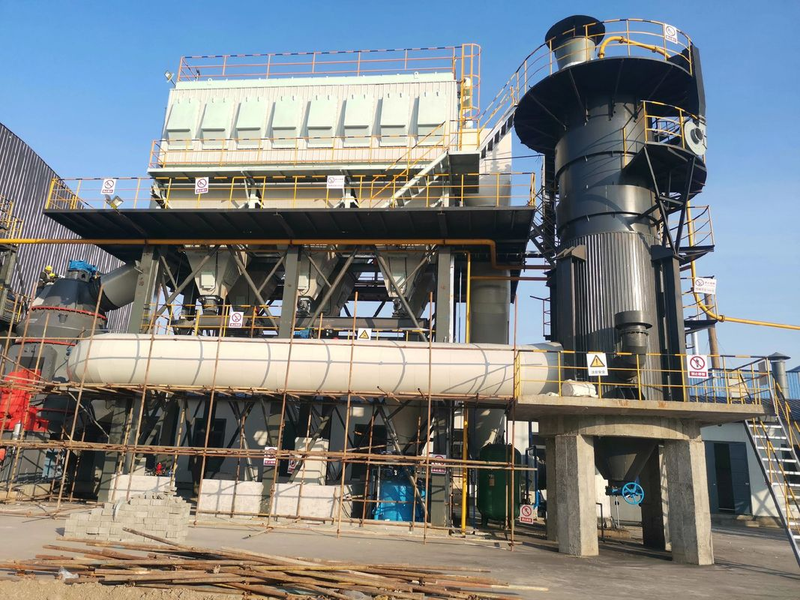
There are many ways to improve the operation of the burner by increasing the concentration of coal powder, which can be summarized in terms of its export enrichment and pre-combustion enrichment。
2. 2. 1 export component
The term " burner export enrichment " refers to the use of local devices to separate the powder from the unit at a burner's mouth, thereby allowing the powder to concentrate locally for a stable purpose. The main technologies with burner enrichment features are blunt burners, high-speed jet burners, multifunctional ship-form burners, etc。
2. 2. 2 pre-composition of burners
Increasing the concentration of one-time wind and coal powder has been limited by the means of delivering coal powder. For low-volatilization sub-coal, the theoretically required one-time wind rate is very small, but in order to avoid the deposition of coal powder in a pipe, it actually increases to 18-20 per cent. The final method is currently the method of pre-combustion, i. E. The use of a gas-solid separation device before the normal concentration of powder flows into the burner, which divides the powder gas stream into two thin units and is delivered to each of the powder vents, creating a heavy powder burner, or concentrated powder combustion. Typical burners in this manner are: high-regulating ratio (wr) burners, pm burners, pa x burners, and horizontally enriched coal powder burners。
3 design programme
Coal species have been designed in conjunction with the export enrichment of the burner and pre-combustion enrichment, with the export enrichment of the burner using a blunt v and an asymmetric level perimeter wind. The pre-composition of the burner with the use of the blind enrichment and the high-regulated ratio (wr) burner is designed to provide quick and effective ignition of coal powder and to ensure stable combustion, increase the exhaustion rate of the poor coal and thereby increase the efficiency of the combustion, while reducing n ox emissions。
3. Mechanism for a burner with a v-shaped blunt body
Based on the burner's design mechanism, one in a wind nozzle is set up to rationalize the aerodynamic field of the powder current
50
Volume 41
The upper line and the blunt object of the blockage rate, compared to the conventional coal powder nozzle design, the separation of the wide-regulated coal powder nozzle through the entrance tip, the injection of heavy coal powder from the upper nozzle into the oven, the injection of light coal powder from the lower nozzle into the oven, and the inclusion of a v type of blunt object in the nozzle, have allowed a wind to form a stable return zone in front of the blunt v-type, with high-temperature smoke to stabilize the flame, thereby effectively reducing the generation of n ox and prolonging the burning time of the coke carbon. Due to the inertia of the particles of coal powder, there is a local concentration of coal powder, so that, in addition to the high-temperature reflow effect, local concentration of coal powder is also the reason for some flammability of blunt combustion devices. The aerodynamic field after a blunt body, as shown in figure 1, uses a vertical and horizontal configuration of the blunt body on the thick side of the phase, which facilitates the inhalation of high-temperature smoke and creates argon. The three-high # conditions favour fire and low-load stable combustion, and the aerodynamic properties of the blunt burner are shown in figure 1。
Figure 1
3. 2 design of asymmetrical horizontal perimeter winds
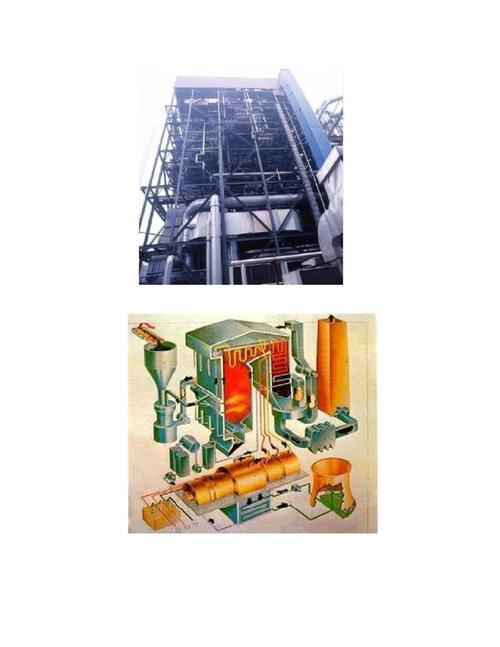
The design of this project level is an asymmetrical structure, with a small wind to the side of the fire and a large wind to the side of the back fire. The aim is to have a high concentration of coal powder to the side of the fire, while the air is small, resulting in a low wind coal ratio, i. E., a high concentration of coal powder, which is conducive to stable fire and low load combustion; and on the side of the backfire, the wind is high, so as to prevent the slag and high temperature corrosion in the water cold wall。
3. 3 the operation of the blind burner
A single wind is divided into an appropriate dichotomy of concentration at the horizontal direction using an open window coal powder condenser, with different direction by which the blind is directed, all of which are thick coal powder streams cut from side to side of the fire and inject into the furnace to form an inner circle. Fire safety is enhanced by reduced heat, shorter fire time, faster fire transmission and lower fire temperature. Light coal powder gas flows cut into the furnace at the four corners between the thick coal powder gas stream and the cold wall of the boiler water, forming an outer circle, creating an oxidizing atmosphere near the cold wall of the boiler water, increasing ash melting points and preventing burning coal powder particles from flushing directly into the cold wall, thus increasing the capacity of the slag. The blinds are thin
See figure 2。
1, a wind pipeline; 2, a condenser shell; 3, blinds; 4, an export of heavy coal powder gas; 5, an export of light coal powder gas; 6, a enrichment fence; 7, a separation panel
Figure 2
3. 4 high reconciliation ratio (wr) burners
When coal powder air is convoluted, the separation of coal powder from the outer side as a result of inertia has resulted in uneven concentrations of coal powder, with the use of medium-spacing plates keeping the concentration difference to the vent, thereby increasing the concentration of coal powder for vertical and thin combustion purposes. This structure and vents are co-used with small penetrating and conic exports and can maintain stable combustion without oil-assisted combustion at lower loads。
Compared to the conventional coal powder nozzle design, the thinness of the window level reinforces the fire powder nozzle by stabilizing the flames within a distance from the nozzle's exit, making the volatilization spread fast and stable in a fuel-rich atmosphere, thus effectively reducing the generation of nox and prolonging the burning time for coke. Lightened coal powder burners are first burned by concentrated coal powder gas streams, which is equivalent to reducing a single wind rate in the fire zone, thereby reducing the generation of nox. Light coal powder gas streams are then gradually blended to ensure that the amount of air required for combustion is reasonably efficient. The heavy coal powder gas stream deviates from chemical equivalents from combustion, reducing nox emissions according to the fenimore fuel-type no generation mechanism, while the light powder-type nox is similarly reduced according to the zelkovich temperature-type no. In addition, horizontally concentrated coal powder burners can avoid a reductive atmosphere near water cold walls and are very useful in preventing high temperature corrosion. Thus, horizontal enrichment of coal powder combustion meets the five requirements of efficient, low-load stable combustion, low pollution, waste prevention and high temperature erosion. The concentration of pyrotechnics and nozzle powder is reinforced by the thinness of the blind level in figure 3。
Figure 3
Issue 5 zhang wai-man: application of horizontal dilution technology on 660 mw supercritical coal powder furnaces
51
4 test results
Conclusions
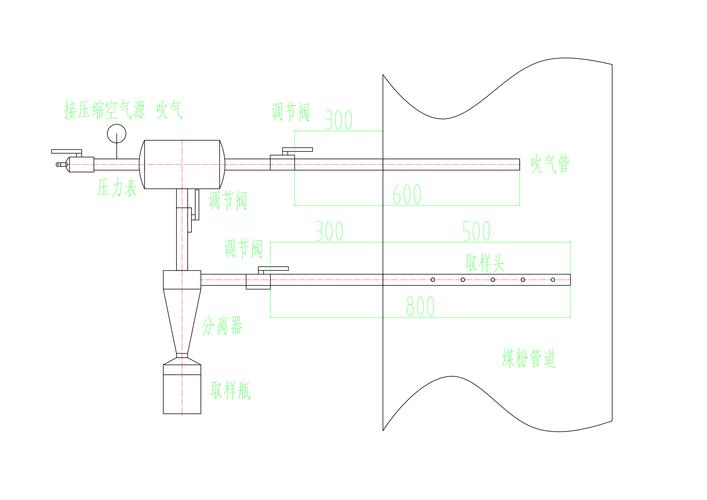
In july 2009, after a pass of 168h, a series of performance tests of the boilers were performed by the units concerned。
4. 1 boiler maximum capacity test
The boiler's maximum capacity test is conducted simultaneously with the vwo test. The boiler slowly increased its capacity on the basis of the 660 mw load until the main flow (consistent with the engine's measured main flow) reached maximum contribution flow of 2012. 68 t/h, above the guaranteed value of 2000t/h, and the side pressure of the soda was also within the guaranteed range, at which time the counterpart group load was 698. 6 mw. During the lifting process, the boilers received no heat at all and the crew operated steadily。
4. 2 minimum oil outlet test for boilers
On 10 july 2009, at around 2:30, the crew load was 330 mw, at which point the main steam flow was 920. 1 t/h, which transported b
C. D3 grinding. Then began a slow drop in load, which was reduced to 280 mw at the time of the test, due to poor coal on the day of the test. The negative pressure began to fluctuate significantly, and the power plant, for reasons of safe operation, required a halt to the continued load and an increase to 298. 8 mw, at which point the main vapour flow was 846. 9 t/h, greater than the guaranteed value of 700 t/h. The crew was under 298. 8 mw loads, the fire was stable, the flame was bright and the combustion was good, and the test was completed by 5 p. M. On 10 july. It is expected that if the load continues to be down to a minimum cut-off capacity of 35 per cent, it will be noted that the test ash ratio design value for coal species is 7. 3 per cent higher and the heat is 3. 53 mj/kg lower than the design value, and that the test coal species are poor。
4. 3 nox emission concentration test
The mean emission concentration of nox was measured at brl at 497. 0 mg/m3 (o2 = 6% time) and the implementing agency sofa 2 failed in the test and could not move, and the average emission concentration of nox should be lower if the implementing agency was normal。
4. 4 general description and analysis of the test
The efficiency of boilers is 92. 9 per cent, and the carbon content of fly ash is 1. 5 per cent, while that of poor coal boilers, which do not use blind burners, is about 91 per cent, with a minimum non-oil stable combustion load of 50 per cent - 60 per cent and fly ash of 3 per cent - 5 per cent. As a result, the use of combustion designs for blinds and v-shaped blunts has resulted in significant improvements in boiler efficiency, a significant reduction in the minimum non-oil stable combustion load and in the carbon content of fly ash。
The application of the low-load stabilization effect of coal powder separation combustion techniques to low-volatilization poor coal combustion units was good and the project was designed to be successful and achieve its intended purpose, with significant economic benefits. When coal powder furnaces are used for thin-separators, their most significant macro-level features are stable combustion within the furnace, wider adaptation to coal species, increased combustion efficiency and lower fly-ash flammable content。
As mentioned earlier, horizontally concentrated coal powder burners (branded windows) have performed well. It has shown great vitality in addressing all aspects of efficiency, stability, prevention of slags and low n-ox emissions at the same time. Because of the ease of matching this technology with existing combustion equipment and the simple structure and low cost, the boiler need not be changed, the technology will be widely applied。
In addition to the use of blind enrichment techniques, the proper reduction of coal powder detail and the improvement of the evenness of coal powder could be more conducive to the burning and steady combustion of coal powder and the depletion of coal powder. At the same time, due to the reduced fineness of coal powder, secondary wind distribution can reduce the generation of nox by reducing the volume of wind in the sofa sector, as appropriate。
It is expected that, as theoretical research deepens and problems with burner applications continue to be solved, enrichment coal powder combustion technologies will increasingly contribute to the development and application of new technologies。