The digital transformation of hospitals is no longer simply a system-building exercise, but rather a profound integration and efficient use of data and knowledge. The establishment of a high-quality hospital knowledge system with full-process data governance is a core initiative for sedimentary medical knowledge, the transfer of business management experience, and such visible knowledge, with textbooks, guides, standards at its core, is an important foundation for hospital development. Large models, as technology carriers with hidden intelligence capabilities, allow for the efficient deployment and intellectual generation of visible knowledge through technological means. Both form a two-wheel drive of “knowledge + capacity” to leverage health services and to lay the foundation for innovative hospital development。
Why? Knowledge systems are the core foundation, large models are capacity-supported, and synergies are hospital development bottom gas
The development of hospitals depends on the accumulation and transfer of knowledge, and the construction of smart hospitals requires more systematic knowledge systems as a “smart hub”, supported by a large model of critical capacity to activate the hub, whose synergistic application makes the intellectual development of hospitals even more minimal。
Knowledge systems are a precise and credible source of knowledge for large models, carrying industry consensus and determining the professionalism and reliability of large models, which define professional boundaries and provide an authoritative basis for their application; large models are intelligent application capacity vehicles for knowledge systems that transform static knowledge into dynamic service capabilities through algorithms and reasoning, achieve efficient retrieval and landscapeization of knowledge and give real value to knowledge systems. Both are mutually reinforcing and cannot be separated。
From a clinical point of view, the knowledge system is an important guarantee of precision, with consolidated authoritative clinical guidelines, drug knowledge, testing standards, etc., providing basic knowledge support to health-care providers, while large models quickly access these elements, providing real-time support for clinical decision-making and reducing clinical deviations. From the point of view of hospital management, the business experience, management norms, etc. In which knowledge systems are deposited, etc., provide a framework for operational management. Large models, in turn, contribute to the scientificization of management practices through intellectual excavation of these knowledges。
In a context of increasingly stringent privacy protection requirements for medical data, locally deployed knowledge systems and large model applications not only allow for the safe use of local knowledge in hospitals, but also allow the results generated by large models to fit into the actual hospital context and truly bring about a deeper integration of the “health + big model”. The synergy between knowledge systems and large models is a necessary path to the transition of hospitals to intellectualization. It is a key to boosting core competitiveness and pre-empting innovative development. It is based on knowledge systems and uses large modelling capabilities to keep hospitals intellectually stable。
Build what? Multiple taxonomy builds a visible knowledge system and adapts large models to the full landscape
The hospital knowledge system is a comprehensive system of carrying knowledge, not a single collection of knowledge, covering the multiple dimensions of clinical, management, experience, documentation, etc., and is built under the leadership of the corresponding operational units to ensure professionalism and accuracy. Its core objective is to provide systematic and standardized knowledge input for large models, so that the capabilities of large models can be fully realized within an authoritative knowledge framework。
1. Core clinical knowledge, protective medicine
As the core building block of the knowledge system, direct service to clinical treatment is the core source of knowledge for major model clinical applications. Pharmacology, clinical guidance bank, case bank, testing library, surgery, nursing, etc., integrate knowledge of clinical aspects in the form of manuals, norms, standards, etc., provide accurate clinical input to large models and support clinical operations and clinical decision-making by health-care personnel。
2. Business management decision-making knowledge for precision management
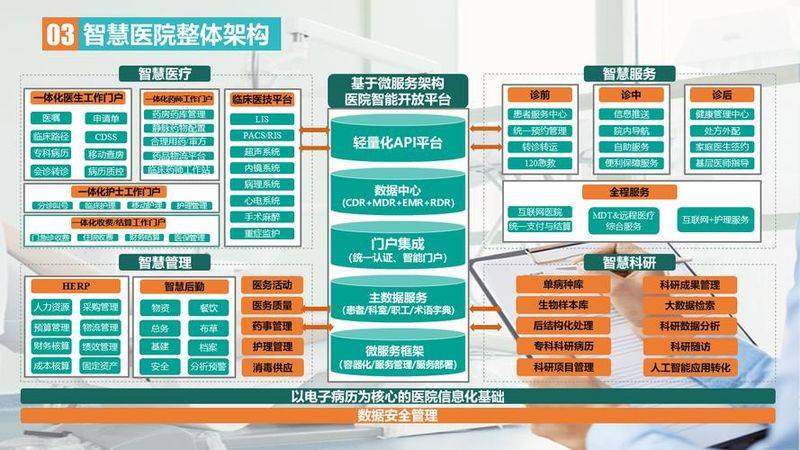
Operating as a “smart staff officer” for hospitals, in collaboration with the information, operations and so forth, knowledge covers personnel master data, resource management, health-care clearance, quality control, etc., identifying various management standards and rules, providing a basis for the management analytical capacity of the large model, and promoting a shift in hospital management from an “experience” to a “data type”。
3. Knowledge of experience and results, transmission of hospital wisdom
It is a unique invisible asset of hospitals, which translates the best operational experience and clinical practical skills of the institutions ' departments into standardized and visible content, making individual experience the collective wisdom of hospitals. It also includes the results of the research carried out by workers, such as academic papers, research results, patent technology, etc., which highlight the scientific power of hospitals and provide an exclusive reference for scientific innovation in large models。
4. Public correspondence and institutional knowledge, regulating in-house management
(c) to incorporate the salient elements of hospital documents, internal management systems and workflow norms, to achieve centralized management of documents and systems, easy access to them, to ensure that the large models are always consistent with the requirements of the system when managing within the service establishment, to ensure that the work of the entire institution is carried out in accordance with the rules and to raise the standard of management。
How? Science provides a visible knowledge system and a synergistic system between knowledge systems and large models
The hospital knowledge system is built in conjunction with large models, not as a simple stacking of content or technology, but as a system project, at the core of which is the development of standardized knowledge systems, combined with the technical requirements of large models, the matching of competencies, the ability of large models to understand and mobilize in-house knowledge, the multiplication of responsibilities, data governance, technical suitability and full life cycle management, and the building of a synergistic system for appropriate hospitals。
1. Clarifying section responsibilities and building divisions ' responsibilities
In accordance with the principle of “specialization to the professional”, responsibility for the building of the various sections is assigned to ensure the professionalism and accuracy of the knowledge system: the pharmaceutical section leads the development and updating of drug knowledge; the information section is responsible for building knowledge of basic data and systems interface; the clinical section leads the development of specialized medical treatment, clinical knowledge of cases, etc.; and the administrative section is responsible for integrating knowledge of correspondence, systems, operational management, etc. Each section has developed a pattern of “a clear division of labour and teamwork” and has built a high-quality knowledge base for the larger model。
2. Integration and standardization of multi-source data
Hospital data are based on a wide range of structured data from operational systems, as well as non-structured information such as medical guides, correspondence, etc. A unified knowledge management platform is needed to verify the uniqueness and accuracy of structured data and harmonize data standards; for non-structured data, the synergetic technological pathways are created through optical character recognition (ocr) and conversion to formats that facilitate the analysis of large models, using natural language processing (nlp) techniques and medical knowledge mapping (medical kg) to standardize data and align terminology, provide a high-quality knowledge base for large models to access enhanced generation (rag)。
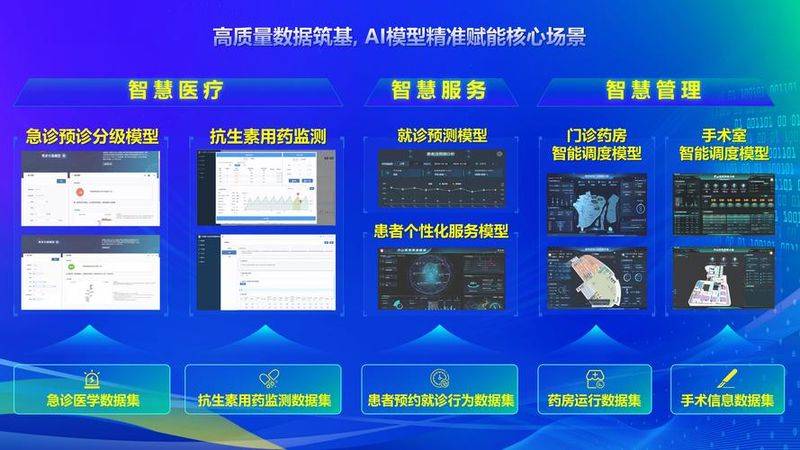
3. Constructing a three-dimensional synergetic model in conjunction with large model technologies
Using the “local knowledge system + large model + model fine-tuning” technology combination model, the precision of intra-institutional knowledge transfer and intelligent generation is achieved. Once basic knowledge systems are put in place, the ability to mobilize knowledge systems can be enhanced through the use of data governance to transform personalized knowledge into formats suitable for learning in larger models, by monitoring fine-tuning and enhancing learning fine-tuning, bridging the gap between generic large models and local knowledge systems in hospitals, so that larger models can be based on knowledge systems, producing accurate and traceable responses, and large models adapted by rag。
4. Development of life-cycle management and dynamic updating of quality assurance
Building knowledge systems is a long-term ongoing process, requiring a life-cycle management mechanism for knowledge collection, validation, dissemination, updating and obsolescence, as well as professional vetting teams to ensure the authority and accuracy of knowledge systems. Hospitals need to update the content of their knowledge systems in a timely manner, in accordance with clinical guidelines, institutional adjustments, business developments, etc., so as to avoid “modernity of knowledge and conflict of knowledge”, so that large models can always obtain up-to-date and accurate knowledge inputs and preserve the professionalism of their intellectual abilities。
How? Focus on detail to maximize the effectiveness of knowledge systems in synergy with large models
Building synergies between knowledge systems and large models is only the first step, and it is the safe and efficient application of the two-wheel-drive value of “knowledge + capacity” that is fully activated. In doing so, hospitals need to focus on data security, back-up management, cost control, while at the same time encouraging individuals to sink their knowledge and develop a good pattern of “hospital + personal typologies”。
1. Secure information lines to protect core data
Medical data and classified information are relevant to patient privacy and hospital development and are a red line for synergetic application. Access rights need to be strictly established, with encryption of classified information and “specialized, hierarchical access”. At the same time, localized deployment models are used to ensure that both knowledge systems and large model applications are within a manageable safe environment, that hospital knowledge is secure from the source and that large models operate within a safe framework。
Rationalizing privatization deployment for practical value-for-value
The privatization of knowledge systems in conjunction with large models is costly to deploy, and hospitals can move forward gradually, taking into account actual needs, to improve the functionality of knowledge systems and the capacity of large models to apply them in a phased manner, integrating them into clinical, operational management, scientific teaching, etc., in order to activate the value of knowledge systems through large models, increase the efficiency of treatment, reduce management costs, promote scientific innovation and achieve a virtuous cycle of inputs and outputs。
3. Building knowledge industry patterns to enable healthy china strategy
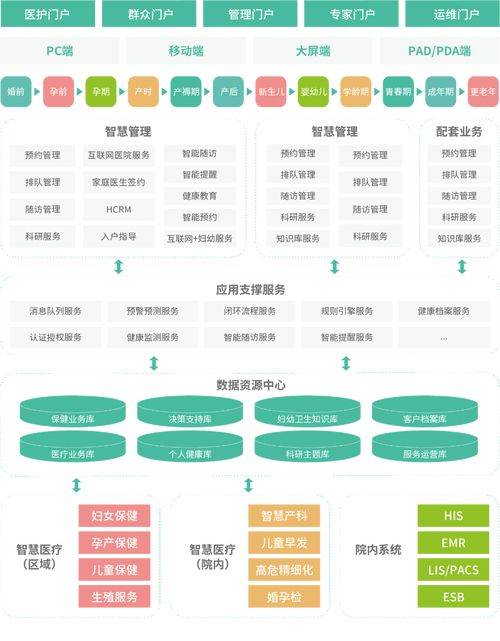
The accumulation of knowledge and the release of value from hospitals require socialization across the boundaries of the hospitals. Based on the core areas of hospital management, existing knowledge systems are professionally classified and standardized and modularized. Hospitals use data governance techniques to embezzle knowledge, identify ownership, standards and application norms for knowledge assets, and create tradable and reusable data assets for public circulation. Such an approach would effectively recover the cost of building a knowledge base system, provide feedback on the value of knowledge inputs, and provide peer-to-peer, professional knowledge system support to hospitals at all levels, particularly at the grass-roots level to address such challenges as lack of expertise, enable them to rapidly upgrade their capacities and management, and enable quality medical knowledge resources to be shared and empowered across institutions and regions。
The building of hospital knowledge systems in the age of large models is both a technological innovation and a knowledge transfer. Hospitals need to be highly valued, scientifically constructed and conscientiously operated, with knowledge systems being identified as the central vehicle for carrying knowledge and large models as an engine of ability to activate knowledge values. The twin-wheel drive of “knowledge” and “capacity” has led to the emergence of a professional and intellectual development path in a wave of intellectual transformation that provides intellectual support for the strategic fall of healthy china。
(author: department of data and information, east to county general hospital, anhui province)
Chima 2026 link
1. Notification of the chima 2026 conference
2. Chima 2026 book fair
3. Chima 2026 short video collection set
4. Chima 2026 round
5. Seventh cybersecurity skills competition
6. 30th chima annual collection of old objects