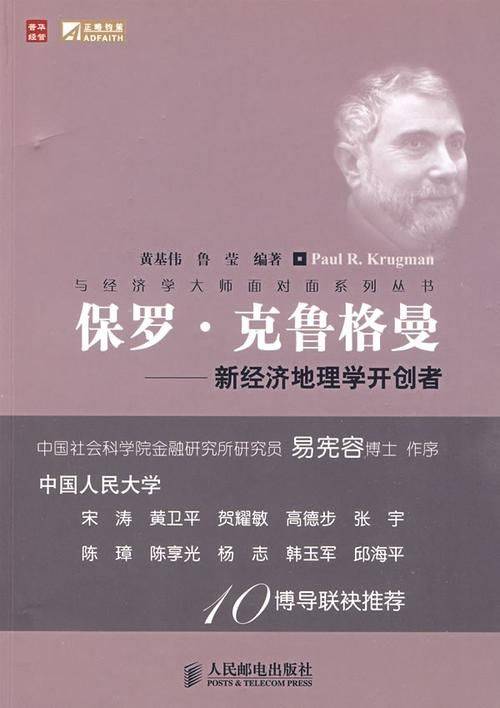
The “centre-outside model” of the new economic geography model of krugman provides an overview of the new economic geography model of krugman, which emerged from the 1990s and is mainly based on the theme of spatial convergence of economic activity. Its underlying theory is whether economic activity will be spatially concentrated or fragmented, depending primarily on who dominates both the motivation for industrial concentration and the reduction of the centrifugal power of industrial concentration. The driving forces for the geographical concentration of industries include, inter alia, the effects of market size, adequate labour markets and purely external economics. Industrial concentration can facilitate the generation of a sufficient labour market, especially a skilled labour force, while also providing a wider employment space for the labour force. Through the spillover effects of information, regional concentration of economic activity creates a purely external economy. The centrifugal forces that contribute to the decentralization of economic activity include the inflexibility of elements, tenancy and purely external non-economicity. The element of non-mobility refers to the fact that land and natural resources are determined to be non-mobility due to natural conditions, and that labour is not free to move internationally because of country-specific constraints, which are both supply-side and demand-side forces hindering industrial concentration, since the production of enterprises must go where they have labour. The creation of decentralized markets by decentralized elements will provide incentives for some enterprises to choose the production of goods close to consumers. The concentration of economic activity has been accompanied by an increasing demand for land in the region, with the result that higher land rents have been lifted, hampering further concentration of economic activity. A further concentration of economic activity, on the other hand, would create a purely external non-economic character such as congestion. The krugman model, based on the theory of non-linear dynamics and using research methods such as incremental and incomplete scale compensation, fixed rates of transport costs, process evolution and dynamic simulations, establishes three basic models, namely, centre-outside models, historical and anticipated models and regional specialization models. Based on a comprehensive review of the literature on the new economic geography model of krugman, this paper focuses on one of the most representative models, namely, the centre-outside model. Centre - the problem to be solved by the peripheral model is why manufacturing is concentrated in some developed regions rather than in relatively less developed ones, in two areas with exactly the same external conditions, where there is a interaction between pay increases, population movements and transport costs. To solve these problems, the model starts by assuming that there are two regions and two sectors in the world economy. Both regions have the same preferences and technologies, i. E. The same initial conditions. There are two sectors in the world economy: a fully competitive agricultural sector with constant pay, and a competitive manufacturing sector with increasing pay of scale. Each region has two factors of production, each of which serves a specific sector, i. E. Farmers can only work in agriculture