2008 nobel prize for economics
The most important contribution of krugman in the field of international trade is the creation of a model for a new theory of international trade based on economies of scale and a state of imperfect competition, bringing together the ideas of many scholars within a framework, thus creating a genuine convergence. In the area of economic geography, one of krugman's major contributions was to link external economic and regional industry concentrations and trade, and his emphasis on imperfect competition and financial externalities also revealed the limits of the concept of externalities in the traditional economic geography literature. In addition, krugman recognizes that regional economic development is a historical path-dependent process。
Ho deok-hyun, wang dynasty, wu bai
On 13 october 2008, the royal swedish academy of sciences announced the award of the 2008 nobel prize for economics to paul r. Krugman, an american economist and professor at princeton university, in recognition of his outstanding contribution to the “trade modes and economic activity area” study。
New krugman trade theory and its development
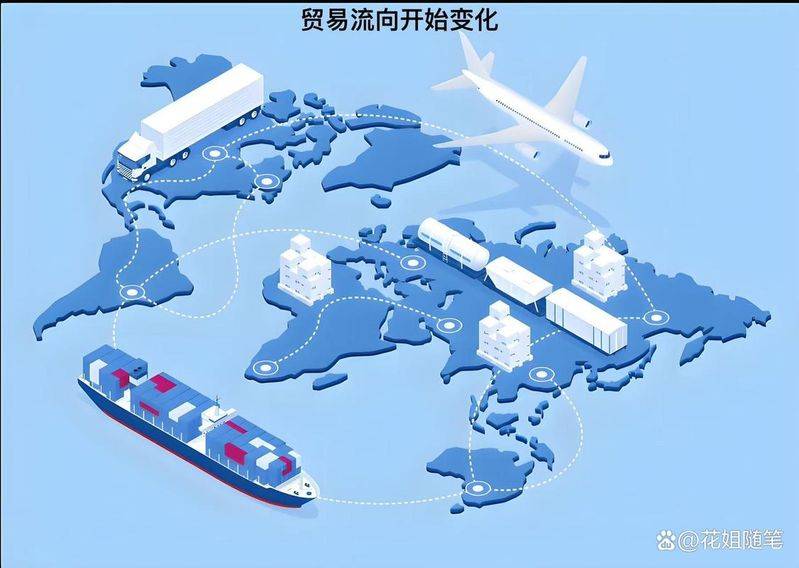
In 1977, dick sitt and stiglitz published a paper in the united states economic review entitled “monopoly competition and product diversification”, which created a dilemma between economies of scale and diversified consumption (the d-s model). It is assumed that there are endless economies of scale in production, while consumers have a preference for diversified consumption. In this way, the smaller the variety of products for producers, the better for consumers, the greater the variety of products, creating a dilemma. However, because of economies of scale, market competition can weigh the dilemma and achieve a certain balance of monopolistic competition. The conclusion was that an expanded, unified market would be better placed to take advantage of economies of scale, thereby increasing the space for resolution of the dilemma. It is easier to achieve a balance because trade expands market size to the world as a whole and increases opportunities for more diversified and cheaper products. According to that logic, the pursuit of economies of scale could lead to international trade even if there was no li gato comparative advantage. Since then, the d-s model has provided a new direction for further theoretical research on international trade。
Indeed, in the late 1970s, a number of scholars, including krugman, dickett, norman and lancaster, came to a relatively unanimous conclusion independently that, even without comparative advantage, monopolization of competition and economies of scale could lead to trade. But among the people, only krugman has clearly and forcefully expressed this revolutionary view, which was perfected in his 1979 paper, “incremental pay, monopolies competition and international trade”. This 10-page paper not only illustrated the fundamentals of the new trade theory, but also laid the foundation for krugman's subsequent integration of factors of production and location into the general equilibrium analysis and the development of innovative economic geography. Based on the d-s model and chamberlain's monopolistic competition model, krugman argued that even countries with similar factor endowments could still generate trade through increased pay on a scale. In krugman's own words: “trade is not necessarily a technological or factor between countries. Rather, trade is likely to be only one way of expanding markets and promoting economies of scale, and its role is similar to that of labour force growth and regional convergence.”
Based on krugman's research, studies on the impact of economies of scale pay and monopolistic competition on trade patterns have begun to enrich, and these models are more complex and sophisticated than those of krugman in 1979. However, he was the first to improve his model. The 1980 krugman paper, economies of economies, product differences and trade patterns, further introduced the element of transport costs, thus making its original model more relevant. For analytical purposes, krugman views the transport product as an “icicle”, i. E., only a portion of each unit's product destined for the field arrives at its destination, while the rest is consumed in transit. Since then, krugman has paid more attention to the central effect of the market, which is that enterprises tend to focus or be located in regions with larger market shares. This is easy to understand, as enterprises are more willing to operate in the regions with the largest market size where there are increasing returns and transport costs. Concentration in a given region can make economies of scale more fully effective and reduce transport costs. Of course, krugman's new trade theory does not stop there. In 1983, krugman published the “new theory of trade between industrialized countries”, applying the industrial organization theory to international trade to analyse intra-industry trade, the importance of which can be seen in two ways: the analysis of intra-industry trade by combining economies of scale with comparative advantages, and the analysis of technological competition theories that may help to illustrate the international competition dynamics of knowledge-intensive industries. Through the paper, krugman not only further elaborated on the theory of intra-industry trade, but also earlier on the theory of technological competition。
While krugman's 1979 and 1980 papers provide new interpretations of trade patterns based on the principle of monopolistic competition and pay for scale, how do the new elements interact with those of traditional trade theory? Krugman did not explain in these two papers. In follow-up studies, integrated models were provided by lancaster, 1980, dixit & norman, 1980 and krugman, 1981; and improved models were provided by helpman, 1981, halpman and krugman, 1985. These efforts, which have led to the further integration of new and traditional trade theories, have been very interesting, as they have made trade patterns between countries predictable and have provided the basis for further empirical empirical research on both models。
Research in the field of empirical evidence is increasing as new trade theory matures and models for forecasting trade patterns are enriched. The empirical study of 14 industrialized countries by helpman, 1987 confirms the validity of the new trade theory. Reamer and levison (leamer & levisohn, 1995), after comparing trade between developed countries (consumer preference for diversification, firms can offer diversified products) and between underdeveloped countries (products are provided by monopolists, and diversified products are not important), found that trade flows support both theories. They concluded that, in addition to the reasons for factor endowments in traditional trade theory, the growing importance of new trade theory and product diversification were important factors in shaping the structure of trade in the real world. In addition, antviler and antweiler & trefler, 2002 confirmed the impact of economic size on trade patterns and found that about one third of enterprises could be classified as enterprises with increasing pay on a scale. A study by evenett & keller, 2002 shows that the real world can be well explained by a combination of factor endowments and scale increases。

New economic geography of krugman and its application
Elemental flows and trade have long been seen as substitutes, and factor price differentials resulting from trade barriers will facilitate the movement of capital and labour between regions. If trade did not exist, the larger regions would provide better welfare for their inhabitants, as it could provide more diversified products, leading to migration from small to large regions. As the population of the larger regions continues to grow, its appeal to the inhabitants of the smaller regions will continue to grow and, without taking immigration restrictions into account, all populations will be concentrated in regions with larger populations in the early years. It is worth noting that if there is no difference between regions, the process is triggered by differences in population size at the initial stage. If the region is different, for example, in terms of labour productivity, this may create an ineffective balance. In other words, if productivity is lower in a region where the initial market size is larger, population movements will lead to a concentration of the entire population in the larger region where productivity is lower。
It should be said that this idea was reflected in krugman's 1979 paper. Moreover, this idea has since been modelled by scholars, such as abdel (1988) and fujita (1988), who, on the basis of the d-s monopolistic competition model, have introduced industrial clustering into the model and extrapolated the balanced model of location. However, their analysis did not address agricultural factors and population movements between regions. It was krugman who gave a reasonable explanation for these issues, and 12 years later, in his 1991 paper, “remuneration growth and economic geography”, krugman created a fine “centre-periphery” model that laid the foundations for a new economic geography。
The centre — outer space — was first proposed by argentine economist raúl prewish in 1949 to analyse the world economic system at that time. The “centre” is composed mainly of western developed countries, characterized by homogeneity and diversity in production structures; the “outside” is the vast majority of developing countries, which exhibit different and specialized production structures. In 1966, j. R. Friedmann, a regional planning expert in the united states, presented a more systematic presentation of the centre-nearing theoretical model based on the study of the evolving characteristics of regional development in venezuela, based on theoretical studies of interregional economic growth and interaction by g. Myrdal and a. O. Hirschman and others. Since then, the subject of theoretical research on the centre's periphery has been extended from the space economy to all levels of social life, i. E., it exists not only between several different regions, but also between different industrial sectors and between different types of enterprises。
The krugman “centre-outside” model considers an economy in which only the agricultural and manufacturing sectors are considered, assuming that agriculture is fully competitive and produces a single homogenous product, whereas the manufacturing sector is a monopolistic, supply-intensive and differentiated product with increasing returns; the two sectors use labour as a separate resource: agriculture employs elements of labour that are non-mobility, while workers in manufacturing are free to move; agricultural products have no transport costs, while manufactures have “elctic costs”. The evolution of the economy may lead to patterns such as “centres” in manufacturing and “outsides” in agriculture when three conditions are met, namely, that transport costs are low enough, that there are a large variety of manufacturing products and that the share of manufacturing is large. This would explain why, of the two initial symmetrical areas with exactly the same initial conditions, one can accumulate through self-reinforcing cycles and become a relatively developed centre of gravity, while the other becomes a relatively backward periphery. The mechanisms for economic evolution in the model are the three economic effects determined by the producer's production location, namely forward linkages, back linkages and market crowding effect. The first two of these effects are directed towards the heart, while the third is centrifugal, i. E., inhibiting the trend towards convergence. At present, economic activity tends to converge in the region when both have greater centrifugal power than the market crowding-out effect。
Centre-outside models stimulate research on space economics and make economic geography part of mainstream economics. Central-outside models in the new economic geography perspective can be applied in studies in many areas, such as tourism, where the meossec and gormsen have observed the evolution of destination tourism from the point of view of spatial structure and spatial dynamics, taking into account the behaviour and type of tourist and the geographical distribution model of the tourist. Hills, lundgren and britton, among others, have directly developed models of the centre-outside theory, emphasizing the dependence of the periphery on the centre. Weaver conducted case studies on trinidad and tobago and antigua and barbuda in the caribbean sea area using a centre-outside model. It is worth noting that centre-outside models can also be used to study why some commercial services are geographically concentrated in large cities. In the kolko 1999 model, the manufacturing sector was redefined as services, providing not only products for customers and other manufacturers, but also related services. Service enterprises also have similar concentrations of centrifugal and centrifugal forces, which may well result in a central and peripheral layout. As urban economies develop, the tendency for services to gather at headquarters or in the premises of manufacturing firms' research laboratories reinforces the tendency for services to accumulate in metropolitan industries。
Simple evaluation

Building on the lessons and innovations of the aforeman theory, krugman has developed a new set of international trade theories that address the challenges that many traditional trade theories have failed to resolve, such as intra-industry trade, trade among countries with similar resource endowments, market access and international trade, the role of strategic trade policies, the impact and interaction of international capital flows on international trade. The most important contribution of krugman in the field of international trade is the creation of a model for a new theory of international trade based on economies of scale and a state of imperfect competition, bringing together the ideas of many scholars within a framework, thus creating a genuine convergence. In the area of economic geography, one of krugman's major contributions was to link external economic and regional industry concentrations and trade, and his emphasis on imperfect competition and financial externalities also revealed the limits of the concept of externalities in the traditional economic geography literature. In addition, krugman recognizes that regional economic development is a historical path-dependent process. He repeatedly stressed the importance of “historical issues”, arguing that initial conditions and occasional events created specific ways in which industry developed in time and space, and then led to many after-effects through self-reinforcing effects。
Beyond the new trade theory and the new economic geography theory, many of krugman's other studies are equally important for the real world. Before the current nobel prize for economics was announced, and affected by the financial crisis in the united states, it was assumed that this year's nobel prize would be awarded to a scholar in the financial field. In fact, however, krugman's research is by no means limited to these theories. In 1979, krugman's paper, “a model of balance-of-payments crisis”, had already constructed an early theoretical model of the currency crisis, which was later referred to as the first generation of monetary crisis theory, following the expansion and simplification of vlad and gobo. In 1991, under the exchange rate target zone programme advocated by some scholars, krugman published a paper in the economics quarterly entitled “inter-target and exchange rate changes”, creating the first normative theoretical model of the exchange rate target zone. In particular, as early as 1996, krugman predicted directly the outbreak of the asian financial crisis in the book pop internationalism. In 1999, krugman, based on material from the asian financial crisis, published the back of depression economics and presented the famous “triple paradox”, making it clear that countries could achieve only two of the three goals of independence of monetary policy, stability of exchange rates and full liquidity of capital, rather than three at the same time。
On the occasion of the thirtieth anniversary of the opening up of china's economic reforms, and today, when the financial crisis in the united states has spread across the board, it is believed that krugman's academic thinking will, as always, be shining。
(by the institute for financial and economic research of the chinese academy of social sciences)