Xinhua, beijing, january 13th, as the most common basic particle, neutrons may have unusual dark secrets. United states scientists have recently suggested that neutron decay into dark matter particles, and this neutron “dark decay” can explain why neutron life is “not measured”。
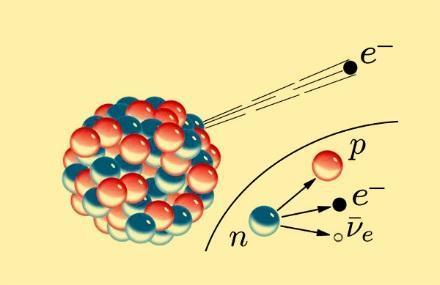
The neutrons that are bound to the atomic core are stable, but the life of the free neutrons is about 15 minutes, and it decays in beta, producing a proton, an electron and an anti-neutron microbe. There are two main methods of measuring the lifetime of free neutrons, one based on decay products and the other on binding the neutrons in containers to measure the remaining neutrons after a given time。
To date, the measurements of the two methods have varied by about 8 seconds, calculated on the basis of decay by about 888 seconds, and by 879. 6 seconds. This may be due to a system error, but it may also be due to neutrons with unknown decay patterns, and counting only beta decay can overestimate neutron lifetimes。
The british magazine new scientists recently reported that two physicists at the university of california in san diego suggested that neutrons could decay into dark matter particles. For neutrons, the "dark decay" occurs about once, producing particles of dark matter of similar mass to neutrons。
According to this new model, dark decay produces single-colour photons and electron-positive pairs of specific energy, and the search for these particles can test the validity of the theory. If supported by evidence, this would be a major breakthrough in dark matter research; on the other hand, determining the lifetime of free neutrons is also important for physics。
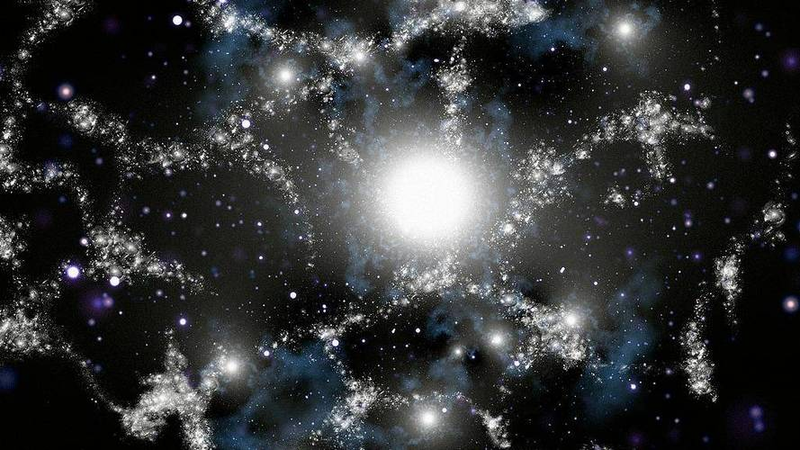
According to current models of the universe, we are familiar with only about 5 per cent of the universe, while about 27 per cent are “dark matter” that does not interact with ordinary matter except gravity, and about 68 per cent are “dark energy” that produces excavation rather than gravity. With regard to the nature of dark matter, the scientific community has put forward a number of scenarios, including some of the hypothetical particles, such as large-mass interaction particles, axes, inert neutrons, etc., but to date there is no conclusive evidence to support any theory。