In international trade, the cif (cost, insurance and freedom) is a commonly used trade term to clarify the division of responsibilities, costs and risks between buyers and sellers in the carriage of goods. Understanding the meaning of the cif is essential for importers and exporters because it directly affects cost accounting, risk taking and logistics arrangements。
Cif means that the seller is responsible for transporting the goods to a designated port of destination and paying freight and insurance. However, the risk of the goods passes to the buyer upon delivery at the port of shipment. Thus, under the cif clause, the seller's liability extends to the production of the goods, packaging, freight for transport to the port of destination and the purchase of transport insurance。
In order to provide a clearer picture of the meaning of cif trade terms and related points, the following is a brief summary and tabular description:
I. Summary of the core meanings of cif trade terms
1. Cif is one of the terms of international trade defined in incoterms 2020。
Cif represents “cost plus insurance and freight” as the trade term for which the seller has the primary obligation。
3. The seller was responsible for arranging transportation and insurance and for paying freight and insurance costs to the port of destination。
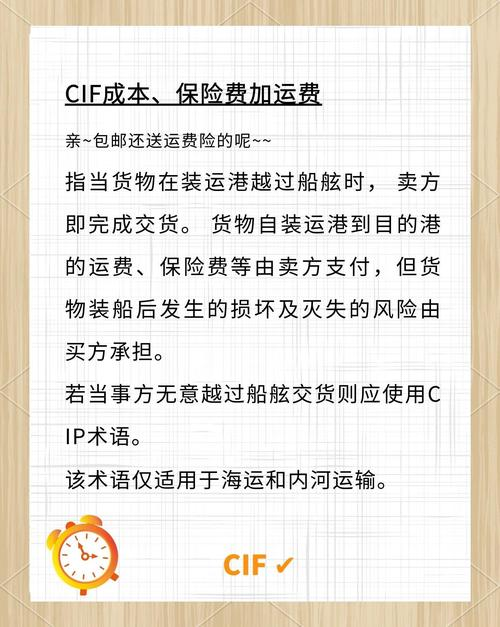
The risk of the goods is transferred to the buyer at the port of shipment, provided that the seller provides an insurance policy to safeguard the safety of the goods while in transit。
5. Applicable to sea or inland carriage and not to other modes of transport。
Comparison of cif trade terms key points
Item
Contents
Full name
Cost, insurance and freedom
Allocation of responsibilities
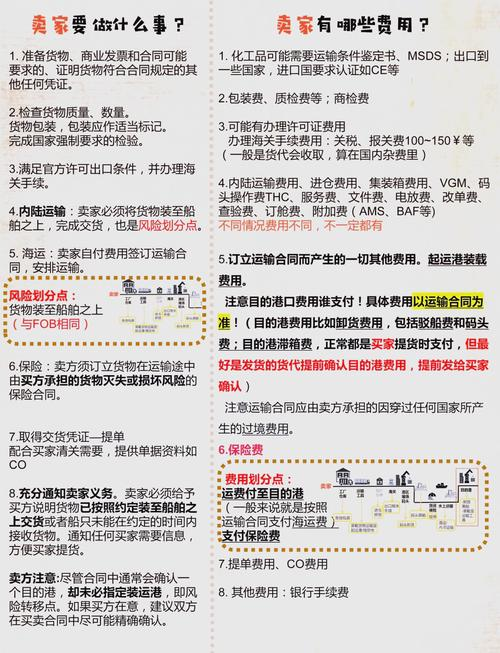
The seller is responsible for transport, insurance and freight; the buyer is responsible for all liability upon arrival of the goods
Risk transfer points
Port of shipment (board or dock)
Means of transport
Naval or inland transportation
Insurance liability
The seller must insure the goods, usually the lowest risk (e. G. The association's goods clause c risk)
Costs borne
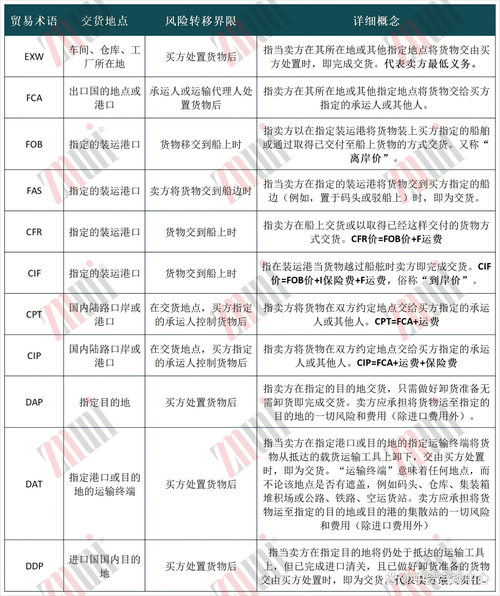
The seller bore freight and insurance costs, and the buyer incurred import clearance and related costs
Documentation
Vendors provide necessary documents such as bills of lading, commercial invoices, insurance policies, etc
Applicability
For maritime transport only
These summaries and tables provide a more intuitive understanding of the meaning of cif trade terms and their practical application. The rational use of the cif clause helps buyers and sellers to clarify their respective responsibilities and obligations, thereby reducing transaction risks and improving the efficiency of international trade。