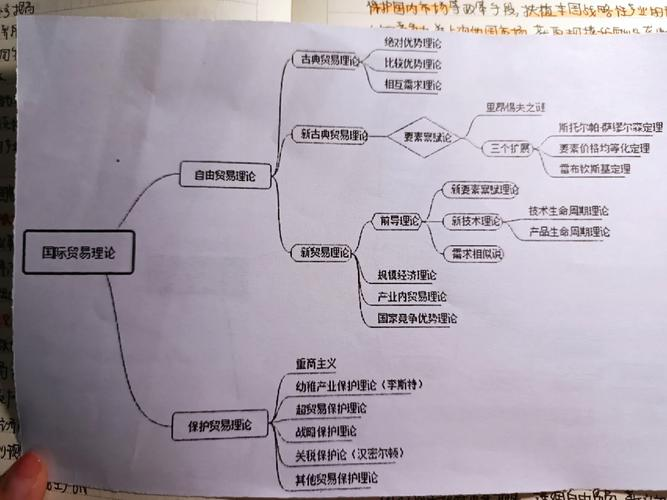
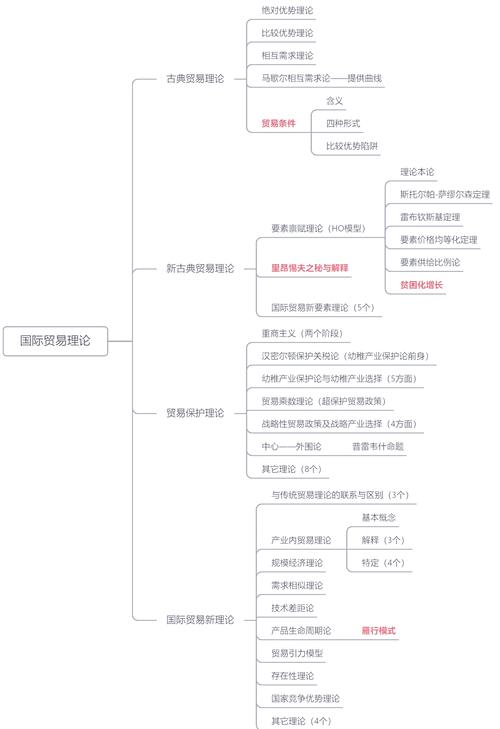
Section iii. New theory of international trade
Around the year 2010, our manpower costs for businesses are already high, with some shoe-making, garment-making enterprises investing in construction in south-east asia and africa. But why did electronics industries move out less? Why aren't some shoe-making and garment-making businesses moving out? It's also a smart phone. Why does china sell phones to europe and america? To answer these questions, the theory of absolute superiority, the theory of comparative advantage and the theory of trade protection do not seem to be well explained, and this section will present several other major new theories of international trade。
I. Thesis of factor endowments
As the foundation of modern international trade theory, classical international trade theory dominated for a century. Until the 1930s and 1940s, many new changes had taken place in international trade, and the corresponding international trade theory had shown unprecedented prosperity. Among them, the swedish economist bertil ohlin, 1899-1979, in his book inter-regional and international trade, adopted the main arguments of his teacher's hekcher doctrine and advanced the doctrine of factor endowment, which is therefore also known as the hekcher-olin theory (hereinafter the heh-russian theory)。
The main ideas of the factor endowment theory are the following。
1. Absolute international differences in commodity prices are a direct cause of international trade
International absolute differences in commodity prices refer to price differences that occur when prices of the same commodity are expressed in national currencies in different countries and converted to prices in the same currency at a given exchange rate. When the price differentials between the two countries are greater than the freight costs of the goods, international trade takes place only when trade is profitable for both parties, from the export of goods from low-priced countries to the high-priced ones。
2. Differences in factor prices arise from differences in factor endowments between countries
Olin divides factors of production into natural resources (including land), capital and labour. Natural resources are divided into five subcategories: agricultural and forestry resources, fisheries and hunting resources, mineral resources, hydropower resources and transport resources. Capital is divided into two subcategories: short-term capital and long-term capital or security capital and venture capital. The labour force is divided into three subcategories: unskilled, skilled and skilled. These factors of production differ from region to region or country to country for natural, social and other reasons, creating price mechanisms in the region or country. This price mechanism is influenced by factors of demand for and supply of factors of production, in which supply is the dominant factor, where supply is relatively abundant and where supply is relatively scarce。
3. The ratio of factors of production determines the establishment of specific industries
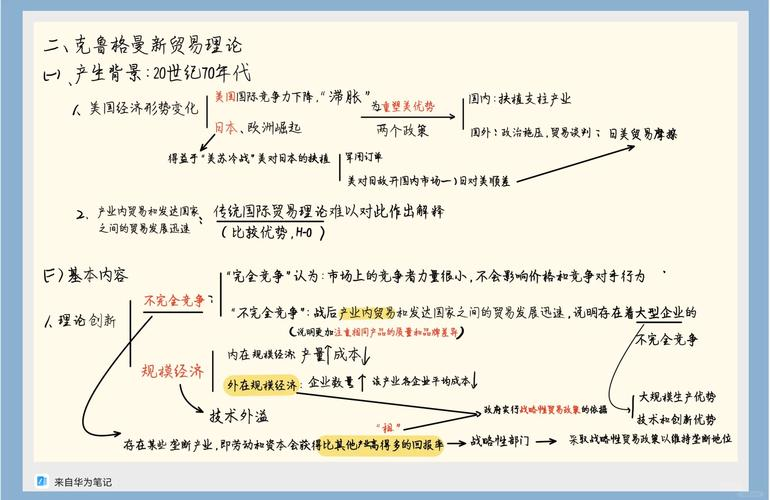
There should be a division of labour between regions or countries in terms of factors and proportions. Olympian concludes that a country produces and exports products that are heavily dependent on the country's abundant production factors at a low price and thus have a comparative advantage; on the contrary, the production of those products that require a large use of the country's scarce production factors is priced at a higher price and exports at a disadvantage. In order to increase the world's production efficiency and make the best use of countries ' resources, each country should produce and export factor-intensive products from its rich production factors and import those from its scarce production factors。
Thinking and training 2. 1
At the beginning of the reform and opening up, china's exports consisted mainly of textiles and clothing (which, at peak, accounted for more than 50 per cent of total exports), and labour-intensive products such as footwear and boxing. Please analyse this phenomenon in the light of the factor endowment theory. The share of exports of such labour-intensive products in china's total exports has now fallen to about 20 per cent. Why
Ii. The enigma of lyons
(i) the presentation of the conundrum of lyons
Wassily leontif, 1906-1999, a modern well-known american economist, founder of input-output economics and winner of the nobel prize in economics。
There is no doubt about the factor endowment theory, according to which a country should export products that are produced intensively using its rich production factors and imported products that are produced intensively using its scarce production factors. On the basis of this understanding, in 1952 he used the input-output analysis method to conduct a specific analysis of the united states foreign trade commodity structure in 1947, with the aim of validating the factor endowment theory. He divided the factors of production into capital and labour, and calculated the amount of capital and labour used to export and import goods per million dollars, thus deriving the intensity of capital and labour contained in united states exports and imports. The calculation is that united states exports are labour-intensive, while imports are more capital-intensive. This test results the opposite of the factor endowment theory. The result caused great shock and confusion in the economics of the west and referred to this conclusion as a “lyonshove retrospect” or a “lyonshove puzzle”。
(ii) various interpretations of the lie of lyons
The test results of lyonshaw's theory of factor endowments have struck economists from all over the world, who have explained the causes of the lyons puzzle from a variety of angles. Two representative theories have been chosen to illustrate them。
1. Skilled labour says
Skilled labour, known as factor non-symmetry, was first proposed by lyonshaw and later developed by the american economist kisin. According to leon schulf, since united states workers are about three times more efficient than other countries, the united states becomes a relatively rich and scarce capital-intensive country in terms of efficiency measures. Why are american workers more efficient than others? According to lyonshaw, this is due to the high level of corporate management in the united states, the higher level of education and training of workers and the greater motivation of united states workers. These arguments can be seen as a prototype of what skilled labour says。
Subsequently, the united states economist kisin studied the issue further. Using united states census data from 1960, he classified united states corporate workers into two categories: skilled and unskilled labour. An analysis of the structure of imports and exports of 14 countries based on these two broad classifications leads to the conclusion that capital-rich countries tend to export skilled labour-intensive products, and countries with less capital tend to export unskilled labour-intensive products. For example, the united states has the highest share of skilled labour among the 14 countries ' exports, with the lowest share of unskilled labour; india has the lowest share of skilled labour and the highest share of unskilled labour. In terms of imports, the opposite is true. This shows the advantage of developed countries in producing goods that contain more skilled labour, while developing countries have a comparative advantage in producing goods that contain less skilled labour. Differences in labour proficiency are therefore one of the important factors in the generation and development of international trade。
2. Human capital
Human capital is suggested by american economists, kenan, among others, who explain the creation of “mysteries” by using differences in human investment. According to kenan et al., labour is of a different quality, manifested in differences in labour efficiency, which are determined mainly by labour proficiency, which in turn depends on the training of workers, education and other related expenditures, i. E. Investment in intellectual expenditure. According to kenan et al., the capital required for the production of goods in international trade includes both physical (material) and intangible capital, namely “human capital”. Human capital is primarily used for vocational education, technical training, etc. The united states has more skilled labour because of its investment in human capital. As a result, united states exports contain more skilled labour. The addition of human capital to the physical capital component would clearly lead to the conclusion that the united states exports capital-intensive products and imports labour-intensive products, which remains consistent with the he-russian factor endowment theory。
Intra-industry trade theory
The concept of intra-industry trade was first introduced by economist walden. In 1960, when looking at trade patterns within the luxembourg, belgium and netherlands economic union, walden found that most of the specialized products produced within the union countries were under the same trade classification. In 1962, in analysing trade data for 36 countries, mcleigh also found that there were greater similarities in the composition of imports and exports between developed and developing countries. In 1966, balasa referred to the phenomenon of trade between different countries within the same industrial sector, i. E. The simultaneous export and import by a country of products from the same industry and the differential competition between countries for products from the same industry as intra-industrial trade。
The content of intra-industry trade theory is as follows。
(1) the diversity of products is the basis for intra-industry trade. Within each industrial sector, products are considered to be different because of differences in quality, performance, specifications, trademarks, number plates, styles, packaging, etc., and even in the same physical form, may be treated as different because of differences in terms of credit conditions, delivery times, after-sale services and advertising. Countries, owing to financial, material and human constraints and scientific and technological disparities, are not able to produce all the differentiated products in sectors of comparative interest, but must choose to focus on the specialization of certain differentiated products in order to reap economies of scale. For example, cars are produced in both the united states and japan, but cars produced in the united states are generally more expensive and expensive; and cars produced in japan are mostly functional, energy-efficient and affordable. This is in line with the consumer preferences of most consumers in both countries, but both countries also have some consumers who like the products of the other country. As a result, intra-industry exchanges between the two countries occur。
(2) similarity of demand preferences is the driving force behind intra-industry trade. The swedish economist lindh noted that different countries had different demand structures and preferences due to different levels of economic development and per capita income. The closer the level of economic development and per capita income of the two countries, the more similar the structure of demand and preferences, the greater the volume of trade between them; on the contrary, it impedes the development of international trade。
(3) the overlap in product and consumption hierarchy between different countries has made intra-industry trade between them possible. For developed countries, because of their similar levels of economic development, the product and consumption hierarchy is broadly the same. This convergence is a prerequisite and basis for intra-industry trade between developed countries. There is also a partial overlap in product and consumption hierarchy between developed and developing countries. This overlap has made it possible to import and export from one another products that differ between developed and developing countries. This is a good explanation for being also a smart phone, why china has a market for mobile phones in europe and america。
Theories of national competitive advantages
In 1990, michael potter, a professor at the harvard university business school in the united states, published a book entitled national competitiveness, which presents the theory of national competitive advantage. For the first time, porter's theory clearly revealed that the fundamental driving force of foreign trade was the pursuit of national competitive advantages, and for the first time, the precise content of national competitive advantages was clearly and systematically articulated。
According to porter, the underlying reason for a country's resilience lies in its ability to gain a competitive advantage in the international market, the key to the creation of competitive advantage lies in enabling the dominant industry to gain advantage, the establishment of which depends on the improvement of production efficiency, and the source of productivity efficiency is the innovative mechanisms of enterprises. At the macro level, the acquisition of a country's competitive advantage depends on four fundamental and two supporting factors that constitute the competitive environment of the country's enterprises and promote or hinder the emergence of a national competitive advantage。
The determinants of national competitive advantage are the following。
(1) production factors. Porter divides factors of production into essential elements and push factors. The former refers to elements that are acquired by birth or are available at great cost, such as natural resources, climate, geographical location and unskilled labour. The latter refers to elements that are costly to obtain, such as infrastructure, skilled labour and high technology. The competitive advantage of a country cannot be sustained on the basis of basic elements, and only countries with push factors can maintain their competitive advantage. Therefore, having an enabler is most important for a country's objective competitiveness。
(2) demand factor. Porter believes that the demand for relevant industries in the domestic market is an important factor influencing a country's competitive advantage. For example, the large demand in the domestic market for certain categories of products in the sector in question will lead to competition and development in the sector, leading to economies of scale and thus to increased international competitive advantage. High quality domestic demand, on the other hand, is more conducive to promoting innovation and improving product competitiveness. If domestic consumers are highly selective and of high quality, they force their firms to seek competitive advantages by improving the quality, sequencing and service levels of their products. Dutch people, for example, are particularly fond of flowers, resulting in a huge flower industry. It is the strong domestic demand for flowers and the high level of selectivity that makes the netherlands the world's largest exporter of flowers。
(3) support for the sex and related industries. For a country to achieve a lasting competitive advantage, it must be supported by internationally competitive suppliers and related industries. It is well known that japan's mechanical industry has a strong advantage, which stems from its world-class digitally controlled bed, electric motor and other related spare parts suppliers. Related industries are those linked by the sharing of certain technologies, the sharing of the same marketing channels or services, or those that are complementary. Industry is often a source of new entrants to an industry, bringing in new resources, new technologies and new competitive approaches, thus promoting innovation and upgrading. For example, in japan, the fax industry, which is highly advanced in japan, is associated with photocopying, photographic equipment, communications, etc., and brings in new technologies and new methods when companies in these industries enter the facsimile industry, leading japan to a rapid growth of the facsimile industry, leading the world。
(4) enterprise strategy, structure and competition. Enterprises in different countries differ in their objectives, strategies and organizational approaches. The strength of the state lies in their choice and matching. National competitive advantages also depend on the degree of domestic competition, which is the strongest incentive to create and maintain competitive advantages。
A little tip
National competitive advantages must also take into account two complementary factors: first, the opportunity factor, which refers to the evolution of the world economy and certain important innovations, technological breakthroughs, exchange rate changes, other contingencies, etc., and second, the government factor, which refers to macroeconomic policies adopted by a government, which influence the evolution of the country's international competitive advantage。
Import case analysis
If china simply relies on the theory of comparative advantage in determining the structure of trade and, indeed, of industry, it will make sustained economic growth difficult. The industrial structure should be optimized, based on the theory of national competitive advantage, and the pre-existing niche industries should be adapted to maintain international competitiveness with high technology. At the same time, new niche industries are being nurtured, leading to the optimization of the country's industrial structure and the emergence of capital- and technology-intensive industries to gain the country's competitive advantage。