


The protection of the environment is our basic state policy. To achieve green development, the state has introduced a series of tax policies to support green, energy-efficient development。
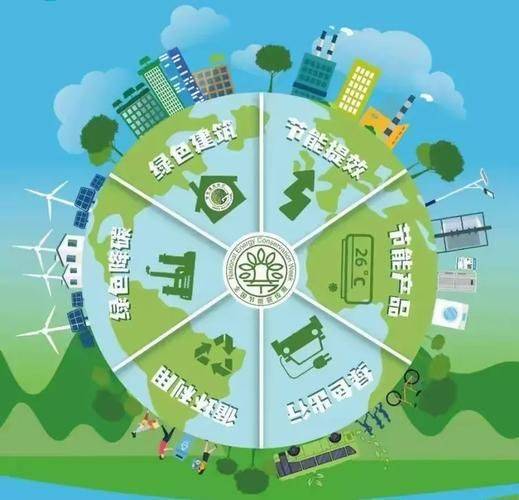
From 10 to 16 july, an energy-saving promotion week was launched in 2023 on the theme “cross-saving, you and i”, so today, let's give you a little insight into these green-energy-related tax policies
Value added tax
Integrated use of resources
1. A general vat taxpayer engaged in recycling of renewable resources sells its acquired regenerative resources, with the option of applying a simple tax method to pay vat at a rate of 3 per cent, or a general tax method to calculate vat。
2. Vat is generally paid by taxpayers who sell their own resources in combination with the use of products and resources in combination with the use of labour and are entitled to vat payback policies。
Contractual energy management project
Energy conservation services companies implement eligible contract energy management projects that transfer value added tax (vat) taxable goods from projects to energy-efficient enterprises, with a temporary exemption from vat。
Energy-saving services companies implement eligible implementing contractual energy management services free of vat。
Corporate income tax
Eligible environmental protection
Energy and water conservation project
From the first year to the third year of the tax year in which the enterprise earns its first production income, the income tax of the enterprise is exempt and the income tax of the enterprise is levied on the fourth to sixth year by halving。
Acquisition and use of environmental protection
Energy-efficient water
Specialized equipment such as safe production
If an enterprise acquires and actually uses special equipment such as environmental protection, energy conservation, water safety, and safe production, as defined in the list of subsidy income taxes for enterprises specialized for environmental protection, the list of subsidy income taxes for enterprises specialized for energy conservation and water conservation, and the list of subsidy income taxes for enterprises specialized for safe production, 10 per cent of the investment in such special equipment may be offset against the taxable amount of the enterprise for the year in question; if there is insufficient credit for that year, the credit may be carried forward for the following five tax years。
Contractual energy management project
The implementation of contractual energy management projects for eligible energy-saving services companies, in compliance with the relevant provisions of the enterprise income tax law, is exempt from corporate income tax for the first to third year of the tax year in which the first income from the production business of the project was earned, and from the fourth to sixth year the corporate income tax is reduced by half at a rate of 25 per cent。
Vehicle acquisition tax
From 1 january 2018 to 31 december 2023, new energy vehicles were exempted from vehicle acquisition taxes. For the period from 1 january 2024 to 31 december 2025, vehicle acquisition taxes were waived for new energy vehicles purchased, of which no more than $30,000 per new energy vehicle would be taxed; and for the period from 1 january 2026 to 31 december 2027, vehicle acquisition taxes would be levied for halving new energy vehicles purchased, of which no more than $15,000 would be taxed per new energy vehicle。
Ship taxes
New energy tankers are exempt from taxes, and fuel-efficient cars are taxed at half。
Environmental protection tax
Agricultural production
Taxable pollutants from agricultural production (excluding scale farming) are temporarily exempted from the environmental protection tax。
Centralized treatment of municipal and rural sewage
Centralized waste disposal
Release of pollutants from sites
The discharge of the corresponding taxable contaminants from urban and rural sewage treatment centres established by law, and from residential waste disposal centres, which do not exceed national and local emission standards, shall be suspended from the environmental protection tax。
Emission concentrations below national and local levels
Required atmospheric pollutants
Or water contaminants
Taxpayers who discharge taxable atmospheric or water pollutants at concentrations below 30 per cent of national and local emission standards are reduced by 75 per cent to environmental protection taxes。
Taxpayers who emit taxable atmospheric pollutants or water pollutants at concentrations below 50 per cent of national and local emission standards are reduced by 50 per cent。



