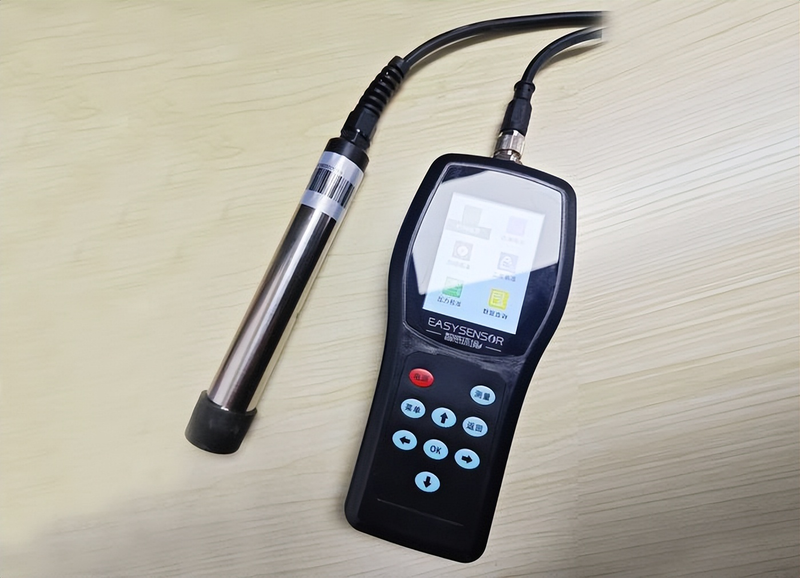
Portable fluorescent oxygen core component: hardware base to achieve detection
Portable fluorescent oxygen is converted from fluorescent fluorescent fluorescent to quantifiable dissolved oxygen concentration data by integrating specific optical components and electronic modules. Its core components consist of five main components, and the synergies of the components ensure the accuracy and stability of the tests:
(i) fluorescent probes (core sensor components)
The fluorescent probe is the core component for achieving fluorescent fluorescent fluorescent and signal perception, and its surface is evenly coated with a special fluorescent substance (commonly used fluorescent, etc.), which is the key to generating fluorescent and acting with dissolved oxygen. In order to avoid contamination and corrosion of the fluorescent material with water samples, while ensuring smooth contact with dissolved oxygen molecules, the fluorescent material is usually enclosed in high-permeability, corrosive inert material (e. G. Sapphire glass), which does not react chemically directly to the water sample and ensures that dissolved oxygen molecules penetrate the material surface in contact with fluorescent material。
(ii) stimulating light source module
The core of the module is the led luminescence diode (led), which functions to launch a specific wavelength of activated light, which is used to stimulate fluorescent material on the fluorescent probe. Depending on the properties of the fluorescent substance, the wavelengths that stimulate the light source need to be accurately matched - e. G., the commonly used luminous fluorescent material, which is usually matched by a light wavelength of 450-470 nm (blue-light band). In order to ensure the stability of flashing light, the module is also internalized into a constant-flow-driven circuit that avoids causing light intensity changes due to current fluctuations, thereby reducing detection errors。
(iii) fluorescent detection module
The module consists of pv detectors (e. G., pv diodes, pv multiplication tubes) and filters, the core function of which is to capture discharge light from fluorescent materials and to convert light signals to telecommunications. Among them, the role of filters is crucial: because the light is activated differently from the wavelength of the ejection (the ejection wavelength is usually longer than the ejection wavelength, such as the 580-600nm red-light band), the filters can filter out the diffused light that is not absorbed by the fluorescent material and allow only the discharge into the pv detector to ensure the purity of the detection signal. The pv detector converts the fluorescent strength into the corresponding current or voltage signal through the pv, which is positively related to the fluorescent strength。
(iv) signal processing module
The original pv output telecommunications numbers are usually weak and noise-containing and need to be scaled up, filtered, model conversion (a/d conversion) etc. Through signal processing modules. The amplification circuits within the modules amplified the detectable range of the weak telecommunications, the filtering circuit removed interference signals such as ambient light, electronic noise, etc., and the a/d conversion circuit converted analogue telecommunications into digital signals for the computational processing of subsequent chips。
(v) data computing and display module
The module is centred on the microprocessor (mcu) and contains pre-corrected stern-volmer equation parameters (e. G., the cylindrical constant ksv). After receiving the digital signals transmitted by the signal processing module, the microprocessor calculates the corresponding dissolved oxygen concentration by the i0-i margin based on the stern-volmer equation; at the same time, some of the equipment integrates temperature compensation algorithms, corrects the effect of temperature on dissolved oxygen saturation concentrations and further enhances detection accuracy. Ultimately, the calculated dissolved oxygen concentration data are presented in the visual form of the display screen, and some equipment supports data storage, wireless transmission。
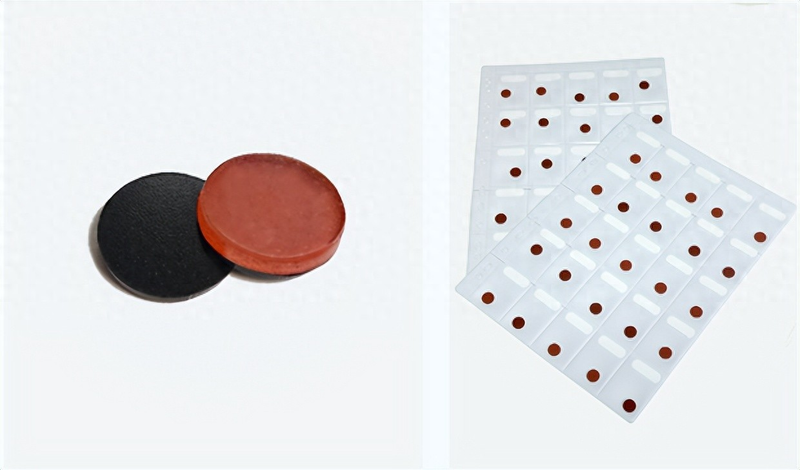
Complete workflow: conversion process from light signal to concentration data
The work process of the portable fluorescent soluble oxygen instrument is essentially a continuous link of "photo signal stimulation - fluorescent fluorescent - signal conversion - data computation" divided into five key steps, without chemical reactions, and only through physical processes:
(i) stimulating light launch and fluorescent generation
When the instrument is activated, the led lamps that stimulate the light source module launch a specific wavelength of the activated light (e. G., 460 nm blue light), which penetrates the inert containment material of the fluorescent probe, irradiating the internal fluorescent material. When the fluorescent material absorbs the light energy, the atom or molecule moves from the base state to the stimulating state; when the fluorescent substance is prepared to return to the base state, without other interference, a certain wavelength discharge light (e. G., 590 nm red light) is released。
(ii) dissolved oxygen initiates fluorescent fluorescent luminium elimination
When fluorescent probes are immersed in water samples to be tested, dissolved oxygen molecules in water samples spread to the surface of the fluorescent probe, colliding with a fluorescent substance in a stimulating state - a dynamic fluorescent process that transfers the energy of a fluorescent substance to the dissolved oxygen molecule, making it impossible for itself to release the fluorescent normally and eventually manifests themselves in a reduced fluorescent strength. The higher the dissolved oxygen concentration, the greater the probability of collision with the fluorescent substance and the greater the degree to which the fluorescent intensity (the level of defusing) is reduced。
(iii) fluorescent signal capture and conversion
Fluorescent (simultaneous) fluorescent through inert containment material after the fluorescent is extinguished and captured by the pv detector in the fluorescent detection module. During capture, the filter filter filters unabsorbed dispersed flash light to ensure that the pv detector only receives the light signal; the pv detector subsequently converts the fluorescent strength signal into the corresponding weak telecommunications number and completes the conversion of the light signal telecommunications code。
(iv) telecommunications processing and digitization
Weak telecommunications are transferred to the signal processing module, where analogue telecommunications are converted from a/d conversion circuits to digital signals by magnifying circuits, filtering wave circuit noise, a process that significantly enhances the stability and readability of signals and provides the basis for subsequent precision calculations。
(v) concentration calculations and output
After receiving a digital telecommunications signal, the microprocessor should first receive fluorescent strength i (when dissolved); at the same time, the non-aerobic calibration parameters contained in the instrument can provide i0 (fluorescent strength in anaerobic environment). Combined with the pre-calculated accelerator constant ksv, the microprocessor calculates the dissolved oxygen concentration in the water sample in reverse by the stern-volmer equation (i0/i = 1 + ksv.); if the equipment has a temperature compensation function, the concentration values will be revised based on the water temperature detected in real time, and the precise data on the dissolved oxygen concentration will eventually be available on the screen to complete the entire detection process。