


The continuity of field operations and the integrity of data collection are directly determined by the sustainability of portable soluble oxygen, which is the core equipment for field monitoring of the aquatic environment. The current portable soluble oxygen is currently mainstreamed with lithium ion or nickel hydrogen batteries, the electrochemical properties of which are clearly required for use and maintenance conditions. Unregulated battery operations not only reduce the lifetime of the battery and reduce its sustainability, but also lead to sudden power outages during field monitoring, resulting in data loss or disruption of operations. This paper, which is based on battery electrochemical principles, combines field-based scenarios for portable soluble oxygen devices, the core principles of system combo battery maintenance with practical methods, and provides scientifically sound technical guidance for extending battery retention and avoiding electricity outage risks in the field。
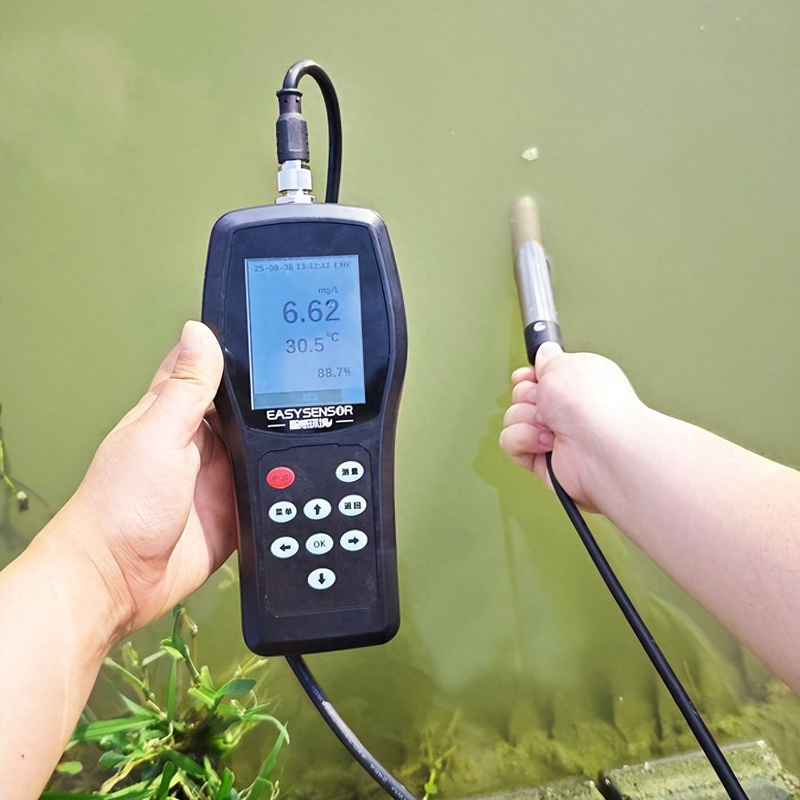
Core premise: clarity of battery type characteristics, precision matching maintenance strategy
Significant differences in the recharge properties, memory effects and temperature sensitivity of different types of batteries are the basis for developing maintenance strategies. The main types of batteries commonly used in portable soluteors are the following:
1. Lithium ion batteries: the current dominant configuration has the advantage of high energy density, no memory effect, low self-emission rate (about 5-10% per month), but in low-temperature environments, capacity decay is significant and overloading and overlay can damage positive and negative materials of the batteries. The core is maintained to avoid voltage and temperature and to maintain a suitable range of 20-80% battery power。
2. Nickel hydrogen batteries: traditional configurations with slightly better cryogenic properties than lithium ion batteries, low cost, but with significant memory effects, with higher self-charge rates (approximately 15-20% per month). The maintenance core is regularly charged to eliminate memory effects and avoid long-term full or deficit storage。
It is recommended that users first look at the product description of the portable solute instrument to identify battery types and rated parameters (e. G. Rated voltage, capacity, charge-to-pay voltage) and avoid performance impairments due to the mismatch between maintenance strategies and battery characteristics。
Ii. Daily maintenance core: basic safeguards for extended continuity
The core objective of daily maintenance is to maintain stability in the electrochemical system within the battery and to reduce the occurrence of irreversible reactions, thereby extending the life of the battery and the ability to continue on a single voyage. There are three starting points:
(i) regulate charging operations to avoid damage risk
For lithium ion batteries: 1 the application of original plant chargers to avoid the use of voltage, current mismatch, third-party chargers to prevent overcharging leading to cell heating and electrolytic decomposition; 2 avoiding deep discharges, which can be charged in a timely manner when the instrument alerts a low amount of electricity (10-20 per cent remaining), which can lead to negative diagnosing of lithium and lower capacity;3 without each charge, the daily use can be as low as 80-90 per cent, and long-term full storage can exacerbate the ageing of positive polar materials, which needs to be filled with electricity only before field operations。
For nickel-hydrogen batteries: 1 discharge cycle (one per 1-2 month) is performed periodically, i. E. First discharge to the instrument automatically shut down, then full of electricity and one-to-two-hour voltage is maintained to eliminate memory effects; 2 avoid frequent shallow flooding, which results in “fiction” of the battery capacity over a long period of time, and a decrease in the actual continuous capacity of the battery; 3 disconnect the power source in a timely manner after the charge has been completed to avoid the excessive heating of the battery as a result of prolonged float。
(ii) optimization of storage environments and reduction of the rate of self-discharge and ageing
The temperature and humidity of the battery in the environment directly affect the self-discharge rate and the electrochemical stability. 1 temperature control: an ideal storage temperature of 10°c-25°c to avoid long-term exposure to high temperatures (>35°c), which accelerates electrolyte decomposition and the ageing of electrode materials; and avoids low temperature storage ((iii) cleaning and protection to ensure good battery exposure
Poor contact between batteries and instruments can lead to unstable power supply and indirectly increase power losses. Regular cleaning of cell contact points and instrument interfaces, use of dry and soft cotton bands for wipe, removal of dust, water stains or oxidizing layers on the surface, and, if necessary, removal of a small amount of waterless ethanol (alcohol) scrubbing, pending drying before installation; 2. Avoiding severe impact, crushing or falling of batteries, preventing damage to their outer casings, internal short circuits and affecting the stability of power supply; 3. If instruments are equipped to replace batteries, periodic inspection of the integrity of the battery's sealing ring is required to avoid short circuits caused by leaking of water vapour into the battery silo during field use。
Special maintenance for field operations: key measures to avoid power outages
The field environment is characterized by high temperature fluctuations, high humidity and lack of access to electricity, and is a high-risk scenario for battery failure. Targeted protective and emergency measures based on routine maintenance are required:
(i) pre-operational preparation: full assurance of the continuation base
1 equivalent predictive operation long enough to fill batteries with electricity 12-24 hours in advance, with lithium ion batteries filled with after-opening power to avoid long-term recharge; nickel hydrogen batteries filled with short-term discharge (about 10 minutes) to eliminate minor memory effects in full-power condition; 2 spare batteries, which need to be pre-filled and placed in specially designed shock-proof packaging boxes to avoid short circuits caused by mixing with metal articles; and 3 check instrument working arrangements to turn off unnecessary auxiliary functions (e. G., light on the back, automatic data upload, etc.), to lower backlighting, automatic switch time to a minimum (e. G., 5 minutes without off) and reduce unit time consumption。
(ii) operational protection: adaptation to field environmental characteristics
Temperature appliance: under low temperature environments (30°c), instruments are avoided with long periods of sunscreen and can be protected against excessive battery temperatures leading to sudden fall in capacity; 2. Protection against humidity: during rain, water-related monitoring, instruments are required to be equipped with waterproof shields to avoid infiltration into battery silos; if batteries are unsustained, they are stopped immediately, batteries are removed and dry surfaces are drained and then checked for normal use; 3. Reasonable use: avoid frequent switches or high power-consuming operations (e. G. Continuous calibration, large data storage) at low battery power levels, which can lead to an instant drop in battery voltage and trigger instrument protection mechanisms to cut off power。
(iii) emergency response: responding to sudden power outage risks
1 carrying emergency chargers such as portable solar chargers, mobile power sources (required to match instrument charge interfaces and voltage) to temporarily replenish batteries when battery power runs out to ensure core data acquisition tasks are completed; 2 real-time backups of data that regularly export monitoring data to disks or mobile devices during field operations to avoid the loss of data as a result of power outages; 3 battery failure screening, immediate closure of instruments, removal of batteries in case of abnormality such as power outburstsing, cell heat, avoidance of continued use leading to battery damage or failure, and priority use of backup batteries to complete operations。
Common areas of error circumvention: safeguarding maintenance effectiveness
In the maintenance of the battery, some of the faults may imply the impairment of the battery's performance, with emphasis on circumvention: 1 error 1: “the new battery needs to be activated and must be full for more than 12 consecutive hours”, modern lithium ion batteries need not be activated deliberately, the plant has been activated and overcharged will damage the battery; 2 error 2: “battery batteries need to be recharged more durable”, only nickel hydrogen batteries need to be discharged periodically to remove their memory effects, and lithium ion batteries need to be discharged in depth to cause irreversible damage; 3 error 3: “repeated insertions at low field temperatures can increase the capacity”, repeated injections can lead to cell contact damage, poor exposure and increase the instability of the power supply, and the correct approach is to take precautions; 4 error 4: “battery drums are still available”, battery drums are a manifestation of electroly decomposition, internal pressure increases, there is a security hazard, and use and replacement of plant auxiliary batteries is not self-destructed。
Product extension
Portable fluorescent fluorescent oxygen instruments in the intellectual environment are based on optimized fluorescent central techniques, carrying self-developed non-expendable high-performance fluorescent film, counteracting the dissolved oxygen concentration by detecting fluorescent signal phase differences caused by oxygen molecules, without electrolytic fluids and frequent calibration, addressing pain points such as traditional electrodes, oxygen consumption, pollution-prone points from their sources, rapid response speeds (t90 /2000/40s), measuring precisions of ± 0. 1 mg/l in the 0-20 mg/l scale range, and automatic compensation for temperature and even salinity from built-in high-precision sensors, which can stabilize at temperatures of -20°c ~ 50°c and complex conditions such as high salt, acidine, etc. The instrument, which is also equipped with an industrial-grade fixed installation and light quantitative handheld equivalent, not only has an industrial-grade design for anti-conservation sealing, anti-pollution, fixed monitoring needs in the chemical, pharmaceutical and water treatment industries, but also portable features such as water-protective grade 500g, ip68 and above, suitable for aquaculture inspections, field emergency monitoring, etc., while supporting the real-time uploading of data and management of multi-equipment networks, helping a wide range of areas to optimize soluble oxygen precision monitoring and process optimization and significantly reduce transportation costs。



