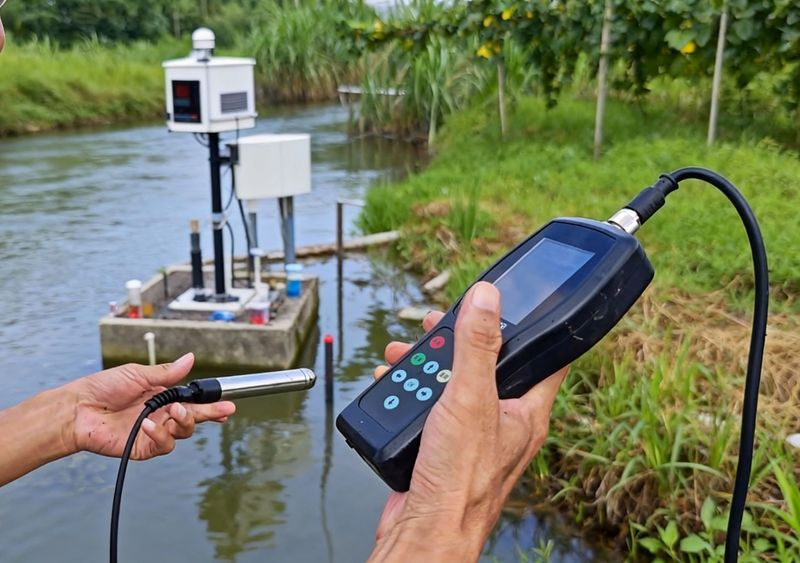
Dissolved oxygen (do) is a core indicator of the health and water quality safety of aquatic ecosystems with levels that directly affect the survival of aquatic organisms, the degradation efficiency of pollutants and the self-purification of water bodies. Traditional electrochemical soluble oxygen monitoring techniques have deficiencies such as membrane contamination, electrodes depletion and response lags, which make it difficult to meet the real-time and precision requirements of modern water quality management. The fluorescent soluble oxygen system is based on the principle of fluorescent outburst, and has become a key technical device in water quality monitoring and precision control systems, based on its high stability, low maintenance costs and rapid response characteristics, for wide application in areas such as water environmental governance, aquaculture and industrial wastewater treatment。
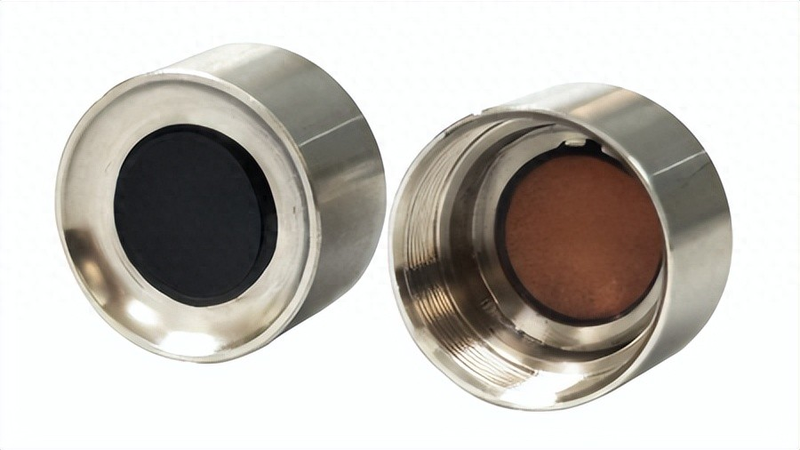
The core principle of fluorescent soluble oxygen monitoring is the use of oxygen sensitivity of specific fluorescent substances: fluorescent probes leap to the agitation state after being activated by light exposure, and when oxygen molecules are present in the environment, fluorescent molecules collide with oxygen to generate energy transfer leading to fluorescent loss. The degree of decomposition of fluorescent strength is associated with a quantitative concentration of oxygen that can be accurately converted to dissolved oxygen content in water by detecting changes in fluorescent life or strength. Compared to the traditional clark electrodes, the technology, which does not require electrolytic fluids, does not consume oxygen, avoids the fundamental problems of electropolarization, membrane congestion, and is highly resistant to the effects of impurities such as sulphides and heavy metal ion in water bodies, monitors accuracy of up to ± 0. 1 mg/l and has a response time of less than 3 seconds, providing technical safeguards for real-time capture of water quality parameters。
In the water quality monitoring system, the application of fluorescent soluble instruments has significantly improved the continuity and reliability of data collection. In surface water monitoring, the instrument can be integrated into an automatic monitoring station or buoy system, providing 24-hour uninterrupted monitoring of dissolved oxygen in waters such as rivers, lakes, reservoirs, combined with supporting parameters such as temperature, ph values, and developing early warning models for eutrophication of water bodies to provide data support for watershed environmental management. In the field of industrial wastewater treatment, biotreatment processes require stringent levels of dissolved oxygen (e. G., a good oxygen tank do needs to be maintained at 2-4 mg/l) and fluorescent soluble oxygen units can dissolve oxygen levels in real-time feedback reactors, provide signals for the dynamic regulation of exposure systems and avoid energy waste due to reduced treatment efficiency or excessive exposure due to inadequate oxygen. In aquaculture, instruments can accurately monitor the content of the farmed water body do, and when concentrations are below the threshold (e. G. 5 mg/l for fish farming needs), automatically trigger the initiation of oxygen-added equipment to guarantee the stability of the living environment of the cultured organisms and reduce the incidence of disease。
The core value of fluorescent soluble oxygen in the precision regulation of water quality is reflected in the achievement of the closed-ring control logic. By linking the instrument monitoring data to the automated regulatory system, a complete closed loop of "monitoring - analysis - decision-making - implementation" can be constructed: the instrument collects dissolved oxygen data in real time and transmits them to the control centre, which conducts data analysis on the basis of pre-set thresholds (e. G. Do standard values for different water quality targets), produces regulatory instructions (e. G., regulation of exposure intensity, initiation of oxygen-added equipment, control of drainage flow, etc.), and the implementing agency responds to the instruction by completing parameter reconciliation and thus achieving dynamic precision control of water quality. For example, in the nitrification process at the sewage treatment plant, real-time monitoring of do concentrations in exposed pools through fluorescent soluble oxygen (hfs) automatically regulates the frequency of operation of the wind-exposers to stabilize the do concentration at 1. 5-2. 5 mg/l in the best range, ensuring both the activity of the nitrified bacteria and reducing the energy consumption and achieving a balance between treatment efficiency and energy consumption。
Portable fluorescent fluorescent oxygen instruments in the intellectual environment are based on optimized fluorescent central techniques, carrying self-developed non-expendable high-performance fluorescent film, counteracting the dissolved oxygen concentration by detecting fluorescent signal phase differences caused by oxygen molecules, without electrolytic fluids and frequent calibration, addressing pain points such as traditional electrodes, oxygen consumption, pollution-prone points from their sources, rapid response speeds (t90 /2000/40s), measuring precisions of ± 0. 1 mg/l in the 0-20 mg/l scale range, and automatic compensation for temperature and even salinity from built-in high-precision sensors, which can stabilize at temperatures of -20°c ~ 50°c and complex conditions such as high salt, acidine, etc. The instrument, which is also equipped with an industrial-grade fixed installation and light quantitative handheld equivalent, not only has an industrial-grade design for anti-conservation sealing, anti-pollution, fixed monitoring needs in the chemical, pharmaceutical and water treatment industries, but also portable features such as water-protective grade 500g, ip68 and above, suitable for aquaculture inspections, field emergency monitoring, etc., while supporting the real-time uploading of data and management of multi-equipment networks, helping a wide range of areas to optimize soluble oxygen precision monitoring and process optimization and significantly reduce transportation costs。