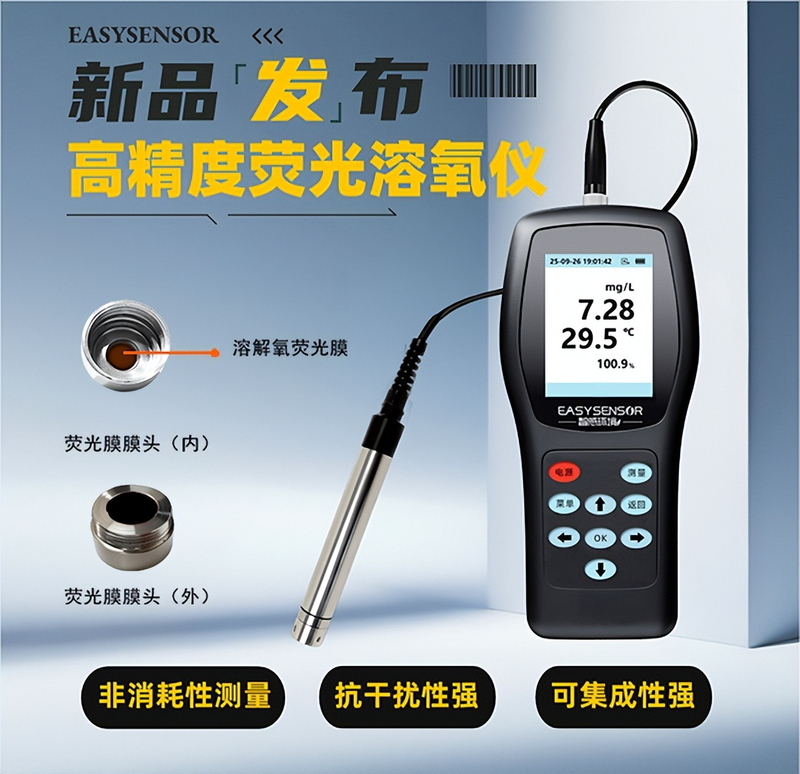
In industrial waste-water biochemical processes, exposed gas pools are the core units of degradation pollutants by active sludge, and dissolved oxygen (do) concentrations are key process parameters for regulating the metabolic efficiency of activated sludge. Appropriate do concentrations (usually 2-4 mg/l) guarantee the activity of aerobic microorganisms and increase the removal rate of pollutants such as cods and ammonia, while high do concentrations lead to waste of energy and low levels lead to anaerobic corruption of sludge and deterioration of treatment. Continuous and accurate monitoring of the dissolved oxygen sensor for water quality is the basis for the dynamic regulation of do concentrations in exposed gas pools. This paper combines the complex and volatile quality of industrial wastewater with five dimensions of sensor selection, installation layout, monitoring systems, transport calibration and data application, building a scientifically feasible continuous monitoring programme for exposure pools do to provide technical support for the optimization of industrial wastewater treatment processes。
Characteristics of industrial wastewater exposure gas pools and monitoring needs
The complexity of the work of industrial wastewater exposure pools and the stringent requirements for continuous monitoring of the do are: first, the complexity of the water quality matrix, the high concentrations of organic matter, heavy metals, acid alkaline, high salinity, etc., in different industries (chemicals, printing, pharmaceuticals, metallurgicals, etc.) and the vulnerability of waste water to sensor contamination and erosion; second, the intense disturbance of water bodies, the strong exposure of gas units, which keeps the water bodies in high stifling conditions, along with the presence of a large volume of aerosols and active sludge, affecting the stability of sensor measurements; third, the volatility of the work, high levels of waste water emissions, intermittent changes in pollutant concentrations, which can result in rapid fluctuations in the concentration of the do, requiring a rapid response capability of the sensor; and fourth, the long-term continuous operational needs, the 24-hour uninterrupted pattern of industrial wastewater treatment, requiring high reliability and stability of monitoring systems, and a reduction of the impact of stationary maintenance。
Based on the above-mentioned characteristics, continuous monitoring of the exposure pool do is required to meet three main core needs: (1) measurement of high accuracy, 0. 1 mg/l error between key areas of 2-4 mg/l to ensure precision of process regulation; (2) industrial wastewater performance that is anti-pollution, anti-disturbation, and is suitable for high permutation, corrosive, high salinity;3 continuous and stable operation, long life of sensors, and monitoring systems to support real-time data transmission and unusual warning, and to safeguard process continuity。
Selection of core equipment: scientific adaptation of water quality dissolved oxygen sensors
For the technical characteristics of industrial effluent exposure gas pools, the three core indicators of “contaminated resistance, measuring stability, and suitability of work conditions” need to be given priority consideration for the dissolved oxygen sensor selection, which, combined with the sensor's working principles and technical parameters, is recommended for the online dissolved oxygen sensor fluorescent, based on the following parameters:
(i) sensor type selection: fluorescent over traditional electrodes
Traditional electrodes (spectroscopy, original battery) sensors rely on electrolyte and electrochemical reactions to measure do, with significant limitations in industrial wastewater exposure pools: electrolytic fluids are susceptible to pollution failures, membranes are susceptible to activated sludge, organic matter is blocked, frequent replacement of electrolytic fluids and film is required and maintenance costs are high; gas bubbles generated by strong exposures are susceptible to attachment to film surfaces, leading to measurement of signal fluctuations. On the other hand, the fluorescent sensors are based on the fluorescent fluorescent system, which does not require electrolytic fluids, and the core measurement component is a closed fluorescent film that circumvents the defects of the electrode method at its root:
1. Strong anti-pollution resistance: fluorescent film is inert material that is not susceptible to contamination by activated sludge, organic matter, heavy metals, and can be restored to measured performance by simple washing even if the surface is attached to a small amount of impurity
2. Measurement of high stability: free from bubbles and currents in the water column, without frequent calibration and suitable for continuous monitoring over time
3. Low maintenance costs: fluorescent film can have a useful life of up to 1-2 years, far longer than an electropharmaceutical film, without the need to replace electrolyte and significantly reduce the transport workload。
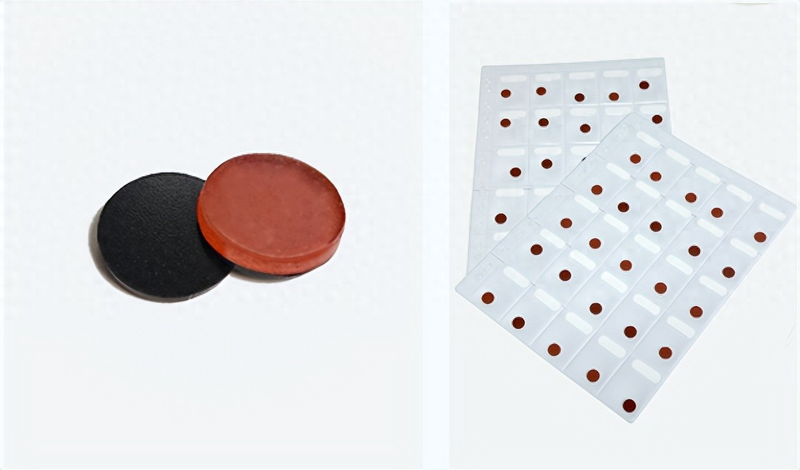
Semantic environment dissolved oxygen fluorescent film
Sensor installation and layout programme
The installation and layout of the sensor directly affects the accuracy and representativeness of the measurement data and requires a scientific design that combines the structural characteristics, water flow state and exposure layout of the exposed pool:
(i) placement selection
1. Avoiding bubble-intensive areas: a high concentration of bubbles in the vicinity of the exposed air vent, easily attached to the sensor's surface, leading to a measurement error, with a position to be installed at a distance of 1. 5 m from the exposed air vent
2. Selection of a water-flow stabilization zone: priority is given to areas where the water flow is evenly mixed (e. G., in the middle of the pool, near the flow wall), ensuring that the water body around the sensor is evenly mixed, that the do concentration is representative and that it is not installed in areas where the water flow is stagnant, such as the corner of the pool and the recoil
3. Guaranteed depth of installation: sensors are installed at depths of 0. 5-1. 5 m below water surface to avoid the exposure of sensors to air due to water level fluctuations, while ensuring that the film is completely immersed in water; multiple sensors can be installed at different depths to monitor the concentration of do in the water column (deep > 3m)。
(ii) installation design
It is recommended that the installation be “strength-type installation + adjustable angle”, designed as follows:
1. The material of the stand is selected with 316 l stainless steel, which is fixed on the basis of the structure of the pool wall of the exposed pool, to ensure that the stand is secure and to avoid sensor shaking due to water flow
2. Sensors are connected to the frame through a french or screwdriver and are fitted to adjust the angle (recommended to be 45° angle of water direction) to reduce bubble attachment and sludge deposition
3. Retention of maintenance space: the location of the sensor installation requires a maintenance space of 0. 8 m to facilitate subsequent clean-up, calibration and replacement; for large-scale exposed gas pools, a rail-type support frame can be installed to achieve rapid sensor upgrade and decentralization and maintenance can be completed without a stoppage。
(iii) multi-sensor layout strategy
A multi-sensor layout is needed to ensure the comprehensiveness of the monitoring data for larger (>10000m3) or mixed current distributions:
1. Layout along the pool long: installation of a sensor at the end of the water, at the central and at the outlet end of the exposed gas pool to monitor trends in do concentrations along the current direction and to assess the soluble oxygen requirements during the degradation of pollutants
2. Layout along the wide direction of the pool: for the exposure pool > 5 m wide, a sensor is installed on each side of the pool to monitor the horizontal distribution of do concentrations and determine whether the exposure is even
3. Enhanced monitoring of priority areas: additional sensors to monitor changes in do concentrations in real time and adjust exposure intensity in a timely manner in areas with high concentrations of contaminants in exposed pools (e. G. Near water vents) or areas prone to sedimentation of sludge。
Iv. Continued monitoring systems
A continuous monitoring system for industrial wastewater exposure pools, do, with sensor collection-data transmission- data processing-control implementation as its core process, achieves closed ring management from data collection to process regulation, consisting mainly of the following four components:
(i) data capture layer
Composed of a fluorescent dissolved oxygen sensor, is responsible for the real-time collection of do concentrations in exposed gas pools, together with the collection of associated parameters such as water temperature, ph, which can be combined with the corresponding sensor, providing a comprehensive basis for data interpretation and process regulation. The 4-20ma analogue signal or rs485 digital signal exported by the sensor is transmitted to the data-processing layer by shielding cables, which are required to be protected against corruption, waterproofing and signal interference。
(ii) data transfer layer
In the form of "wire transmission is predominant and wireless transmission is complementary": for exposure tanks located in or near the control room, sensor signals are transmitted directly to plc or dcs control systems by shielding cables; for exposure tanks located outside or further away from the control room, wireless communication modules such as lora, nb-iot can be used to achieve wireless transmission of data and reduce wiring costs. The transmission process needs to ensure the real-time (transmission delay 1s) and stability of the data and avoid data loss or distortion。
(iii) data processing and presentation floors
Composed of plc, dcs control systems or industrial computers to process, store and display the collected do concentrations:
1. Data processing: filtering of raw data to eliminate signal fluctuations caused by bubbles, turbulence, etc., while compensating for modifications to the water temperature, ph, etc., to improve data accuracy
2. Threshold setting and early warning: a ceiling (e. G., 4 mg/l), a floor (e. G., 2 mg/l) threshold for do concentrations, as required by the process, and an automatic acoustic alert by the system when monitoring data exceed the threshold, and the delivery of early warning information to transporters by means of text messaging, app, etc.
3. Data presentation and storage: real-time display of information on do concentrations, historical trend curves, alarm records, etc., through industrial touch screens or monitoring software, 1 year of data storage cycle, supporting data export and traceability。
(iv) regulatory implementation level
Composed of equipment such as an exposed wind machine, a variable, etc., which automatically adjusts exposure intensity according to the regulatory signals exported from the data-processing layer: when the do concentration is below the lower limit threshold, the system control variable increases the rate of exposure and increases exposure; when the do concentration is above the upper limit, lowers the rate and lowers exposure; and maintains the rate of exposure when the do concentration stabilizes within the appropriate range. The precision control of do concentrations is achieved through automatic regulation while reducing energy consumption。
V. Transport and calibration programme
Industrial waste-water exposure tanks are complex, sensors are vulnerable to pollution and ageing in the long term, and scientific transport and calibration systems are needed to guarantee the long-term stability of monitoring systems:
(i) daily maintenance
1. Periodic cleaning: weekly soft brushing of the sensor's fluorescent film surfaces with soft water, removing impurities such as attached activated sludge, organic matter, etc.; if the film surfaces have persistent stains, they can be washed after 5 minutes of impregnation with special detergents (avoiding the use of strong acid alkaline, organic solvents); for strong corrosive, high salinity wastewater, a shorter cleaning cycle of 3-5 days is required
2. Inspection of the state of the equipment: daily inspection of the installation of the sensor, the loosening of the cable connection and the normal transmission of the signal; periodic inspection of the corrosive condition of the sensor's shell and the need to replace it in a timely manner in case of corrosive and damaged
3. Back-up equipment security: with 1-2 backup sensors, which can be quickly replaced in the event of a malfunction with a sensor to avoid monitoring interruptions。
(ii) calibration programme
1. Calibration cycles: one air calibration every three months under conventional conditions; a shorter calibration period of one month under harsh conditions (high levels of turbidity, corrosiveness, high salinity); one standard solution calibration every six months (aerobic + two points of saturated oxygen) to ensure full-scale measurement of accuracy
Air calibration process: the sensor is removed from the exposure tank, washed with pure water, fluorescent film surfaces are emptied, placed in a clean, wind-free environment, 5-10 minutes static until the reading stabilizes, enters the current ambient temperature and air pressure and completes the calibration confirmation
3. Standard solution calibration process: aerobic water calibration (zero points): current aerobic water (addition of excessive sodium sulfate) powder, fully immersed and static for five minutes) immersed the sensor into anaerobic water, confirming zero-point calibration after steady reading;2 saturated soluble oxygen water calibration (quantities): saturated and soluble oxygen water with pure water (aerobic pump lasting more than 30 minutes of exposure), immersed the sensor in saturated soluble oxygen water, after a steady reading, enter saturated soluble oxygen values at current temperature and complete the quantum calibration
4. Special case calibration: once the sensor has replaced the fluorescent film, experienced severe vibrations or temperature changes, and the measured data has fluctuated exceptionally (the margin measured three times at the same point > 0. 3 mg/l)。
Data application and process optimization
Do continuous monitoring data are not only a direct basis for process regulation, but also allow process optimization through data analysis to improve processing efficiency and economy:
1. Accurate regulation of exposure intensity: based on real-time data on do concentrations, automatic re-pacing of the exposure wind by a variable to stabilize the concentration of the do in the appropriate range of 2-4 mg/l, reducing energy consumption by 15-25 per cent compared to traditional constant exposure patterns
2. Assessment of sludge activity: assessment of the metabolic activity of active sludge through analysis of data associated with cod and nitrogen removal rates, and timely adjustment of the back-flow ratio of sludge or discharges if sufficient do concentrations but a decrease in pollutant removal rates may indicate an ageing or poisoning of sludge
3. Early warning of fluctuations in water quality: when the concentration of dos falls abnormally (by > 1 mg/l in a short period of time), it may be due to a sharp increase in the concentration of contaminants entering the water, the need for timely inspection of the quality of water entering, adjustment of the flow of water into the water or the injection of agents, and avoidance of excessive sludge loads leading to the collapse of the treatment system
4. Long-term process optimization: improve the stability and resilience of treatment systems by analysing historical trend data on do concentrations, taking into account seasonal variations and fluctuations in water quality, among other factors, and optimizing the regulatory thresholds and exposure strategies of do concentrations。
Product overview
Portable fluorescent fluorescent oxygen instruments in the intellectual environment are based on optimized fluorescent central techniques, carrying self-developed non-expendable high-performance fluorescent film, counteracting the dissolved oxygen concentration by detecting fluorescent signal phase differences caused by oxygen molecules, without electrolytic fluids and frequent calibration, addressing pain points such as traditional electrodes, oxygen consumption, pollution-prone points from their sources, rapid response speeds (t90 /2000/40s), measuring precisions of ± 0. 1 mg/l in the 0-20 mg/l scale range, and automatic compensation for temperature and even salinity from built-in high-precision sensors, which can stabilize at temperatures of -20°c ~ 50°c and complex conditions such as high salt, acidine, etc. The instrument, which is also equipped with an industrial-grade fixed installation and light quantitative handheld equivalent, not only has an industrial-grade design for anti-conservation sealing, anti-pollution, fixed monitoring needs in the chemical, pharmaceutical and water treatment industries, but also portable features such as water-protective grade 500g, ip68 and above, suitable for aquaculture inspections, field emergency monitoring, etc., while supporting the real-time uploading of data and management of multi-equipment networks, helping a wide range of areas to optimize soluble oxygen precision monitoring and process optimization and significantly reduce transportation costs。