Bioengineering, as the core pillar of modern biotechnology, covers key areas such as microbiological fermentation, animal cell culture and plant tissue development, with the core objective of efficient production of high-value biological products such as antibiotics, enzyme formulations, biovaccinations and recombinant proteins by regulating the biological metabolic process. In bioreaction systems, dissolved oxygen (dissolved oxygen, do) is a key environmental factor affecting micro-organisms/cell growth, metabolic pathways and the synthesis of target products - most of the aerobic micro-organisms (e. G. Penicillin-producing fungus, dead bacillus) have a suitable dissolved oxygen concentration of 20-80% air saturation (corresponding to 1. 5-6. 0 mg/l, 25°c pressure) and animal cells (e. G., cho cells, vero cells) need to be maintained at 30-60% air saturation and depth, with high or low dissolved oxygen concentrations leading to metabolic disorders, disruption of product synthesis, and even cell loss. Traditional soluble oxygen monitoring relies on hyperspectral electrodes, with membranes susceptible to contamination, frequent replacement of electrolyte, response lags, etc. While fluorescent solucometers, with their high accuracy, low interference and long-lived technological advantage, have become important equipment for bioengineering experiments and for soluble oxygen monitoring in industrial production, providing critical technical support for process parameter optimization and productivity improvement。
I. Technical properties of fluorescent soluble oxygen and bioengineering suitability
(i) core technical principles and improvements
The fluorescent soluble oxygen continues the fluorescent fluorescent fluorescent principle, the special fluorescent of its probe surfaces. Light probes (e. G. Luminous coupons) emit red fluorescents at the instigation of blue and purple light, and oxygen molecules in the water induce non-radioactive energy transfer through diffusion combined with fluorescent probes, resulting in decreased fluorescent strength and reduced fluorescent life. By detecting changes in fluorescent lifetimes (more resistant to light drift compared to intensity detection), the instrument is combined with the stern-volmer equation (i0/i = 1 + ksv) where i0 is an aerobic fluorescent strength, i is an aerobic fluorescent strength, ksv is a strangulation constant, is a dissolved oxygen concentration). Compared to the traditional hyperspectral method, the fluorescent method does not require the application of polarized voltage, avoids the recovery of oxygen from the electrode surface, and fundamentally solves the problem of “oxygen-depletion error”, especially with regard to low soluble oxygen, high viscosity (e. G., high sugar fermentation), high-cell density complex systems。
(ii) core technological advantages under the biological engineering landscape
High accuracy is appropriate for wide range: detection of the effects of co2, nh3, organic solvents, heavy metal ion and surface active agents in ferment: resolution of 0. 01 mg/l or 0. 1% air saturation, covering 0-20 mg/l (0-20% air saturation) of microbial fermentation needs, as well as of low soluble aerobic aerobic aerobic accommodation response systems for fermentation; rapid response and real-time monitoring: response time of ph3 seconds, high speed (10-30 seconds) to capture in real-time atmospheric aerobic aerobic arctic concentrations (e. G., failure of pvc, application of high concentrations, metabolic actic acoustic acoustic acoustic acoustic acoustic acoustic acoustic acoustic acoustic acoustic acoustic acoustic acoustic acoustic acoustic acoustic acoustic acoustics) (e acoustic acoustic。
Ii. Key applications in the biological engineering core scenario
(i) microbiological fermentation process optimization and production regulation
Microbiological fermentation is a more mature application in bioengineering, covering the production of products such as antibiotics, enzyme formulations, amino acids and bioethanol, and the dynamic regulation of dissolved oxygen concentrations directly affects the fermentation efficiency and yield rates。
Oxygen solubility monitoring: in penicillin fermentation, the growth stage (0-48 hours) of apricot is required to maintain a high level of soluble oxygen (60-80% air saturation) to promote the growth of the fungus, while the product synthesis phase (48-120 hours) is required to contain solute oxygen at 30-50%, and hypersoluble oxygen leads to the activation of penicillin degradation enzymes. The fluorescent online soluble oxygen instrument can monitor changes in the soluble oxygen in the fermentation tank on a continuous basis for 24 hours and build a closed ring control system by connecting with parameters such as mixing speed, flux, tank pressure - automatically increasing the mixing rate (enhanced gas flow efficiency) or increasing the flux (upgrade oxygen supply) to ensure that the soluble oxygen is stabilized in the eugenic zone; bottom metabolism and synthesis analysis: in starch enzyme fermentation, the bacterium graft quickly consumes oxygen when the carbon source is sufficient and the soluble oxygen concentration drops to a low valley (the “solvable oxygen threshold”), when the carbon source is depleted and microorganisms begin to shift to synthesis. Seizing this critical point through fluorescent soluble oxygen allows for a precise determination of the timing of the recharge, avoiding a decrease in enzyme efficiency due to insufficient carbon sources, while reducing the accumulation of metabolic waste due to excessive recharge; unusual fermentation warning: in the fermentation process, bacterial contamination (e. G. Anaerobic contamination) leads to an abnormal decrease in soluble oxygen concentrations, which cannot be recovered by regulating gas / mixing, and an abnormal increase in soluble oxygen concentrations if microbiological metabolic activity decreases. The fluorescent soluble oxygen instrument, which alerts the population in real-time data abnormally, detects pollution or bacterial degradation in a timely manner and reduces production losses。
(ii) solvent precision control in animal cell culture
Animal cells (e. G., cho cells for monoclon antibody production, vero cells for vaccine production) are much more sensitive to soluble oxygen concentrations than microorganisms, and cells are protected from cellular walls, are less resistant to shearing (mixing, gas production) and soluble oxygen regulation needs to balance precision with temperature。
Precision of low soluble oxygen environment: a suitable soluble oxygen concentration of 30-60% in animal cell culture (corresponding to 2. 2-4. 5 mg/l), hypersoluble oxygen produces excess active oxygen (ros), damage to cell dna and cell membrane; hypersoluble oxygen inhibits linear particle respiratory chain function, leading to a stagnation in cell proliferation. High resolution of fluorescent soluble oxygen (0. 1% air saturation) allows precision monitoring of low soluble oxygen areas, combined with “micro-flood exposure” or “film-based flux” techniques, to maintain soluble oxygen stability without producing high shearing; soluble oxygen corrosive control of batch culture: in single-cloned resistance systems, the recharge rate needs to be adjusted to adjust to soluble oxygen changes during batch preparation - when the rate of solubility drops is accelerated, it indicates an increase in cell growth, oxygen consumption and a simultaneous increase in the rate of supplementation (refilling glucose, amino acid, etc.); when the reduction rate of soluble oxygen is reduced, the cell enters the platform and needs to reduce the rate of recharge, avoid accumulation of metabolic waste (e. G., lactate, ammonia) resulting from excess nutrition, and increase the rate of antibody production; early warning of cell destruction: when dissolved oxygen concentrations are below 20% air saturation in the long term, animal cells activate the path of collapse, are continuously monitored through fluorescent soluble oxygen, provide early warning of the risk of extinction, adjust the conditions for culture in a timely manner (e. G., increase in solute oxygen, add anti-closure reagents) and prolong the cell lifetime and product synthesis cycle。
(iii) assessment of atmospheric fluid transfer efficiency of the biological response system
Gas flow efficiency (in terms of volume oxygen transfer factor (kla)) is the core parameter for bioreactors design and process optimization, which directly determines the rate of transmission of oxygen from the gas phase to the liquid phase. Fluorescent soluble oxygen can be rapidly measured by "dynamic" kla: first reduce the soluble oxygen in the reactor to zero (through nitrogen) and then enter the air to record the upward curve of soluble oxygen concentrations at any time, and by collating the formula in
(c*-c0) / (c*-ct)
= kla. T (of which c* is an oxygen saturation concentration, c0 is an initial soluble oxygen concentration and ct is a t at any time). By comparing the kla values at different mixing speeds, vents, and fermentation viscosity, reactor operating parameters can be optimized to increase the efficiency of gas flow and provide sufficient oxygen for high cell density culture。
Related products
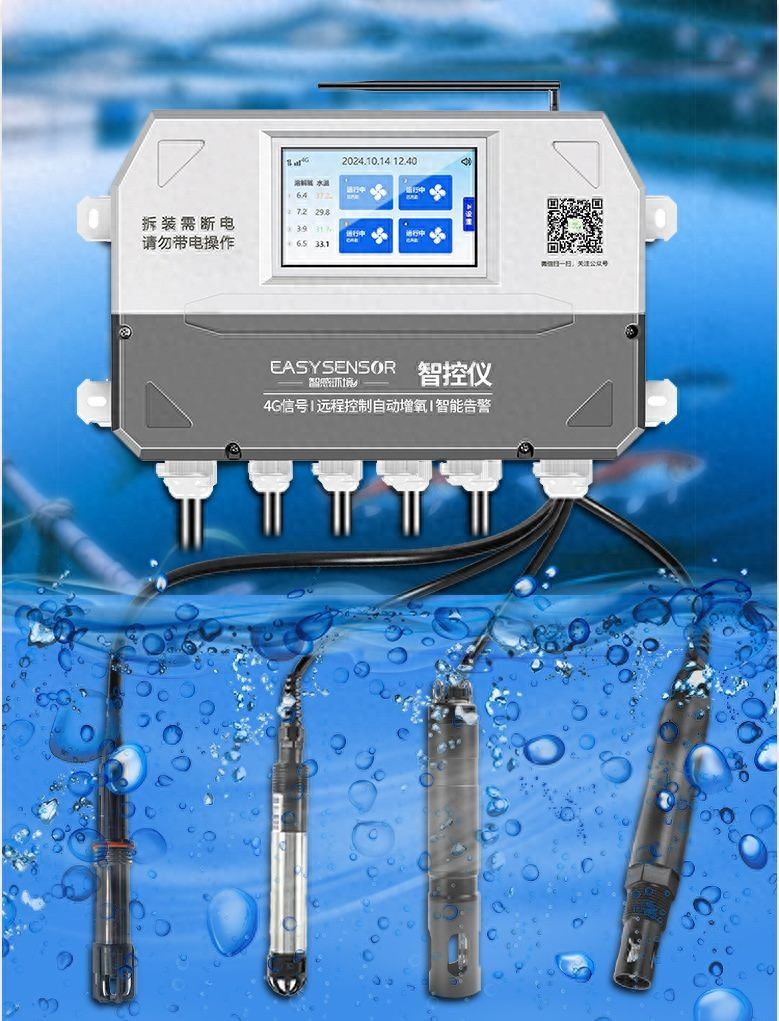
Portable fluorescent fluorescent oxygen instruments in the intellectual environment are based on optimized fluorescent central techniques, carrying self-developed non-expendable high-performance fluorescent film, counteracting the dissolved oxygen concentration by detecting fluorescent signal phase differences caused by oxygen molecules, without electrolytic fluids and frequent calibration, addressing pain points such as traditional electrodes, oxygen consumption, pollution-prone points from their sources, rapid response speeds (t90 /2000/40s), measuring precisions of ± 0. 1 mg/l in the 0-20 mg/l scale range, and automatic compensation for temperature and even salinity from built-in high-precision sensors, which can stabilize at temperatures of -20°c ~ 50°c and complex conditions such as high salt, acidine, etc. The instrument, which is also equipped with an industrial-grade fixed installation and light quantitative handheld equivalent, not only has an industrial-grade design for anti-conservation sealing, anti-pollution, fixed monitoring needs in the chemical, pharmaceutical and water treatment industries, but also portable features such as water-protective grade 500g, ip68 and above, suitable for aquaculture inspections, field emergency monitoring, etc., while supporting the real-time uploading of data and management of multi-equipment networks, helping a wide range of areas to optimize soluble oxygen precision monitoring and process optimization and significantly reduce transportation costs。
The online soluble oxygen of the intellectual environment is a nationally produced high-precision water quality monitoring device based on fluorescent fluorescent fluorescent technologies. The core uses blue light to stimulate fluorescent substances and use oxygen molecules to detect dissolved oxygen concentrations. The electrolyte and polarization of traditional electrochemical methods have been abandoned and the defects of oxygen consumption, water pollution and frequent maintenance have been avoided. The instrument measured a range of 0 - 20 mg/l, with a precision of 0. 2% fs, with a resolution of as low as 0. 01 mg/l, response time of 40 seconds, with built-in temperature sensors and support for salinity, atmospheric pressure compensation, which effectively offsets environmental interference to ensure data reliability; sensors carrying anti-biopollution coatings and automatic clean-up designs, which significantly reduce the cost of microbial attachment and transportation. At the functional level, the equipment is compatible with the rs485/modbus-rtu protocol, which enables the multi-parameter water quality sensor to enable real-time uploading and remote monitoring of data, with a high-protective ip68 corrosive seal structure, support for leaching installation, adaptation to multiple monitoring platforms such as buoys, stations, shipboards, etc., and multiple warning mechanisms such as dissolved oxygen over-limits, equipment failure and risk warning without manual performance. The instrument is now widely used in the areas of aquaculture, sewage treatment, drinking water purification, monitoring of natural water bodies and control of the quality of industrial processes, providing precise and stable technical support for water quality regulation, ecological warning and process optimization。