# headline creation challenge #
A balanced price is the price of the commodity when the supply is equal to the demand, and the price of the commodity when it is equal to the demand price. In markets, market prices tend to be balanced because of the interplay of supply and demand forces. Balancing prices were created spontaneously in the course of competition between demand and supply in the market. The formation of balanced prices is the process of price determination. Thus, prices are determined by competition between supply and demand in the market。
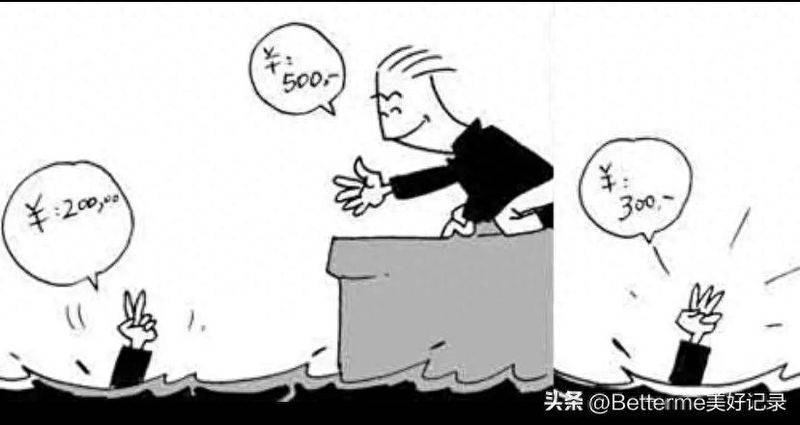
A balanced price is the price that consumers are willing to pay for a given commodity in line with the price that producers are willing to accept for the supply of a given commodity. To better understand this concept, we may wish to look at the following examples of life:
Buyer: how much do you sell this dress?
Vendor: $500。
Buyer: it's too expensive, and it's worth $200。
Sold: 200 too little. If you buy it with your heart, i'll sell it to you! 450!
Buyer: oh, it's so expensive! I'll say, 300!
Seller: $300, you give too low. Why don't we make a trade-off, $400。
Buyer: no, 350 bucks tops. 350 bucks, you sell or not? Sell or i'll go。
Seller: wait a minute. Forget it. 350. I'll sell it to you this time。
The dress was finally sold at $350, which is a balanced price acceptable to both buyers and sellers. Balance prices are created spontaneously in the course of competition between demand and supply in the market, and balance prices are the process of price determination. It is important to emphasize that the formation of balanced prices is entirely spontaneous in the course of competition between the supply and demand sides of the market, and that prices with external intervention are not balanced。
We know that when supply is excessive, market prices fall, leading to reduced supply and increased demand; when supply is short of demand, market prices rise, leading to increased supply and reduced demand. The interaction between supply and demand leads to an equivalent level of demand and supply for commodities at a given price level. There was no surplus (supply over demand) or shortage (supply over demand), and the market was well balanced. This price is a balanced price acceptable to both supply and demand, and only at this price level can the market achieve a balance。
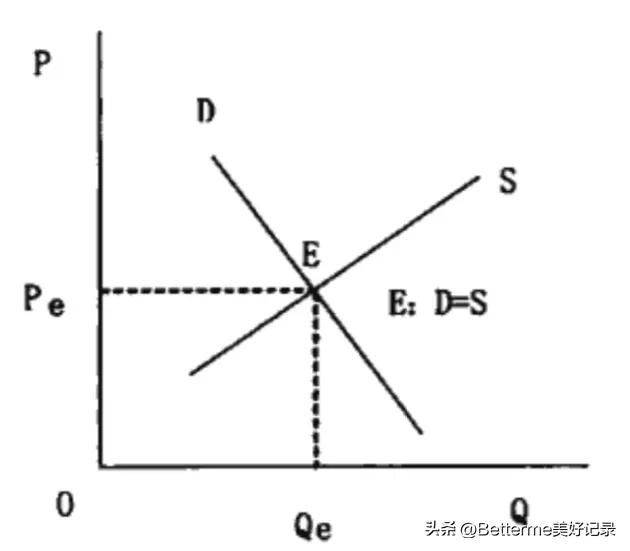
Scheduling of balanced prices and balanced quantities
As shown in the figure, we use oq to represent the number of commodities, vertical op to indicate the price, d to indicate the demand curve, and s to indicate the supply curve, then the e point that intersects with d and s is called the equilibrium point, and the price that corresponds to e point pe becomes the equilibrium price and the number of commodities that corresponds to e point qe becomes the balanced quantity。
When the market price is above the equilibrium price, the supply of goods will exceed demand, and there will be excess items. For example, when there is an excess supply in the fruit market, fruit traders find that their freezer is increasingly full of fruit they want to leave and cannot sell. Their response to this excess supply has been to lower their prices and keep them down until the market is even. Similarly, when there is an excess demand in the fruit market, buyers have to wait long enough for the opportunity to buy a few fruits that are available, and because too many buyers buy too few items, sellers can respond by raising their own prices. As prices rose, the market moved again towards equilibrium。
In the market for the sale of goods, both parties, as rational persons, seek to maximize their own interests. On the one hand, for merchants, maximization of benefits is sought, so prices are usually set far above the cost of receiving goods; on the other hand, for consumers, the aim is to maximize the usefulness of commodities, with a view to reducing prices as much as possible. The price acceptable to both buyers and sellers is a balanced price. The activities of numerous buyers and sellers in the market have spontaneously pushed market prices towards even prices。

However, market balances are divided into partial and general balances. If only one or more commodities in the market achieve a balance between supply and demand, this is a partial balance. If all commodities achieve a balance between supply and demand, that is the general balance. It must be emphasized that general equilibrium is the true price balance, and that partial equilibrium is only temporary。
When market prices deviate from the equilibrium, this imbalance between supply and demand tends to disappear, with automatic return to the level of the equilibrium:
First, when market prices are higher than even prices, the supply of goods exceeds demand and there is a surplus of goods, which, on the one hand, can push demanders down prices. On the other hand, it would reduce the supply of commodities to suppliers, so that the price of commodities would inevitably fall to even price levels. On the contrary, when market prices are below equilibrium, demand is greater than supply and there is a shortage of goods, forcing demanders to raise prices on the one hand, and suppliers on the other, to increase the supply of commodities on the other, so that the price of the commodity is bound to rise and to rise to the level of balanced prices (see para. While other conditions remain unchanged, changes in demand give rise to shifts in the same direction in terms of balanced prices and balanced quantities, respectively; changes in supply give rise to shifts in the opposite direction and in the same direction in terms of balanced prices)。
Once the market reaches its balanced price, all buyers and sellers are satisfied and there is no pressure for price increases or declines. The pace of achieving equilibrium in different markets varies, depending on the speed of price adjustment. However, in most free markets, surpluses and shortfalls are only temporary, as prices eventually change to their equilibrium。
Markets can also achieve a balance between supply and demand. Commodity prices are the result of a combination of the opposite forces of demand and supply in commodity markets。
The effects of changes in demand and supply on balanced prices are as follows:
(1) changes in demand give rise to changes in the direction of balanced prices and even quantities. That is, increased demand, even prices, and more balanced; less demand, less balanced prices and less balanced quantities。
(2) changes in supply cause shifts in the reverse direction of balanced prices, and in the same direction, i. E. Increases in supply, decreases in equilibrium prices, increases in equilibrium: decreases in supply, increases in equilibrium prices and decreases in balanced quantities。
Every day, it's hot