More intellectuals have replaced intellectuals, who are unable to respond to the changing external world. In the chaos of value inherent in transition, we cannot hear their voices clearly and forcefully. The general confusion and mediocrity of thinking are constant reminders of how much society as a whole needs intellectuals and the quality they represent. ♪ i'm sorry ♪
“(they are) professional practitioners of ideas, and hayek was one of the most powerful public intellectuals of the twentieth century, although he became one of the most famous members of the ranks in the latter half of his life. Journalists, teachers and media representatives, these classic types of public intellectuals, in the stubborn eyes of hayek, are those “who, with some scientific knowledge of hearsay, declare themselves to be representatives of modern thinking ... With the responsibility of providing new ideas to the public”. During the post-war wave of collectivism that engulfed the world, the one-sided hajek found these well-informed public intellectuals at the centre of public opinion, making precipitous but puzzling judgements. Throughout the 1930’s and 1940’s, so many prominent intellectuals were drunk by stalin’s reform and keynes’ proposals。
In this sense, richard posner, a distinguished federal judge in the united states, a professor of law at the university of chicago and an untrustworthy high-yielding writer, is the successor to hayek. In his book, public intellectuals, published in 2002, he continued to denigrate these professional skills. He insisted that experts should not go beyond their professional statements, while so-called intellectuals who depended on the media and the publishing industry for their survival became slaves to the market, and the quality of their work was not flattered. He noted, for example, that the “media authority” that spoke extensively about the microsoft antimonopoly case did not really know what was at stake. Similarly, a popular biologist, stephen jay gould, should not have addressed artificial intelligence when writing science books, because he doesn't know it. In addition to setting an interesting ranking for the most popular public intellectuals in the media and viewers (henry kissinger first), posner warned against being smart enough to speak on topics beyond the field of expertise. “unfortunately, posner was equally unable to prove his authority over the intellectual issue”, russell jacoby in his review of the los angeles times。
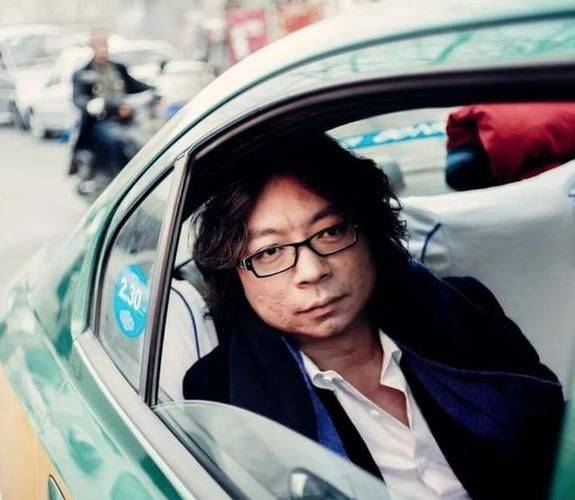
In his book the last intellectuals, published in 1987, russell jacquesby expressed greater concern about the intellectual community in the united states that the real crisis was the disappearance of the intellectuals group, which had been replaced by highly specialized and narrow academic experts. The last generation of intellectuals in jacobi's mind was the new york human circle in the 1950s, represented by daniel bell, galbres and trinin. They focus on a wide range of issues with elegance and clarity, and are committed to writing for an educated population, while the views of today's experts are understandable to only a few peers. What are the criteria for judging intellectuals? No one is more intrusive in this matter than the french definition of bandar: “the essence of them is not to pursue practical purposes, but to seek pleasure in artistic, scientific or physical thinking, in short, to seek non-material interests, and therefore to say in some way that `my country does not belong to this world'.” in this definition, the definition of the role of so-called public intellectuals or college members, journalists or university professors is meaningless。
In capitalist cultural contradictions, daniel bell describes modern culture in this way — court musicians, hymns and monks in monasteries — now become advertisers, columnists and public image designers. An italian in prison for long periods of time, antonio graci, came to a similar conclusion and expanded the scope of intellectuals with a more open mind. In addition to traditional intellectuals, grange created the term “organist”, which means people born with a commercial society, who may be industrial technicians, political and economic experts, lawyers, whose work is more intellectual than physical, and whose judgement in the 1930s is more accurate today. Peter drucker claims that we are entering a knowledge-based society and that, with the collapse of bureaucracy, people are increasingly freed from rigid work, with more freedom and more passion and creativity for new types of work. The recent dot-com wave seems to be implying this new trend. Peter saint-george called the “learning organization” a world in which learning has become a tireless, lifelong job, and western youths in the 1960s like to say, “everyone is an artist”, can we say today, “everyone is an intellectual”
Edward sayed, speaking at the rees lecture on bbc, said that a purely personal or purely public intellectual does not exist and that, as long as you speak in words, it means entering public view. The widely-interested and elegant sayyed came to the definition of a free intellectual: “intellectuals are individuals who work on behalf of the arts, whether it be speech, writing, teaching or on television”. Joseph conrad compared literary creation to rescue work in darkness, and writers saved people from unconscious darkness. And in banda, jacoby and saÏd, intellectuals have been breaking down the mediocre and boredom of everyday life. Their weapons are intense curiosity, while the enemies are the repetition of the rules and hatefulness that they seek to give meaning to the bleak reality。
Let us return to the mockery of hayek and posner, and i admit that their criticisms are justified, and that they dislike the echoes of ideas that are blinded without thinking. But their radicalism (especially persiana) prevents them from seeing deeper crises, and the true trap for intellectuals is to fall into a trap of over-specialization and technologicalization, losing curiosity about the wider world. They are not overstretching new ideas, but are unaware of them. Moreover, we should not ask every active thinker to make the right judgement, and their most important duty is to keep thinking。
We face a more complex situation when this debate jumps into the chinese context. For a long time, we have mixed the roles of intellectuals with various types of technologists, engineers, doctors or sociologists, who are intellectuals as long as they have expertise and have a university education. But at the same time, i would like to admit that it is also a mistake to overideodate the role of intellectuals, and that some chinese scholars persist in shaping it into dissidents like solzhenitsyn, who emphasize the critical side of intellectuals but ignore criticism as an end in itself, and when critical for the sake of criticism, it becomes a mechanical repetition, losing intellectuals’ most precious spirit of thought and creativity。
As young chinese people who grew up and matured in the 1990s, they went through an era of great intellectual deprivation. How did we get through the university era — the old teaching materials and the old knowledge that was transmitted day after day. I can even put it bluntly that more than 90 per cent of chinese university students have never actually had access to education in the true sense, that we are recited, obeyed, tested and that we lack the ability to think and think. More intellectuals have replaced intellectuals who are unable to respond to the changing external world. In the chaos of value inherent in transition, we cannot hear their voices clearly and forcefully。
"the university is no longer as popular as it used to be." anthony gideons, director of the london school of economics, said that the university was no longer the only centre of knowledge production and had a growing number of competitors: think tanks, research agents, investigative agents, management consulting firms and media companies. And during the golden years of the american intellectuals who had given russell yabe, many eminent intellectuals worked for magazines like the times, the new republic, some of them even thought that college work would constrain their creativity. Even more embarrassing in china, when our universities still do not have (or restore) their status as knowledge centres, competitors like think tanks and the media are also not mature. The general confusion and mediocrity of thinking are constant reminders of how much society as a whole needs intellectuals and the quality they represent. Perhaps, in the 1980s, we also had lee zahe, liu, and the “going to the future” series, which encouraged the most active sectors of society to participate more extensively in intellectual or public affairs discussions。
“the era has a greater impact on education in the united states than on the sum of all educational systems in the united states”, an assessment by the rector of the university of chicago, robert hutchens, of the impact of a magazine founded by henry luth, inspired the growth of the economic watch that i used to serve. We are witnessing the rapid changes that have taken place in china over the past decade or so, accompanied by a deep sense of cultural break-ups between new ideas and terminology. Although a group of people is being raised in a wider intellectual background, ignorance of the outside world is also evident in chinese society. Even though we sometimes have the obvious repulsion of hayek, "with some scientific knowledge of hearsay, we pretend to represent modern thought... We are trying to build a climate of free discussion in china, even more important than this stigmatization, the quality of people who are responsible for providing new ideas to the public. I do not like the term public intellectuals, because, as i have concluded before, there is only a difference between low-level intellectuals (intellectuals) and senior intellectuals, and no difference between individual intellectuals and public intellectuals. I also agree with the general assessment of journalism that “it is born to pursue power, money and drama”. But the most important thing we see in comparison to all these weaknesses is whether we inspire your broad interest in the world