The academic background has been biased, the journalist has been a journalist for four years, the research and development agent has chosen the chinese university of science and technology's software academy, the school year is more sour and bitter than my four years of undergraduate studies, and has begun to think slowly. The computer curriculum has learned a lot of things in all its forms, but why should it be? So i talked to a lot of my classmates and kept looking for answers online, and here's a quote from a senior undergraduate at the chinese university of science and technology. I think it's pretty clear: sum up and add my mind, black is his, blue is mine
The whole computer science is like a human being with two legs. One is called mathematics, one is called physics. Math is mainly about mathematical logic. More important among them are the form logic system, the turing topic and the churchr topic. The form logic system describes the world in a logical way, building the entire logic system, the mathematical system and even computer science on a few rules of reason and reasoning. Turing, which is the foundation of computer science, points to the power of the form logic system: machines can be calculated using the rules of the form logic whenever they are human. And it suggested a way to do it, the turing machine. The churchr question points to the inadequacy of the form logic system: a machine may not prove it if one can prove it. More precisely, in the form logic system, there is no universal algorithm that can judge the true or false of all propositions. That's the mathematical basis of computer science. And the physical basis of computer technology is digital logic circuits. It's not about analog circuits, it's about electromagnetics, because it's not so much about logic. First of all, the digital circuit gives logical circuits, such as how to achieve them — only when both inputs are high-level and output is high-level — that is, with the door. And digital circuits give the design method for combining logic. This directly makes possible the design of the arithmetical logic module (alu). Finally, digital circuits give a design method for time-series logic, with the typical result being the emergence of repositories and counters, making time-series control possible。
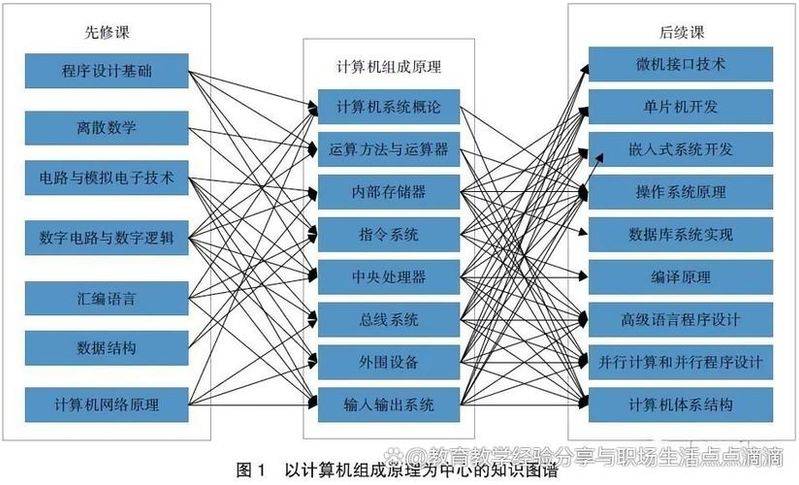
Computer-hardware: the architecture of modern commonly used computers is designated by von neumann students and known as von neumann. The schoolmate took the entire computer down to five large pieces: an algorithm, a controller, a storage, an output and an output. Computers are binary. Commands and data are stored in storage on an equal footing. Courses: computer composition principles, operating systems, micromechanical principles, design and testing of cpu, computer system structures
— software: data structure, algorithms, software engineering, software quality assurance and testing
—application
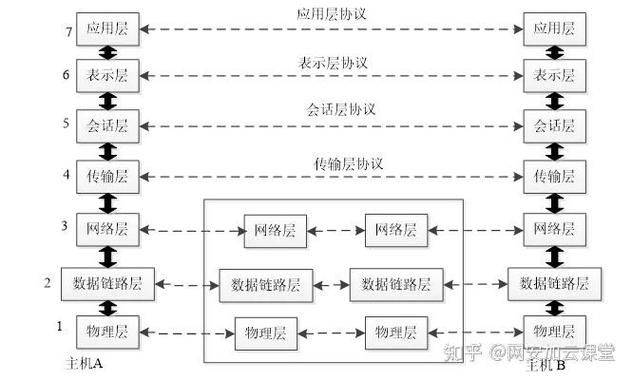
From the start of the software development mission, the architecture of software science is easily accessible. First, we need an advanced language to communicate with computers that is compatible with human thinking. On its basis, the data structure can be achieved, thus laying the foundation for the achievement of algorithms. The structure of the data is naturally an algorithm. It goes up to structured programming ideas and norms, such as object-oriented thinking, software engineering ideas, etc. Software science seems to have improved at this point. But don't forget that there is a foundation behind it in advanced languages: compilers and operating systems. These two courses: compile principles and operating systems serve as bridges between communication software and hardware. As for computer applications, there are too many areas involved. For example, artificial intelligence, digital signal processing, computer networks, operating systems, etc. The operating system is also classified as a computer application because its realization is also supported by much computer science, such as algorithms, graphics, etc. Each domain is based on its own mathematics: for example, artificial intelligence requires form logic, digital signal processing requires information theory, fractional transformation and sampling theory, computer networks apply more probabilities, etc. Thus, computer applications can be divided into two layers, the lower is mathematics, and the upper is a specific discipline。
Math runs through the system. It can be said that mathematics is the soul of computer science and technology, and a solid mathematical base is a considerable advantage for students in this profession。
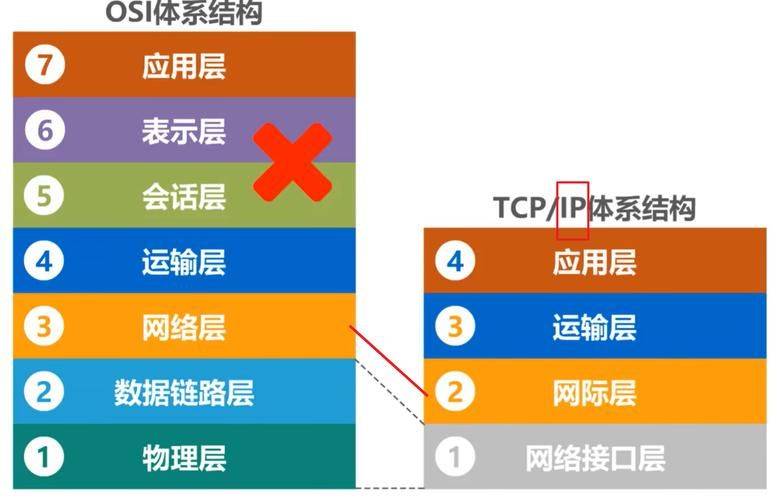
As far as i am concerned, i do not have any knowledge of this, and i have to look at it slowly with the larger curriculum, with a detailed understanding of computer knowledge, using " in-depth understanding of computer systems " as an introductory course, and an in-depth study of the operating systems of linux, during which the mechanisms of language understanding are not only grammar, but also a true understanding of the movement and writing of the entire language within the computer. On the other hand, the knowledge to start supplementing hardware, the entry point for which is the eda technology, is higher, but forces itself to supplement the knowledge of digital circuits。
Computers are a subject, not just coding, as most people think, and thank you for keeping me off the curve for three years, with a clear direction at the learning stage。