


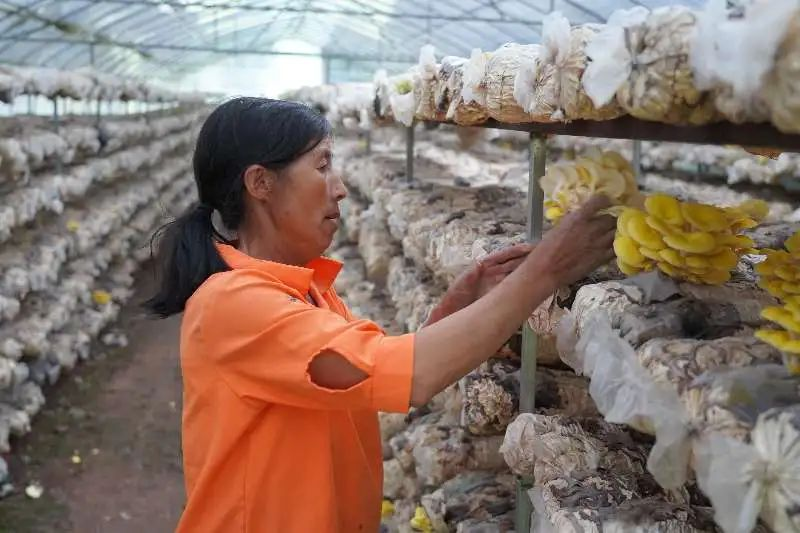
During this period, farmers are busy collecting gold mushrooms, boosting farmers ' incomes, promoting economic development and empowering villages in the post-madén village's food-bacterium cooperative。
Entering the growing grounds of the professional cooperative of riverine agricultural farmers, a golden mushroom is glamorous and colourful, spreading its unique smell of fermentation. Gold mushrooms, also known as hazelnut mushrooms, are a valuable food fungus, which is grown in a very difficult, productive and efficient manner, rich in high proteins, low fats and a variety of nutrients, and is the preferred option for many of the predators and is popular with consumers。
Suh ping, director of the professional cooperative for agricultural farmers of the equinox region: “our third batch of golden mushrooms, with 130,000 rods, the main selling method being dry, with fewer fresh shipments, which are easy to keep, is relatively manageable in terms of logistics and quality, and we have sold more than 40 tons of dried gold mushrooms to date, mainly in lijiang and kunming markets.”
In recent years the town of madden has been committed to building a party that is capable of helping farmers to increase their incomes, taking full advantage of the leadership, leadership and convergence of grass-roots organizations in industrial development, promoting the “party branch + company + cooperative + farmer” model, and introducing leading enterprises such as the professional cooperative of rural farmers in sawakawa county, which has led to a sustained increase in farmers' incomes by leading mass-based projects, strong development and co-benefits, building a community of collective and popular interests and creating a new model of farming and farming. At present, more than 1,000 acres of fungus are grown throughout the town, amounting to over $10 million。
Suh ping stated: “our business model is 50 acres of land flowing under the leadership of village councils, and the government invests in huts, which are then managed by cooperatives. We produce our own bacteria and we harvest them and dry them, and in the process we use more than 300 workers a year. Today's kawakawa



