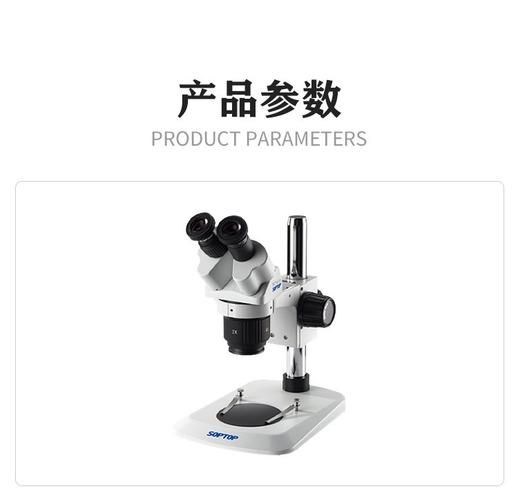
Visual microscopes are a common microscope type that is complex and sophisticated and typically contains several key components, each of which plays an important role。
1. Pillars and floors
(c) pillar: is the primary support structure for the visual microscope, which fixes and supports the components and provides the basis for stability。
Undersea: installed at the bottom of a pole to stabilize microscopes, usually with a smoothing pad to prevent microscopes from sliding or moving during operation。
Arms and arms racks
Arms: parts connected to columns and arms frames, providing support and stability。
Arm frame: it is the main framework that supports the lenses, goggles and lighting systems and usually has a adjustable mechanical structure to adjust the height and angle of the microscope。
3. Eyescopes and mirror systems
Eyescopes: visual microscopes are usually equipped with two glasses to observe samples. Eyescopes usually have adjustable pupil and focal length to suit the needs of different users。
Mirrors: visual microscopes are usually equipped with multiple mirrors, with different magnification multipliers and work distances to observe samples of different sizes and types。
4. Focus system
Coarse focus structure: for fast-moving mirrors and sample distances, fine-tuned focus and clarity。
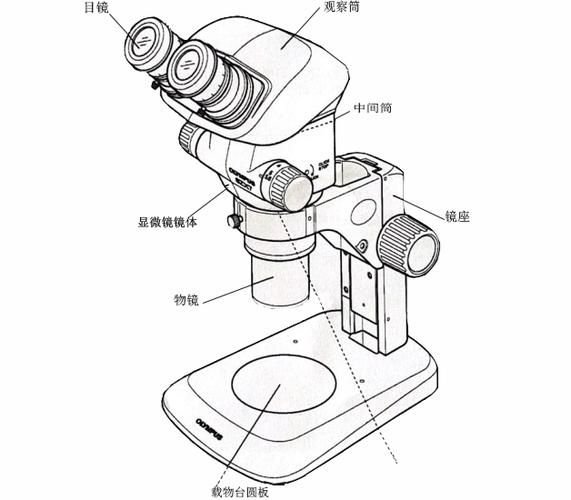
A fine-tuned body: used to fine-tune focus and clarity to obtain high-resolution and clear images。
5. Lighting systems
Bottom lighting: visual microscopes are usually equipped with a bottom lighting system for lighting samples to observe the details and structure of the sample surface。
Transmittance lighting: some body vision microscopes are also equipped with a pent-ray lighting system for transient optical and fluorescent observation。
6. Reconciliation institutions and annexes
Pupil distance adjustment: the pupil distance used to adjust the mirror to the distance between the eyes of different users。
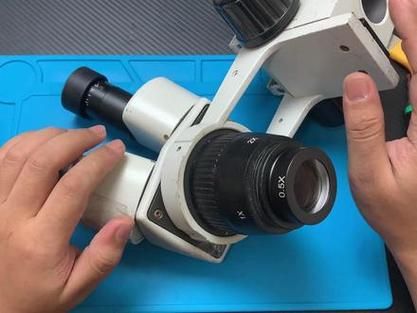
(b) working distance reconciliation: to adjust the distance between mirrors and samples to different sizes and shapes。
Angle reconciliation: this is used to adjust the tilt angle of the microscope to better observe specific parts of the sample。
Slide table and sample clips: to fix and support samples to observe different parts and angles of samples。
Summary
Visual microscopes are complex and include multiple components such as poles, bottoms, arms, arms frames, eyescopes, mirror systems, focus systems, lighting systems, regulators and accessories. Each component plays a key role and together constitutes a complete body-view microscope system for observing and studying the microstructure and properties of various samples. An in-depth understanding of the visual microscope structure contributes to a better understanding of its working principles and methods of operation, leading to more effective use of the microscope for observation and research。