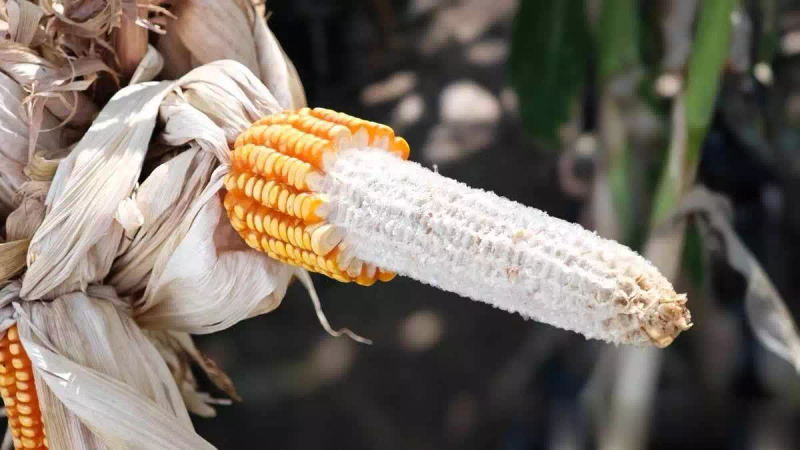
As farming technologies are being upgraded over time, models relying solely on monocropping have gradually shown weaknesses in risk resistance and resource utilization. A combination of good species based on the principle of the complementarity of species characteristics is an innovative form of cultivation based on the scientific combination of red-axis and white-axis maize varieties, which can effectively improve the resilience of field communities, optimize pollination efficiency and exploit the potential for increased production, providing practical technical options for stable production of spring corn。
I. Core advantages of mixed species of blue and white corn in spring
There are natural differences between red-axis maize and white-axis corn in terms of genetic properties, plant shapes, anti-reversible performance, etc. The hybrid model organically integrates these different properties, breaking down the limits of monoculture and achieving “1+1>2” farming benefits。
(i) increased resilience of field communities and reduced risk of cultivation
Resilientness is a key indicator of the adaptability of maize varieties, and the characteristics of red and white axes of maize are significantly complementary in terms of resistance to disease, voltage and environmental coercion. Red-axis maize varieties are usually characterized by strong and well-developed troughs, strong invertability and resistance to common diseases such as scabs and stasis, and can effectively reduce the occurrence of inverts and reversals in extreme weather events such as wind and stormy rains. The white-axis maize varieties, most of them, are characterized by dense-planted and cloud-resistant oscillations, and are still able to maintain a more stable growth pattern under special climatic conditions such as low-temperature vamps in the spring and high-temperature and humidity in the summer, while at the same time showing some resistance to diseases such as white powder and rust。
With the mixing of red and white axle species, fields form complementary groups of maize that can effectively spread the risk of monoculture. When a certain type of disease occurs in the field, more resistant varieties can form a natural “barrier” to reduce the rapid spread of the disease; in the face of the risk of inversion, different varieties of high-strength stasis support each other and reduce the probability of overall inversion. In addition, the drought-resilient and flood-resilient characteristics of red and white axis varieties vary, and the resilience of post-mixed groups to droughts and floods has increased significantly, guaranteeing the stability of spring maize growth in complex weather conditions。
(ii) extension of pollination time window to increase pollination rate
The pollination period is a critical period for the growth and development of maize, and the quality of pollination directly determines the number and yield of corn grains, thus affecting final production. There is a slight difference between the red-axis corn and the white-axis corn's male scintillation period and the female scintillation period, which is usually concentrated on three to five days in monocultures, during which poor weather conditions, such as high temperatures, rain, wind, etc., tend to lead to insufficiency of pollination and problems such as baldness, lack of grains and granules。
Under the red & white axe hybrid model, both varieties are connected with one another, extending the whole field pollination window to 7-10 days. In the early stages of the bulk pollination of the red axle varieties, the white axle varieties gradually entered the dusting season, and during the end of the bulk powdering period the red axle varieties continued to have some of their strains in a powdery state, resulting in “wrong pollination”. This complementarity of time has effectively circumvented the effects of bad weather on pollination, which, despite short-term adverse weather conditions during pollination, still has ample time to complete. At the same time, different varieties of pollen are spreading among themselves, enriching the sources of pollen, increasing the probability of fertilization of female specks, significantly reducing the incidence of bald and missing particles, and making maize specks full and even。
(iii) optimizing field group structures and improving resource efficiency
A reasonable group structure is the basis for high production of maize, and differences in red and white axes of maize in terms of heights, foliage patterns, coronal structure, etc., provide conditions for the construction of high-luminant and productive group structures. Red-axis maize, which is generally relatively high, is up-stretched, is well ventilated and suitable for cultivation in medium-high-density conditions; white-axis maize is relatively small, leaves are spread evenly, leaves have a large area coefficient, light-capable and suitable for cultivation in medium-density conditions。
After the mix, the red-and-white-axis corn is at fault and the leafy form is complementary, and the coronal structure of the field is characterized by “screech, up and down”, which effectively improves the ventilation of the field. The upper-level blades are fully photo-receiving and photo-cooperative, while the lower-level flat blades use diffuse light to increase light utilization. At the same time, there are differences in the depths of distribution of the root systems of different varieties, with the red axial roots of maize being deep enough to absorb bathymetry and nutrients in the soil; the white axial roots of maize being shallow, absorbing mainly the nutrients of the cultivated soil, resulting in the stratification of soil nutrients and moisture, avoiding competition between different plants and increasing the efficiency of fertilizer and water use. In addition, optimized group structures can reduce field humidity, reduce environmental conditions in which pests and diseases breed, and further guarantee maize growth。
(iv) quality of production stabilized and efficiency gains achieved
Production and quality are core indicators for measuring the benefits of cultivation, and the hybrids of the red and white axis show significant advantages in terms of both stable production and upgrading. In terms of production, the hybrid model effectively circumvents the risk of a reduction in production from monoculture by increasing resilience, increasing pollination rates and optimizing resource use, achieving a 5-10 per cent increase in production in normal years and an increase of more than 15 per cent in disaster years。
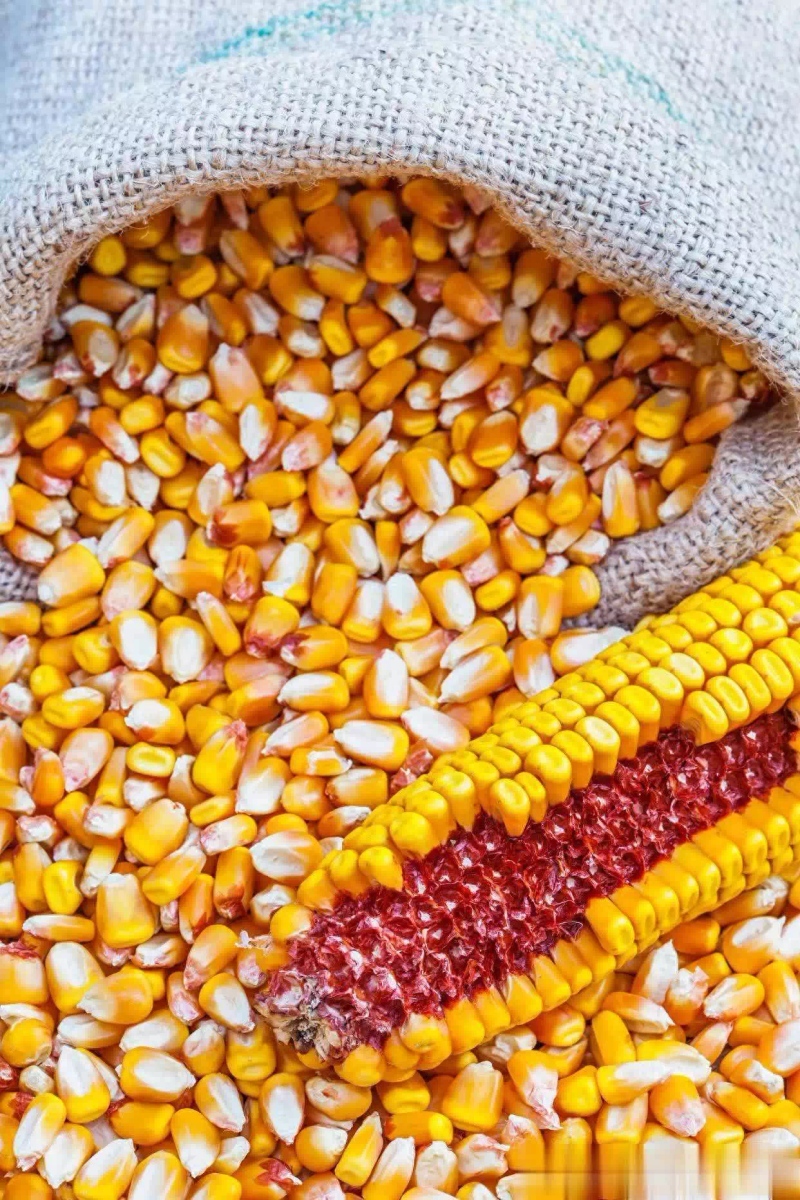
In terms of quality, red-axis maize seed grains are rapidly dehydrated and heavy in size, full seed grains are abundant and good in commercial terms, suitable for varieties harvested as seed grains, and white-axis maize seed seed seeds have a high level of starch and a good taste, suitable for cultivation as blue or fodder corn. When mixed, harvests can be adapted flexibly to market demand, and if seed grains are mainly harvested, the quality seed grains of the red axis varieties can raise the overall commodity food rating; if they are stored primarily, the high starch content of the white axis varieties can increase the nutritional value of feed. This “one-field” potential further enhances the economic benefits of spring maize cultivation and provides new avenues for farmers to increase their incomes。
Ii. Scientific methodology of the chung red and white axis
The red & white axe hybrids are not simple hybrids, but require scientific planning and precision management in order to take full advantage of the hybrids by following the principles of matching, proportionate and co-singling。
(i) accurate screening of suitable varieties to establish a solid hybrid base
The selection of varieties is key to the success of the mix and needs to be guided by the core principles of “reproductive proximity, complementarity, validation and replication”。
One is the choice of varieties with similar reproductive periods. The spring maize fertility period directly affects the planting time, harvest time and field management rhythm, and differences in the reproductive period between the hybrid red and white axis varieties are to be contained within three to five days, avoiding the difficulties of management in the field due to excessive differences in maturity periods, or problems such as the collapse of pre-maturized varieties, and the lack of slurries for later-maturized varieties. Priority is given to the selection of locally validated and extended spring-cast varieties to ensure that they are adapted to local climatic and soil conditions。
Second is the choice of varieties with complementary anti-resilient characteristics. Targeted pairs are based on the main type of disaster and occurrence of the disease. In the event of a high incidence of local wind events, preference is given to matching red axy with white axy resistant; in the event of a serious local disease, the red axy with the white axy with rusty axy. At the same time, taking into account the high differences, the red axle varieties can be slightly higher than the white axle varieties, forming high and low faulty group structures and improving ventilation。
Third is the selection of species of appropriate quality. The selection of quality-complementary varieties for the purpose of cultivation, mainly for seed sales, is based on the choice of red-axle high-capacity varieties to be matched with white-axle high starch varieties, and of red-axle high-volume species to be matched with white-axle high-nutrient varieties to achieve synergy of quality and production。
(ii) determination of reasonable mix and optimization of group structure
The combination ratio directly affects the group advantage and needs to be determined by science in combination with the characteristics of the species, planting density and field management approach, and the most widely applied model is the line-to-mix model。
One is the recommended line comparison configuration. For plots planted by artificial or small machines, a line-by-line configuration of 1:1 or 2:2 is used, i. E., one line of red-axis with one line of white-axis or two lines of red-axis with two lines of white-axis. This configuration is simple and facilitates management operations such as field fertilization, spray, etc. For large-scale mechanized plots, a 3:2 line-by-line configuration could be used to balance mechanical efficiency and group complementarities。
The second is to control planting density. Mixed densities need to be determined in combination with the characteristics of the species, generally increasing by 5 to 10 per cent compared to the intensity of single species. Insistible white-axis varieties can appropriately increase the number of plantations, reverse red-axis varieties remain appropriate density, ensure that the total number of field plants meets local density standards for high-yielding cultivation, and avoid group depression due to high density or too low density to take advantage of the group。
Third is to avoid an imbalance in the proportion of single species. The proportion of red-and-white-axis varieties to be cultivated needs to be kept between 1:1 and 3:2 to avoid the underrepresentation of one species. If there are too few single varieties, it is difficult to form effective groups and do not play counter-resistance and pollination complementary roles。
(iii) regulate seeding management processes to ensure that they are strong
Consequence seeding and precision seeding are key elements in ensuring the unity of growth of the mixed population of red-and-white-axis corn, which requires strict control of the timing, depth and quality of seeding。
One is to manage the planting time. Spring maize seeding needs to be based primarily on soil temperature, which can be done when soil temperatures of 5 cm or more are stabilized at 10°c. Red-and-white-axis varieties need to be sowed over the same period to avoid sowning that leads to uneven growth and affects pollination and group structure. The planting time also needs to be combined with the local climate, avoiding late frosts and preventing cold freezing from affecting seedlings。
Second is the harmonization of seeding standards. The sowing depth of the red and white axis varieties needs to be consistent, generally contained at 3-5 cm, with a suitable low-sprinkled plot, and a low-sprouted plot, with a maximum depth of 6 cm. The seeding shall be conducted in such a way as to ensure a balanced and reasonable range and to avoid leakage and replaying. At the same time, seeding is adjusted to the characteristics of the species to ensure that the rate of seeding is over 85 per cent。
The third is the repression after the broadcast. The timely suppression of seeding has brought seeds into close contact with the soil and has facilitated seed-ingestion. Repression efforts need to be adapted to soil conditions, softly repressed well-intentioned plots, heavy repression of poorly-intentioned plots, and the prevention of soil leaks, affecting the integrity of the seedlings。
(iv) enhanced integrated field management for robust growth
Field management of mixed red-and-white-axis maize species needs to balance the growth needs of both varieties, follow the principles of “harmonized management, precision control” and implement key measures such as fertilizer, water and pest control。
One is scientific fertilization. Based on soil fertility and maize target production, a rational fertilisation programme is developed, with base fertilisation dominated by organic and compound fertilisation, followed by nitrogen fertilisation, taking into account phosphorous potassium fertilisation. Fertilizers should be applied in such a way as to ensure homogeneity and avoid local fertilisation at high concentrations. During the corn horns, re-fertilization is required to meet the nutrient needs of the two species during the symbiosis period and to promote large specks。
Two is rational water. In accordance with the pattern of demand and soil conditions for maize growth, timely water is provided, with a particular focus on ensuring the water supply for seeding periods, dysentery periods, masculinities and slurry periods. The planting of seedlings keeps the soil wet and promotes seed growth; the filament period is a water-critical period that ensures sufficient water in the field to avoid the effects of drought for pollination; and the slurry period keeps the soil stable and contributes to the abundance of seed grains. At the same time, the rains are followed by timely drainage and flood-proofing, so as to avoid the root causes of decomposition of the fields。
Third is green control of pests. Consistent with the “preventive and integrated approach” approach, targeted pest and disease control is carried out in the light of the resistance characteristics of the red and white axis species. Priority is given to agricultural, physical and biological control measures, such as rational rotation, the removal of the sick and sick in the field, the use of booby traps and the release of natural enemies. When necessary, chemical control, the selection of highly effective, low-toxic, low-pest pesticides, strict control of dose and time of use, and avoidance of pesticide residues affecting the quality of maize and the ecological environment。
Four is a timely harvest. The harvest can take place when the maize seed particles are lost and the base is blackbed. The red-and-white-axis varieties are sowed over the same period of time, with essentially the same maturity periods and a uniform mechanical harvest. If there are minor differences in the maturity of the two varieties, the harvest can be delayed appropriately, pending the full maturity of the seed grain, to ensure yield and quality。
Iii. Attention to promoting the application of hybrid technologies in the red and white axis
In promoting the application of integrated techniques in the red and white axes of corn in spring, local realities need to be taken into account to avoid blindness and wind and ensure that the technology works. One is the development of a pilot demonstration of varieties, which will require local small-scale seed screening tests to determine the mix and mix of suitable varieties and to summarize locally appropriate planting techniques. The second is to strengthen technical guidance training to reach farmers through field observation, technical lectures, home orientation, etc., with the aim of increasing the level of scientific farming among farmers by disseminating the technical elements of hybrids. Third is the integration of modern agricultural technologies, combining hybrid technologies with modern agricultural technologies, such as precision fertilization, water-saving irrigation and mechanization, to further enhance the efficiency of cultivation。
Spring corn is a good hybrid technique, a model of innovative cultivation that meets the demand for the cultivation of our spring corn-producing areas, which has achieved resilience, productivity stability and quality optimization through the complementarity of varieties. As the process of modernization of agriculture accelerates, this technology will play a more important role in guaranteeing food security and promoting high-quality agricultural development, injecting new dynamics into the efficiency gains of our maize industry。

The top 10 of the 2026 video games