


Hello, i'm v:xixinke79. This is the information i've compiled, and i hope it will help you。
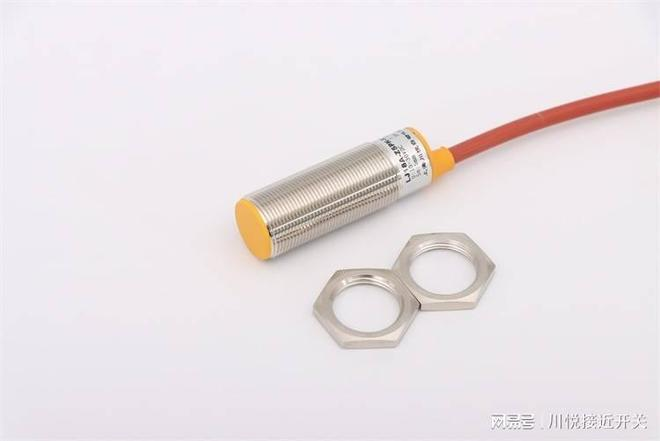
The proximity switch is a sensor that detects the existence of objects without physical contact. When the target object enters its area of sensing, it detects the proximity of the object and produces the corresponding control signal. This method of non-contact detection has made it widely used in areas such as industrial automation, mechanical equipment, etc。
The core function of approaching switches is to detect objects within a given range without having to contact them directly. This feature makes it highly suitable for use in harsh environments or in situations requiring high frequency operations, such as oil pollution, dust or current line operations requiring rapid response. The near-switch has no wear and tear associated with physical contact and therefore has a longer useful life and greater reliability than traditional mechanical limit switches。
Depending on the principle of detection, the proximity switch is divided into several types. Each type has its specific working principles and applicable scenes。
The electrons approach switches is a common type. It uses electromagnetic induction principles to detect metal objects. It contains an internal high-frequency oscillation circuit, which produces an intersection magnetic field. When a metal object enters this magnetic field, a vortex is generated within the object, leading to changes in the amplitude or frequency of the oscillation circuit. This change is detected by subsequent circuits and triggers a change in output status. The electro-sensor approach switch does not react to non-metal materials and is therefore particularly suitable for the precise detection of metal objects in environments containing non-metal impurities。
The rationale for the approximation approach switch is based on a change in the approximation. It works by detecting changes in the tolerance values between the detected object and the sensor sensor surface. Any medium constant close to the sensor surface of an object different from the air will cause a change in the system's capacitation. This change is detected by circuits and converted to switch signal output. Unlike the electron sensory pattern, the approximation switch detects not only metals but also non-metal materials such as plastics, wood, liquids, etc. This makes it widely useful in material detection, fluid control, etc。
The hall approach switch uses the hol effect to detect magnetic objects. When a magnetic object approaches the hole shape, the element produces electrical power differentials in the magnetic field, a signal that is processed to control the switch state. Such switches are usually used to detect permagnetics or electromagnets, and perform well in retrospective measurements, location tests, etc。
The ultrasound approach switch detects the object by launching the ultrasound and receiving its echo. It calculates the time of the ultrasound from launch to return, thus determining the distance of the object. This type of switch is capable of detecting materials, including transparent objects and liquids, but may be affected by environmental factors such as temperature, humidity, etc。
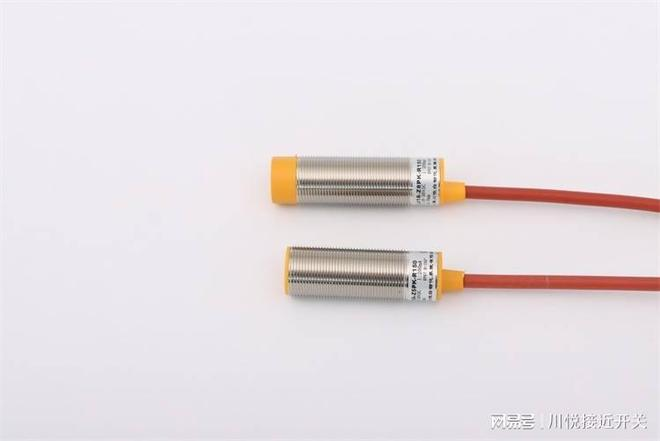
Optical proximity switches are tested using optical principles. It consists of a luminator and a receptor, which determines the existence of the object by detecting the presence of light or changes in its strength. When the object enters the detection area, it will block or reflect the light and cause a change in the light signal received by the recipient, thereby triggering the switch action. This switch is applied for long-range detection, but requires high environmental cleanliness。
Different types of proximity switches have characteristics in terms of detection distance, response frequency, and environmental adaptability. The selection needs to take into account the material, shape, size and installation environment of the subject. For example, electrons may be a better choice in the detection of metal objects; and electrons or photovoltaics may be more appropriate when non-metal materials need to be detected。
The output close to the switch takes a variety of forms, including straight-stream two-line, straight-stream three-line, straight-stream four-line, etc. Two-lined wires are simple, but there is residual voltage; three-line systems are npn-type and pnp-types, which correspond to different output polarity; and four-line systems have both open and closed contact points and are more flexible. Users need to choose the appropriate form of output in accordance with the requirements of the control system。
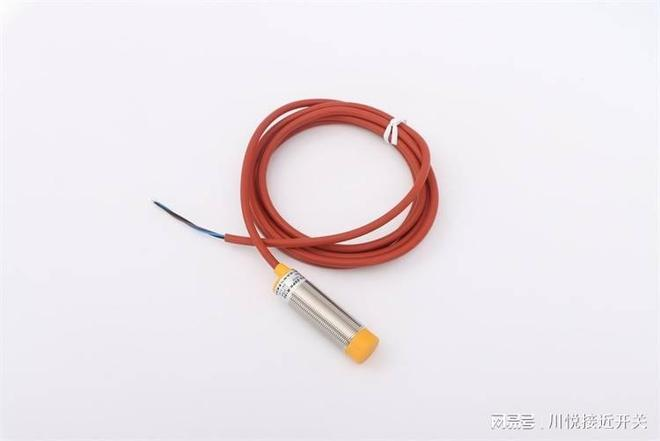
Several aspects need to be noted when installing and using close switches. The first is to ensure that the distance between the switch and the target object is within the rated detection range. The second is to avoid interference by surrounding metal objects with electric sensor switches, or the influence of non-metal objects on the holding switches. In the case of high frequency (hf) usage, it is also necessary to consider whether the switch response time meets the requirements。
In practical applications, the stability and reliability of near switches is affected by a number of factors. Temperature changes may affect the performance of certain types of switches; strong electromagnetic fields may interfere with the work of electrons and horticultural switches; and environmental factors such as dust and oil pollution may affect the sensitivity of photovoltaic switches. Therefore, the characteristics of the actual working environment need to be fully taken into account in the selection and installation。
As technology develops, the performance of near switches is increasing. Modern proximity switches have smaller sizes, longer detection distances, higher frequency of response and better environmental adaptability. A number of new products also combine intelligent functions, such as self-diagnosis, temperature compensation, etc., which further expand their application。
In automated production lines, close switches are often used to detect the location, counting, revelocity measurements, etc. Of the works. In the area of safety protection, they can be used to detect the opening of doors and windows or intrusion of dangerous areas. In auto manufacturing, the proximity switch is widely applied to the precise location of robotic arms, parts testing, etc。
It is important to keep a regular check of the fixed state and sensory face cleaning when close to the switch. If the switch is found to be decreasing, the power voltage should be stabilized in a timely manner, the location of the installation changed and any new sources of interference in the surrounding environment。
1. The proximity switch detects objects by means of non-contact methods, using the principles of electromagnetic induction, capacitivity change, the hole effect, etc。
The main types include electrons, capacitors, hormonals, ultrasounds and photovoltaics, each with different applicable scenarios and characteristics。
The selection and use need to take into account factors such as detection distance, frequency of response, environmental adaptability and modes of output to ensure their stable and reliable performance。



