The market demand for garlic as an important spice and cash crop continues to grow. However, many growers face problems in the production process, such as low yields and poor quality. The following is a study of garlic farming techniques and management。
I. Fertilizing the whole area
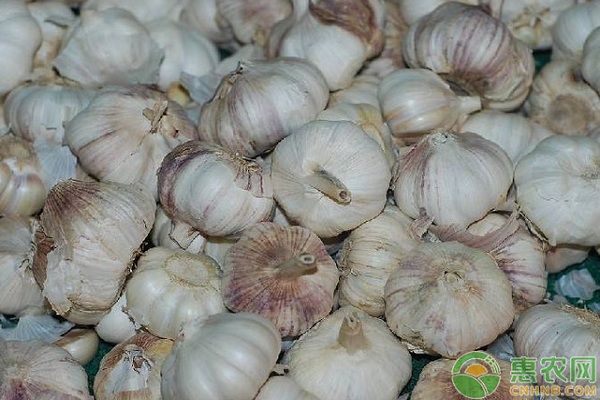
Garlic is the key. Soils should be selected that are loose, well drained and organically rich, with sandy soil as the best option. Until the harvest is completed, the process of tilling the land will begin and the soil will be fully sunken. Before seeding, it needs to be nuanced. The application of base fertilizer cannot be ignored and needs to be evenly distributed before the tillage is turned over. Given that garlic is long-lived, has high population density and requires high levels of fertilization, it is generally required to apply high-quality organic fertilizers, such as decomposed urine fertilizers, school fats, and 5,000 - 8,000 kg, with 20 - 30 kg of phosphorus and potassium fat. Bearing in mind that organic fertilizers must be fully fertilized, otherwise fermentation can burn garlic roots and may induce underground pests, especially maggots, which seriously affect the growth of garlic. The width of the platinum is 1. 5 to 2 metres and the length of the piping is extended to allow later management and ventilation。
Ii. Autumn garlic planting techniques
(i) seeding
Right-time seeding: the timing of planting is essential for garlic growth. The ideal plant state is to grow 5-6 leafs before winter, when cold resistance is the strongest, safe for winter and successful springing. The yangtze basin and its areas south are normally seeded in mid-september; the north-eastern mountains, the rucheng mountains and the peninsula are suitable for mid-september; runan (near the mountains and the towns of king) is suitable for mid-october; anhui garlic is broadcast from late september to early october; shashi garlic is broadcast in mid-september; taihara garlic is broadcast in mid-march and late september in mid-september; beijing garlic spring is broadcast in mid-march and late september is broadcast in mid-september; changyeung garlic spring is broadcast in mid-april; and shenyang garlic spring is broadcast in mid-march. It is also likely to cause secondary growth in the second year, resulting in the formation of corrosive garlic and lower quality; it is too late, the seedlings are weak, the roots are stunted, cold-resistant and the winter mortality is high. The planting period must therefore be strictly controlled。
2. Reasonable planting: cyclops are the basis for increasing production. The production of garlic and garlic is determined by the number of plants per acre, the number of individual garlic petals, and the weight and weight of the acre. Cultivation is carried out in such a way that it is reasonably embedded according to the characteristics of the species. Early ripen cultivation is small, leaves are small, short-lived and short-lived, with a minimum density of around 50,000 acres, with a range of 14-17 centimetres and a distance of 7-8 centimetres and 150-200 kg of acre; medium and late ripen varieties have a long reproductive period, are large and have a large number of leaves, and density should be reduced appropriately, with about 40,000 acres, with a range of 16-18 centimetres and 10 centimetres and 150 kg。
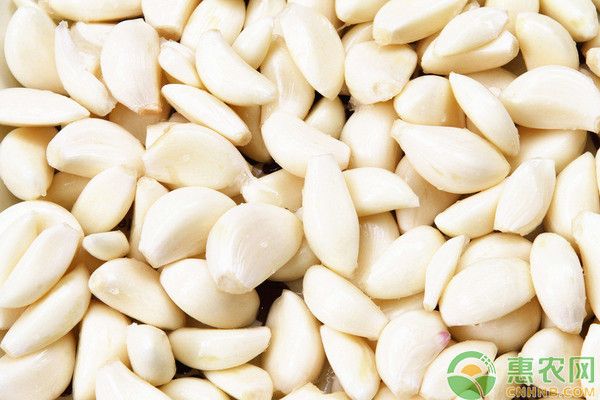
The farming proverb, “deeply planted on the ground”, is a summary of years of practical experience of farmers. Garlic seeding is suitable for a depth of 3-4 cm, with two main methods of sowing it: the plug is the insertion of the petals into the soil, which is then covered and laid down; and the groaning is the opening of shallow ditches with pickles, where the petals are sown, which are about 2 cm thick and are then watered with a mild pedal. A layer of material, such as straw, may be covered on soil for wetting purposes. The depth of seeding requires precision control, too deep and too late, too long mantles, too much fatness in the root system, and heavy pressure on garlic from the soil, which affects production; and too shallow to “jumping petals”, where the roots of the seedlings are prone to water scarcity, poor growth of the roots and colder winters。
(ii) field management
1. Fertilizer pursuit: although garlic seedlings produce long-term petals to provide nutrients, they need to be followed up in due course in order to promote the growth of seedlings and to expand the area of nutrient cultivation. Garlic roots are less able to absorb fat, and the pursuit of fat should be based on quick-impact fattening, avoiding the loss of fat to lead to yellow hair. In general, fattening is 3 to 4 times, including seedlings (after the application of light manure urine seedlings after the planting of seedlings and the use of carbon ammonium), fattening (60 to 80 days after seeding, re-applied manure, 20 to 30 pounds per acre, 10 kg of ammonium sulphate, 5 kg of potassium chloride), fertilizers (after the larvae, re-exact potassium, 10 to 15 kg of nitrogen fat, which is applied around the end of the month), as well as garlic fattening (early and mid-term pre-cooking, e. G., 5 to 10 kg of aluminium per acre, around 5 kg of urea alone, which is free from swelling)。
2. Hydraulic management: one week after the seeding period, the seedling will be able to grow once the soil is dried; the pre-baby period is a critical period for the fragmentation and formation of the garlic trophic organ, with control of water recharge and attention to drainage after autumn rains; the latter part of the seedling is important for nutritional growth until the end of the winter, when the soil drys one time, when the temperature rises after the winter, when water is needed for garlic leaves to grow and the mantle to grow; when the screeching period is the most fertilized period, when the pregnancy is followed up, when the screech is filled, and when the “scramble ends”, when the water is poured down, until it stops two to three days before the harvest; when the screeching of garlic during the screeching period is immediately followed by the pouring of garlic, when the water is stopped。
3. Cultivation: herbicides can be sprayed before seeding, such as sapling, simazin and atrazin, herbicides, garlic fields, which are dominated by single-leaf grass, 35-65 grams per acre, garlic fields, dominated by double-leaf broad-leaf grass, 120-150 ml or 24% gol 45-60 ml per acre, and water dilute spray before seeding. Garlic seedlings are long-lived, weeds are grown in time for weeds to grow, and weeds are uprooted early to avoid competition with garlic seedlings。
Collection
1. The pick-up of garlic is an appropriate time for harvesting when the pick-up is taken out of the leaves and starts to bend. The timing of harvests has a significant impact on the production and quality of garlic, with low, breakable, poor commercial performance, late growth of garlic and increased fibres. The harvest should take place in the middle of the day at noon and afternoon, at which time the plant is aging, the leaves are easily separated from garlic and the leaves are resilient. The method of extraction depends on the purpose, and is based primarily on the harvesting of garlic, which can be cut open or cut open with high yield and good quality, but which is easily dead and low in the production of garlic; and the harvesting of garlic, which is dominated by the maintenance of a good femur, which is scratched with its left hand, and the extraction of garlic from its right hand, which, although low in the production of garlic, is conducive to the expansion of garlic。
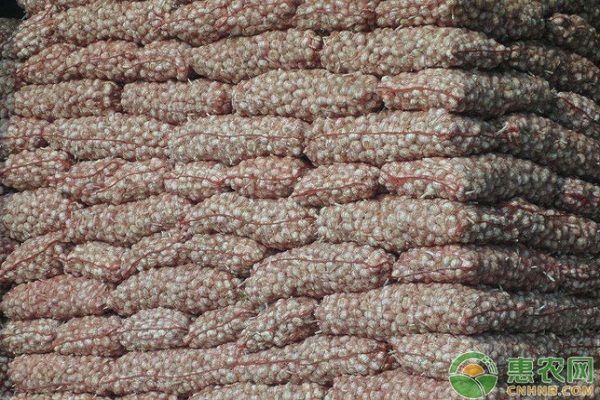
2. Garlic: garlic can be collected 15-20 days (mostly 18 days). The harvest is marked by the drying up of most of the leaves, the greening of the upper leaves, the drying down of the leaves, the softness of the mantle, and the basic growth of garlic. The collection of premature garlic, which is abundant in moisture, is prone to dissipation, is scattered and loses its value. When harvested, they dig hard, pull softly, pick up garlic and then take them to the field, leave them in the sun, prevent burns or turn green, and often roll over for 2 - 3 days, with the leaves to be stored when they are dry。
With the above-mentioned technical points for the management of garlic cultivation, growers can be effective in improving the production and quality of garlic and achieving increased production. In practice, management measures will also need to be continuously optimized in accordance with local climatic conditions and soil conditions。
You may be interested in, and welcome to read, the following recommendations of the network:。