The national intellectual property agency (inip) has defined the criteria for determining trademark infringement
The determination of trademark infringement is often difficult in practice, and in recent days this dilemma has been clearly resolved。
The national intellectual property authority has recently published the trademark tort determination standards (hereinafter referred to as " the standards " ) aimed at improving the system of rules for the protection of trademarks, addressing new situations and problems in law enforcement practice, providing specific operational guidance to law enforcement authorities for their administration, further raising the level of trademark enforcement protection and protecting the environment for transparent and predictable intellectual property rights of market subjects。
Where trademarks are identical and approximative, what are the conditions to be met by a seller for exemption from liability, and how the first-use unregistered trademarks are identified ... A series of “challenges” concerning tort judgements of trademarks are identified in the standards and provide more operational guidance to front-line law enforcement officials。
The addition of service trademarks relates to places
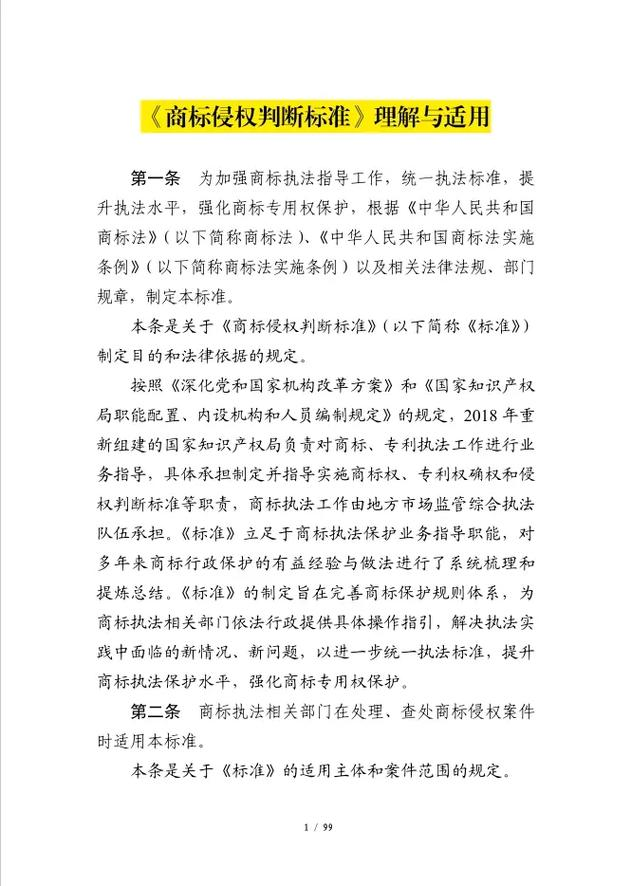
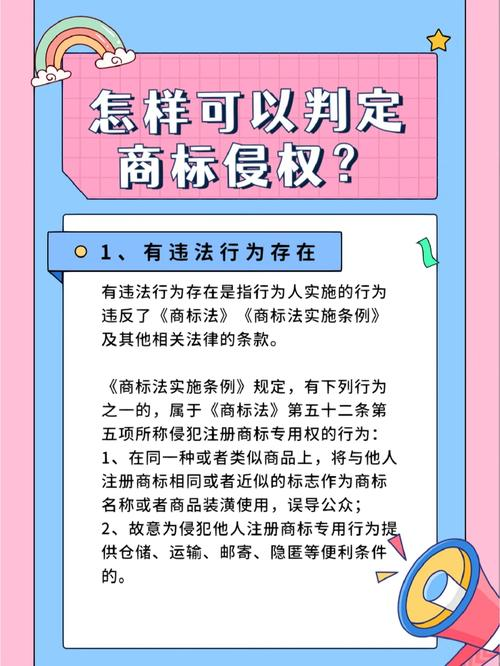
It is understood that trademark tort judgements are more professional, legal and complex, while the protection of trademark rights under trademark law is more principled. Added to this is the growing diversity and complexity of trademark infringement forms as the internet economy develops。
In november 2019, the nco issued its opinion on enhancing protection of intellectual property rights, which explicitly called for “the development of standards for the determination of trademarks and patent infringement in the course of administrative enforcement”. The national programme for the implementation of the declaration on the strengthening of protection of intellectual property rights for the period 2020-2021 has been further developed by the government of china。
According to the head of the protection department of the national intellectual property authority, 38 articles of the standards regulate the use of trademarks, the same goods, similar goods, the same trademarks, approximations of trademarks, ease of confusion, exemption from liability for sales, conflicts of rights, suspension of application, identification of rights holders, etc。
Among them, the standards also make innovative provisions for the use of trademarks. “theoretical and substantive communities have a high interest in the use of trademarks. The standard makes it clear that a finding of a violation of a right to exclusive use of a trademark generally requires a determination as to whether the alleged infringement constitutes the use of a trademark in the sense of trademark law.” the officer-in-charge said that the standard adopted a “general” expression in view of the fact that the forgery of trademarks in torts under article 57 of the trademark act did not involve a determination that trademarks were being used by unauthorized manufacturers。
At the same time, the standards further refine the definition of the use of trademarks, increase the number of service venues covered by service trademarks and list, respectively, the specific manifestations of trademarks used in goods, services, advertising and other commercial activities, especially in response to the features of the internet era, adding new forms of expression such as websites, instant communication tools, social networking platforms, applications, and two-dimensional codes. The standard also provides for the principle of determining the use of trademarks, i. E. That the determination of whether or not a trademark is to be used should take into account, inter alia, the subjective intent of the user, the manner in which it is used, the manner in which it is publicized, the practice of the trade, and consumer perception。
What circumstances are covered by the same trademark
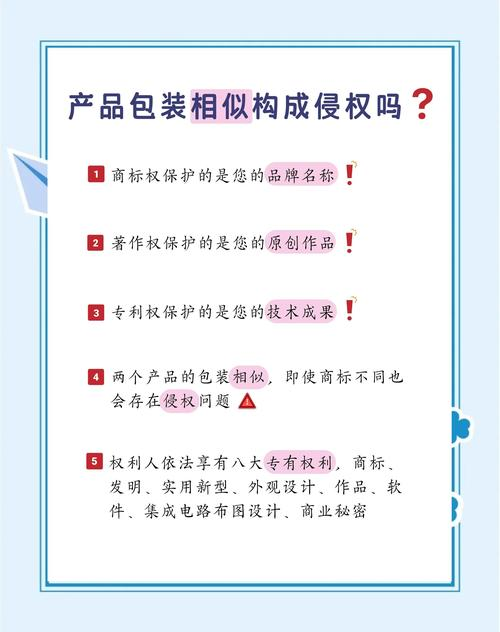
What circumstances are covered by the same trademark? According to the standards, the same trademarks contain the following situations: the text of the trademarks is composed of the same text in the same order; the fonts of the registered trademarks are changed, the letters are typed, the text is vertically organized, and there is virtually no difference from the registered trademarks; the space between the words, letters, numbers, etc. Of the registered trademarks is changed, and there is little difference from the registered trademarks; the colour of the registered trademarks is changed without prejudice to the representation of the prominent features of the registered trademarks; only the generic names, graphics, model numbers, etc., are added to the registered trademarks without prejudice to the representation of the prominent features of the registered trademarks。
Graphical trademarks are essentially non-differentiated in terms of their visual compositions, manifestations, etc.; text graphic trademarks are the same in terms of text composition, graphic appearance and presentation, and trademarks are essentially non-differentiated in terms of call and overall vision; prominent three-dimensional marks and visible plane elements are the same or practically non-different in terms of the stereomarks; colours and forms in terms of colour combination trademarks are the same or virtually non-different; sound trademarks have the same sense of hearing and overall musical image, or are essentially non-differentiated。
According to the above-mentioned officials, the standards incorporate the provisions of the supreme law, the supreme public prosecutor's office and the relevant judicial interpretations of the ministry of public security, which stipulate that only the generic trade names, graphics, models, etc., will be added to the registered trademarks, without prejudice to the fact that the prominent features of the registered trademarks are clearly defined as the same trademarks, so that the standards of the later two-law interfaces are consistent with those of the public security organs, the public prosecutor's office, the courts, etc。
Viable judgements are also defined in the standards. For the first time, the trademarks act, introduced in 2014, introduced provisions that could lead to confusion. On the basis of research, analysis of administrative normative documents and judicial interpretation, the above-mentioned persons described the standards as providing for easy confusion to cover two situations: the first is sufficient for the public to believe that the goods or services in question are produced or provided by the registered trademark holder; the second is sufficient for the public to believe that the provider of the goods or services in question has an investment, licence, association or cooperation with the registered trademark owner。
Prior to that, judicial interpretations and practices, trademark review hearings and administrative enforcement practices had taken into account factors that could confuse the public in question, i. E. Similarity and approximation of confusion, in the determination of similar goods, similar to trademarks. In order to further clarify the relationship between similar commodities, approximations of trademarks, and ease of confusion, the standards consider commodity-like situations, and the approximation of trademarks, as factors to be taken into account in determining the ease of confusion, with a view to addressing the risk of confusing issues of double determination. “concerning determinations need to take into account a variety of factors, including the approximation of trademarks; the similarity of goods or services; the prominence and visibility of registered trademarks; the characteristics of goods or services and the manner in which trademarks are used; the degree of attention and awareness of the public concerned; and other relevant factors.” according to the officer。
Detailed vendor exemption
The standards elaborate the relevant elements of a vendor's exemption from liability, making it clear that it is not an unknown sale and that the relevant conditions for the provider of the statement are met。
According to the above-mentioned official, exoneration of the vendor's liability would have to satisfy three elements at the same time: first, that the seller did not know that the goods sold violated the right to mark; second, that the seller could prove that the goods were legally acquired by itself; and third, that the seller could account for the commodity provider。
The standards detail circumstances that are not unknown to the sale, including: the non-conformity of the route of entry and the apparent price below the market price; the refusal to provide accounting documents such as accounts, sales records or falsifications; the subsequent transfer, destruction of physical evidence, false proof or false information; and the handling of similar violations. Vendors are able to state that a commodity provider means that the party involved offers accurate information or leads, such as the name, business address, contact details of the supplier. A provider is not considered to have been unable to find a provider because the parties involved provided false or unverifiable information。
In addition, the determination of unregistered trademarks with a certain influence as to which circumstances do not fall within the scope of the original use has been a problem in practice. The standards make it clear that there is some influence in taking into account such factors as the duration of the trademark's use, the volume of the goods sold, the amount of business, advertising, etc. The user is not considered to have continued use within the scope of the original use if it increases the specific goods or services used in the trademark and changes the graphic, text, colour, structure, writing, etc. Of the trademark, except for changes made for the purpose of distinguishing it from the registered trademark of another person. (reporter zhang wei)