I. Rationale and methodology for fire prevention and suppression
The score is 1 to 2 points per year。
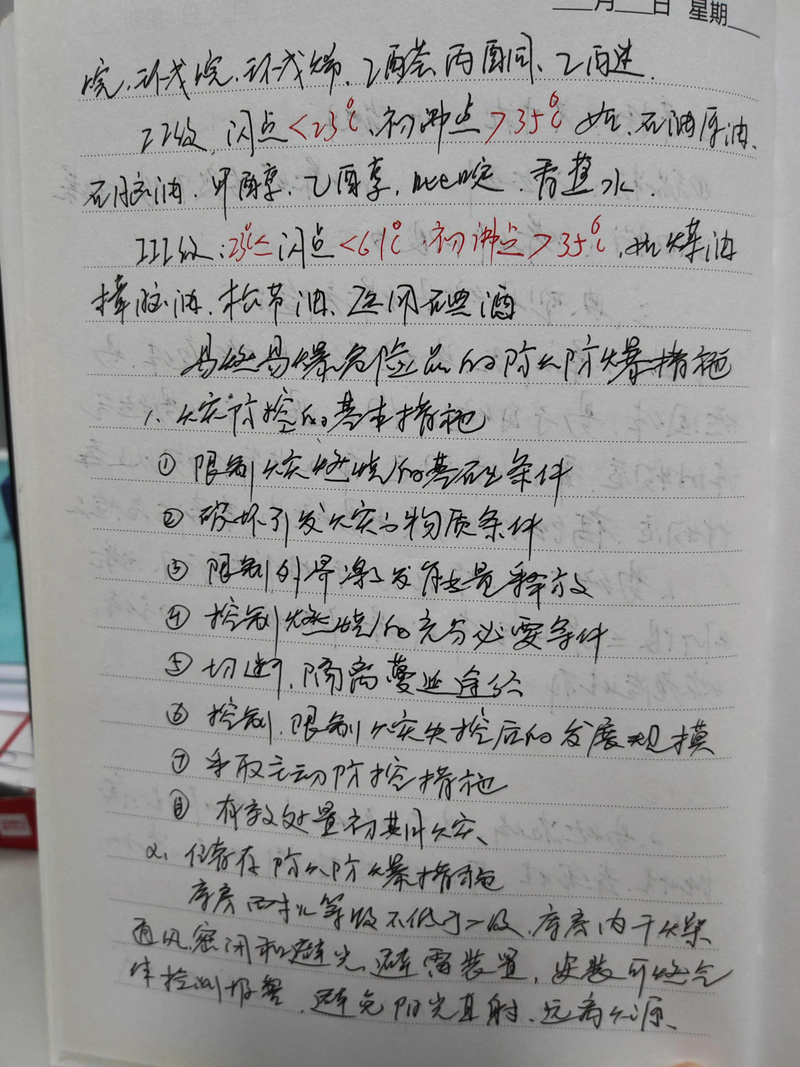
Fire prevention principles: control of combustibles, insulation of flames, control of ignition sources。
2. Fire suppression methods (scrutinised): 1, cool the fires and destroy the triggers of combustion conditions, such as water and fog;2 separate fire suppression: separate flammable materials from the air, such as foam and sand; and rapidly close the valves that deliver flammable liquids or flammable gas pipes and cut the pipelines that flow to the fire;3 and asphyxiate the fires: combustion cannot be maintained when the general oxygen concentration is below 15%, e. G. By injection of non-flammable gases such as carbon dioxide, nitrogen gas, vapour, etc. The combustion ceases when the vapour concentration in air reaches 35%. 4 chemical suppression of fires, often with dry powder and heptafluoropropane。
Ii. Explosive and flammable dangerous goods
It doesn't matter. It takes about a point every once in a while
Main findings:
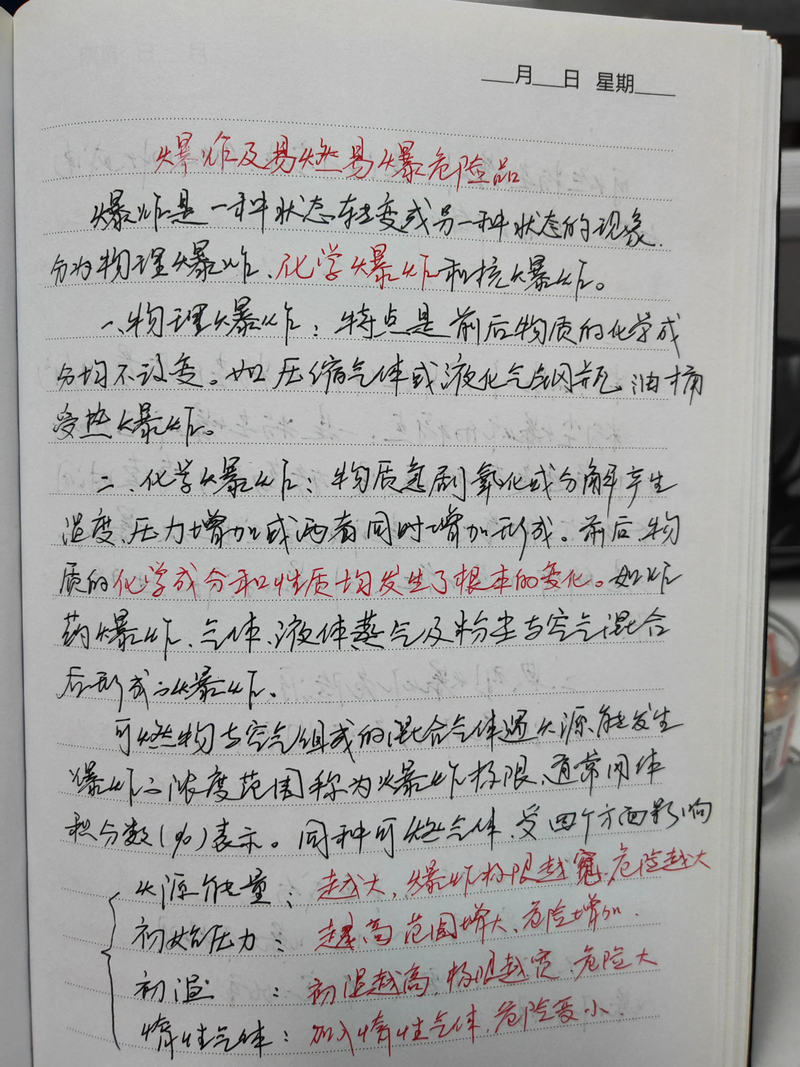
1. The explosions are classified into physical, chemical and nuclear explosions。
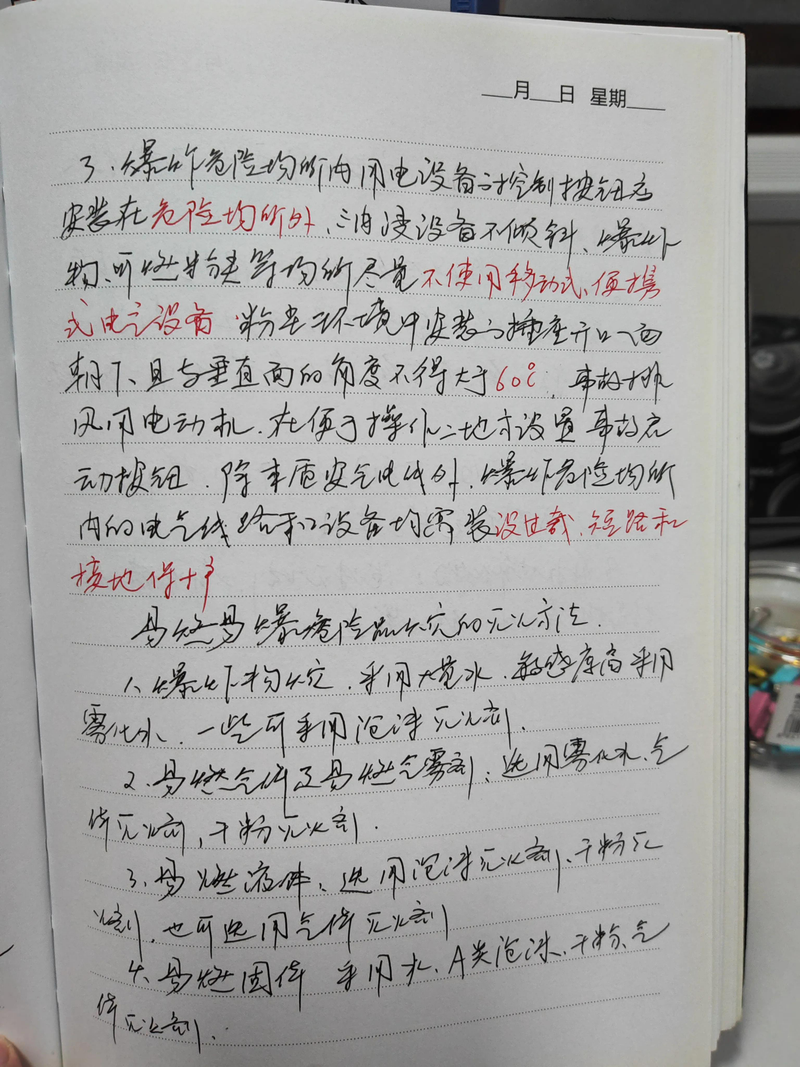
2. Focus on chemical explosions. Exploding limits: flammable gases are expressed in percentages of volume as being affected by fire source energy, initial pressure, initial temperature and inert gases, where the greater the fire source energy, the more dangerous the explosion, the higher the initial pressure, the more dangerous the initial temperature (the exception is dry carbon monoxide). Common entry point: industrial sites that produce and store less than 10 per cent of the flammable gases below which an explosion is limited to an explosion, generally opt for blastproof electrical equipment. An industrial site for the production, storage or storage of a flammable gas with a lower explosive limit of more than or equal to 10 per cent may be selected for any explosive electrical equipment。
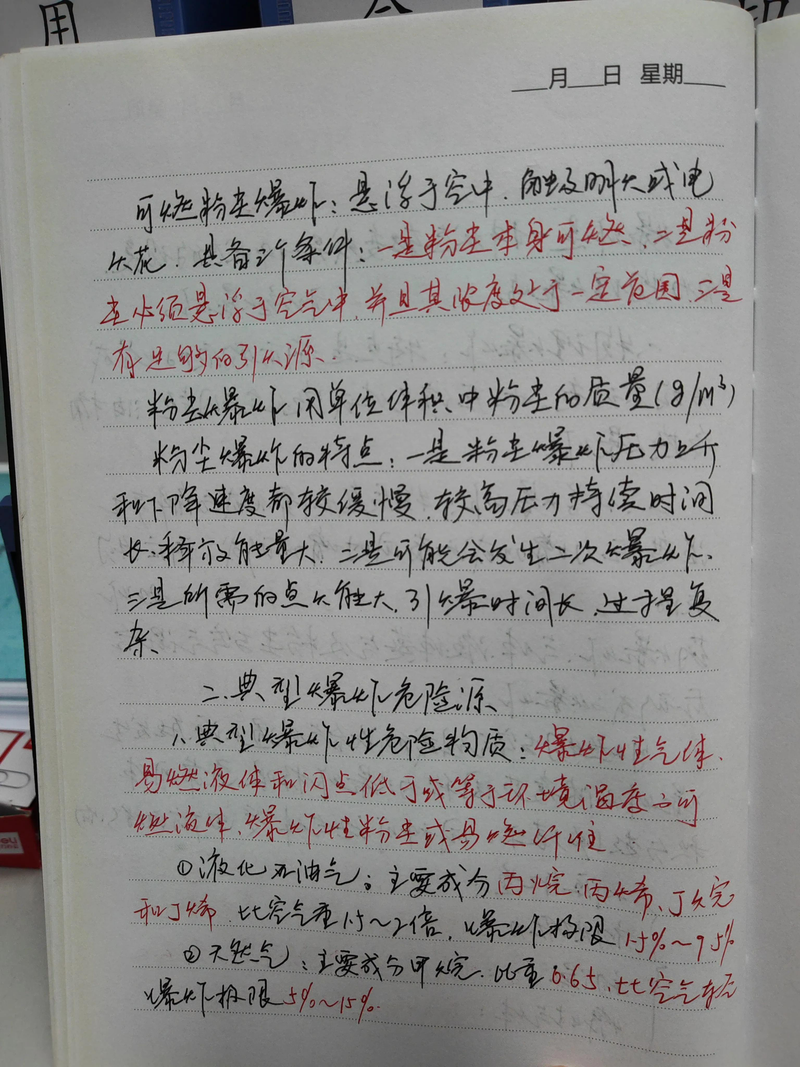
3. Flammable dust explosions (also a small focus), with three conditions: one is that dust itself is flammable, the other that dust must hang in the air and the other that there are sufficient sources of fire. Exploding limits for dust explosions are usually expressed as mass percentages. Dust explosions are characterized by slow increases and decreases in explosive pressure, long periods of higher pressure, high energy releases, the possibility of secondary explosions, high ignition, long detonation times and complex processes。
Iii. Typical sources of explosive hazards
This element focuses on:
Liquefied petroleum gas: the main components are propane, acetylene, butane and butane, which are heavier than air and have explosive limits of 1. 5 to 9. 5 per cent
Natural gas: methane, which is the main ingredient, is lighter than air and has an explosive limit of 5 to 15 per cent
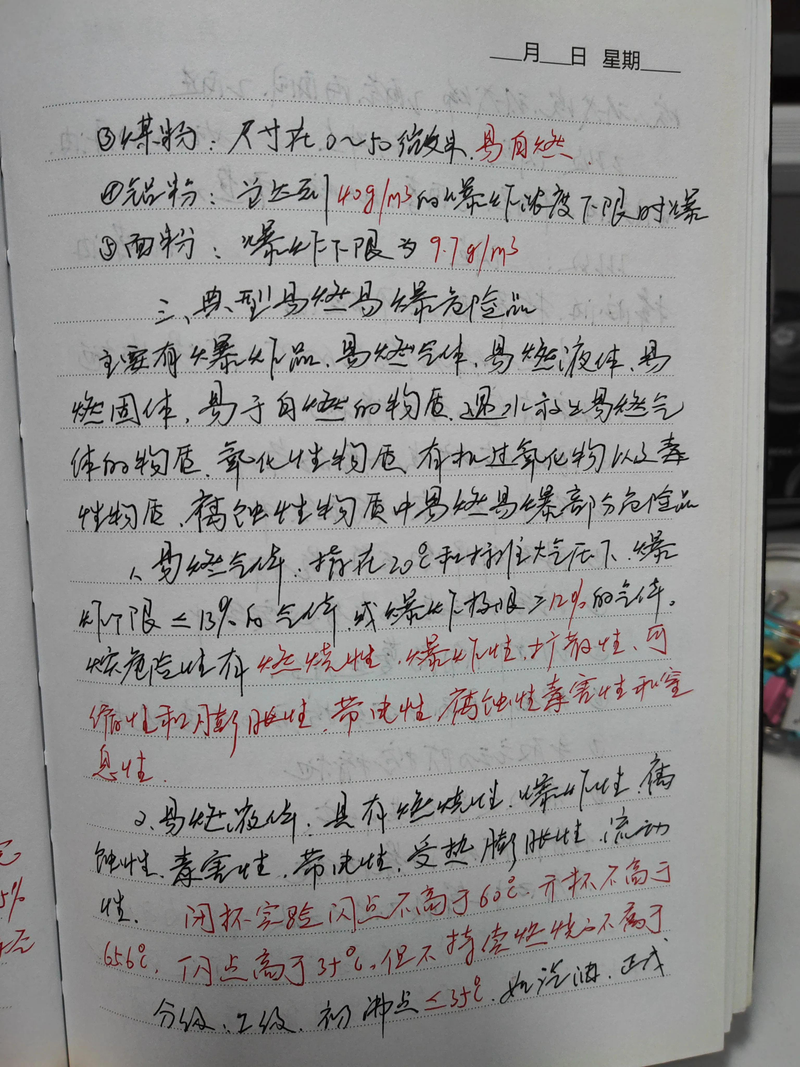
3. Coal powder is highly self-flammable
Aluminium powder explosion limit of 40 g/m3
5. The flour explosion limit is 9. 7 g/m3。
Iv. Typical flammable and explosive hazards
There are 10 categories, focusing on flammable liquids, flammable gases and flammable solids。
1. Flammable gases: gases with a lower explosive limit of less than or equal to 13 per cent or a greater than or equal to 12 per cent at normal temperature pressure, typically hydrogen, acetylene, carbon monoxide, methane, natural gas, liquefied petroleum gas. Fire risk includes seven types of asphyxia for incendiary, explosive, diffuse, scalable expansion, electrical, corrosive toxic。
Flammable liquids: the close cup test flash point is not greater than 60°c and the open glass test flash point is not greater than 65. 6°c. The fire risk is also seven types of incendiary, explosive, corrosive, toxic, electric, heat-inflated, mobile. It is divided into three levels, with primary boiling points of less than or equal to 35 °c, e. G., gasoline, ether; secondary flash points less than 23 °c, primary boiling points greater than 35 °c, e. G., crude oil, phyllite, benzene, methanol, ethanol, ethanol, thallium, banana water, three levels greater than or equal to 23 °c and initial boiling points greater than 35 °c, e. G., kerosene, musk oil, pine oil, fragrance and iodin for medical purposes。
V. Fire-resistant and explosive measures for flammable and explosive dangerous goods
Focus on the following:
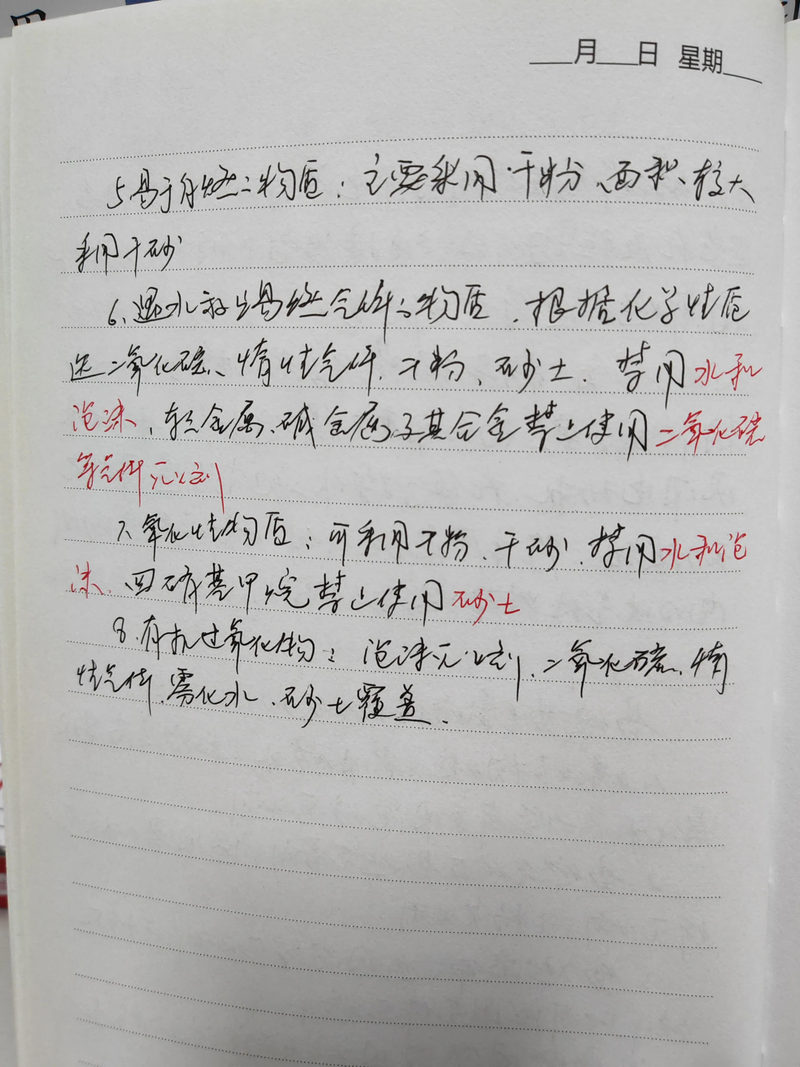
Water-system fire extinguishers: water drip fire extinguishers, cooling, asphyxiating, emulsing, diluting, can save fire types a, b and c. There is also electrical insulation。
Foam extinguishers, fluorine protein foams cannot be used to save water soluble flammable liquids, and high multiplication foams cannot be used to save oil tank fires and water soluble fires。
Dry powder extinguisher: classes abc, bc and d are classified as cooling, asphyxiating and chemical inhibition。
Gaseous fire extinguishers: halo-alkane fire extinguishers are suffocated, cooled, chemically suppressed and carbon dioxide, inert gases are suffocated and cooled。
One additional point: the openings of the plugs installed in the dust environment face down and may not be greater than 60 degrees vertically. (2 times repeated)