In food crops, the potato has always played a role of "coupling", but it is easy to grow, adapt, produce and eat in a variety of ways, giving it a prominent place in the minds of many farmers. Whether they are roasted with hot potatoes or made into powdered, starch-based potatoes, the key to good potato production lies not only in varieties but also in management details。
Many growers grow sweet potatoes every year, but production is volatile, with different sizes, deformities and poor sweetness. The core of the problem is often not natural disasters, but rather man-made management habits — especially the old-fashioned style, which continues for many years. Today, the point of preparation, medium-term management, post-care coverage of the pits is to give a full account of the high-yielding and dry production of potatoes。
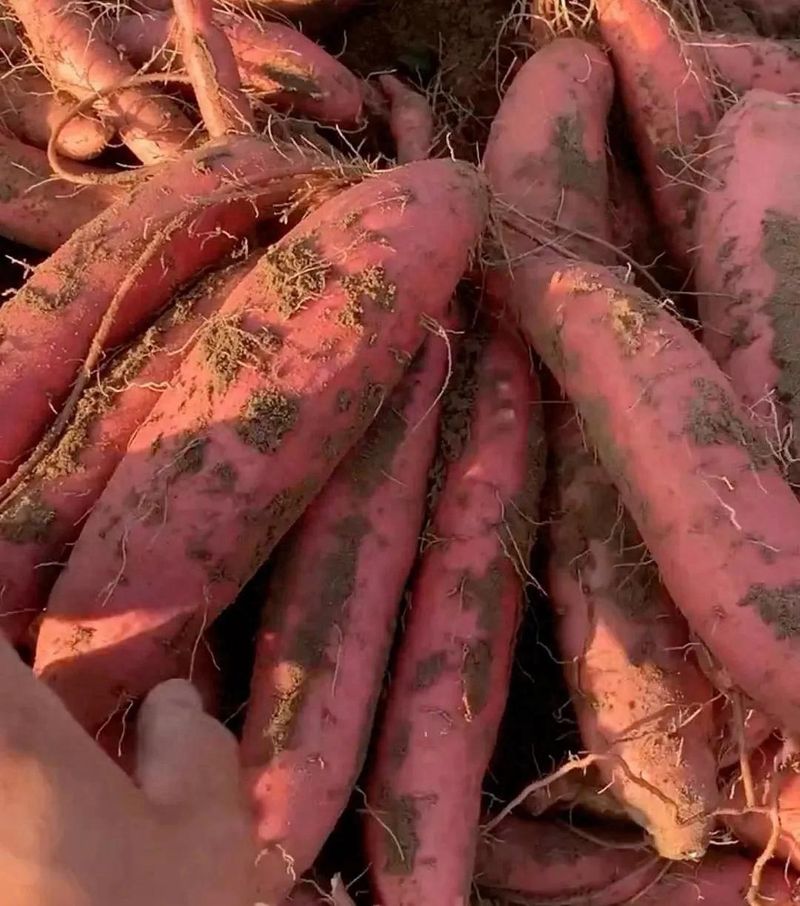
I. Pre-preparatory preparation: laying the foundations, strong and steady
Landing is the first step and the basis for determining later trends. Potato prefers loosely fertilized sandy sandy soil, preferably more than 30 centimetres thick, and hard-walled or water-prone plots are strongly unplanted. The pick-up is a standard movement for the cultivation of red potato, with a distance of 70 to 120 centimetres and above 30 centimetres, which contributes to drainage and flood control, increases the temperature of the ground, promotes soil gas and creates a relaxed environment for root expansion. Based on organic and potassium fertilizer, 200 kg per acre, 40-50 kg per acre of corroded organic fertilizer, combined with potassium sulphate, and control of the ratio of potassium nitrogen phosphorus at 1:1:2, which is the core principle of fattening potatoes - - nitrogen is too big for potatoes. Potassium is big and sweet。
The variety chooses to be used. Potato 25 is preferred for fresh food, sweet potatoes are baked with soft slurry oil; starch processing is preferred for sweet potatoes 18 and commercial potatoes 19, with high pollination rates. Regardless of which species are chosen, it is certain that detoxification seedlings will be recognized, with a high level of resistance, a high level of strength and a significantly higher yield。
In the case of seedlings, seeding takes the form of skin-skinned, disease-free medium-sized chips weighing 150 to 200 grams per person, which are given in mid-april. The transfer of cropping is better than the extraction of seedlings and can effectively reduce the ingestion of bacteria from wounds. Potatoes were planted in late april and early may, and in mid-june, they were planted at a distance of 30 to 33 cm, with 3,500 to 4500 acres per acre. The method of planting is to recommend flatting or tilting plants, so that the seedlings of the potatoes can be used for soil conservation purposes and so forth. When planted, the root water is fixed in time to ensure survival。
Ii. Medium-term management: core control, non-turning, tito enhancement
This is the most critical and easily neglected phase in the management of the whole cultivation of red potato. Let's start with the old question of turning the vine. Many farmers are accustomed to turning vines several times in the middle and later stages of the development of potatoes, which they feel can be controlled and boosted. In fact, the damage to the potatoes is very great — the vines are soared, leaves are broken and even broken, nutrient transmission channels are blocked and photocooperative capacity is drastically reduced. Even more serious is the fact that toads break a large number of sides and uncertain roots, cutting the path directly from nutrients to the roots, leading to a reduction of more than 30 per cent, and that the size of the ground that has been turned over tends to vary, with a marked increase in the number of deformed and stale potatoes。
The right thing to do is "lightly." it's not flip, it's tip. The hands gently lift the vines and remove the shallow roots of the gas that are inserted into the soil from the soil, one or two centimetres away from the ground, and then lightly return the vines to their place of origin, without causing damage to the vines or to the leaves. The best time for tito is in the morning or in the evening, avoiding the high-temperature period; it must be raised once after the rain, when the soil is dry, to prevent the root of the air from plaguing again. The whole life of tito two or three long-term times is enough, the first time that the vine is crawling over the ground, the second time at the peak of the monsoon season and the third time before the fast expansion of the sweet potatoes。
Some farmers are anxious to see the roots growing on the vines and feel that they will rob nutrients and affect the growth of the potato. In fact, these shallow gases, which are so shallow, so weak in their absorptive capacity, can't produce potatoes and can't consume much of their nutrients, are able to fix the vines, protect the soil and keep them intact。
Control is another major core of medium-term management. Water is to be poured dry and wet during the bulge period, water is to be drained in time after the shower, water is to be moist in times of drought, and water must not be pouring – it is not sweet enough to be so drenched – and it is easy to crack potatoes. All nitrogen fats are stopped after sealing, turning to potassium supplementation, and 0. 3 per cent potassium phosphate per acre is sprayed once for 15 days, both to boost the size of the chips and to improve sweetness. Inter-walk weeds are regularly cleaned, but they are not tilled deep enough to ensure ventilation and reduce the risk to the elders。
Iii. Post-care: improving sweetness and preserving the annual harvest
Water should be stopped 20 days before the harvest to make the soil moderately dry. At this stage, the cassava accumulates a great deal of sugar and starch, and the meat becomes tight and sweetness is significantly higher than the watered plot. If water continues to be poured at a later stage, the sweet potatoes are watery and tasteless and are not ready for storage。
Many growers prefer to remove their leaves before harvest or cut off parts of their vines, which they think will concentrate their nutrients on the chips. That's just wrong. Leaf is a plant for the production of nutrients, and healthy leaves are to be preserved. The premature removal of leaves or vines reduces the luminous area and the size of the chips is not sufficient for nutrients。
In the later stages of the process, especially in the later stages of the expansion, which can easily lead to the return of young adults and to the creation of hollow and cassava, the difference between the prices of which falls directly. It is equally important to harvest in a timely manner, when temperatures fall below 15°c and leaves start to yellow (generally in late september to mid-october) before freezing. After harvesting, the potatoes are dryed in the ground for two to three hours and the sick potatoes are removed and then put in the cellar。
Four, three faults, annual reduction due to it
The first area of error: the more the vine turns, the more the potatoes. How many people did this? And the cut-off and the cut-off of the fruit thereof is the best of the way. The second error is that the vines have so many roots that they have to be pulled clean. The subsurface roots are harmless, tearing apart the vines and hurting them. The third area of error is that the zhuang is strong. The length of the tungsten indicates that the nitrogen is so abundant that the nutrients run off the ground that the ground does not contain much of the potato, which needs to be regulated by titten, water control and potassium。
Tofu and tito, the difference is visible
Tilt plots, foliage, foliage, uneven size, deformities, sweetness and low yields. The plots that insist on tito, which are green and symmetrical, are full of sweet potatoes, even heads, smooth skins, high sweetness and high yields. There are two words to be said: stop it and fill it with potassium. That's the point. It's more than 8,000 pounds。
I hope this practical experience helps you. If you feel useful, you are welcome to forward it to more than one friend of the potato。
This paper is for the purpose of sharing rural farming experience and only for the benefit of farmers. Due to local differences in climate, soil and variety, management methods are applied with local practical flexibility and crop management is based on local official agrotechnical guidance。