A one-way valve, as the core component of a hydraulic system, covers two categories: an ordinary one-way valve and a liquid-controlled one-way valve. In the absence of a specific indication, a one-way valve usually refers to an ordinary one-way valve. This paper will explore in depth the structure of the two one-way valves, their rationale and their application in hydraulic systems. Common one-way valves and liquid controlled one-way valve products will also be displayed。
Introduction to single-way valves
1. 1. Functions and roles of one-way valves
One-way valves play an indispensable role in hydraulic systems, with relatively simple structure and rationale. Nevertheless, this seemingly insignificant element is essential for the proper functioning of the system and its effects are described as “simple and indispensable”. A one-way valve is indispensable in a hydraulic system and, despite its simple structure, it is essential for the proper functioning of the system, such as a diode in a circuit, allowing the flow of fluids only in one direction。
1. 2. Structure and rationale for single-way valves
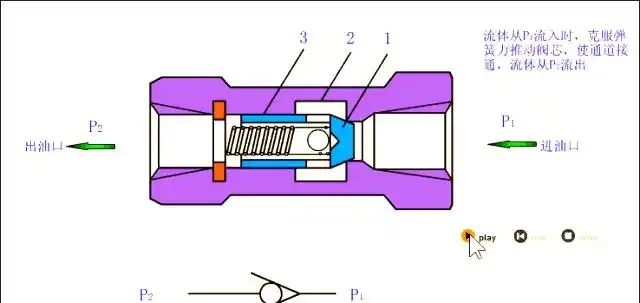
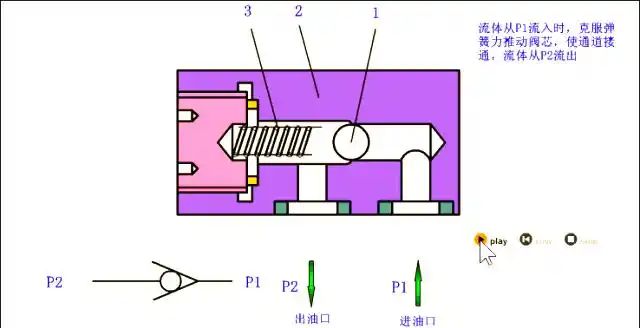
The core concept of a one-way valve is to allow fluids to pass smoothly in one direction, while the reverse is completely closed, a feature that makes it essential in hydraulic systems, similar to the diodes in circuits. The core structure of a one-way valve is a key part of it, which determines the performance of the valve. Depending on the core, a one-way valve can be divided into two categories: a ball valve and a cone valve. The core of a one-way valve is the core structure of the valve, divided into a ball valve and a cone valve, with various pressures and spring coordinating roles allowing the fluid to choose a one-way pass, conduct a conductor or cut-off function。
1. 3. Diversification structure of one-way valves
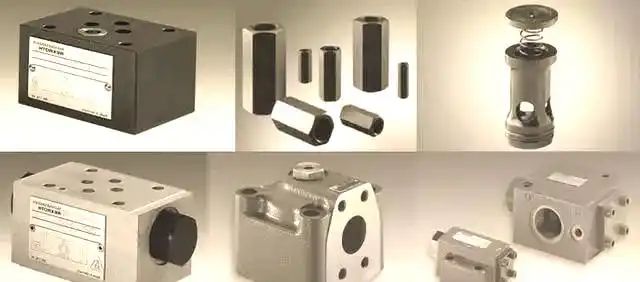
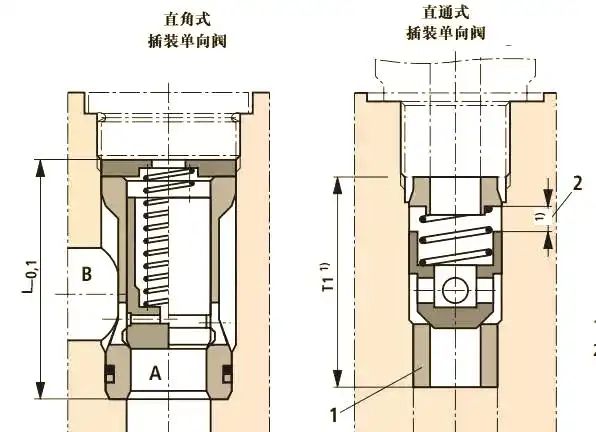
The structure of a one-way valve is not limited to a tube, but is also stacked, plugged and plated to meet different applications. Next, we will introduce several representative single-way valve products. For example, the one-way valve of the rixle m-sr type is a common option. The one-way valve is designed to be used in the insertion of the inside of the valve and provides two different structural forms, straight-through and straight-angled, to meet different application needs。
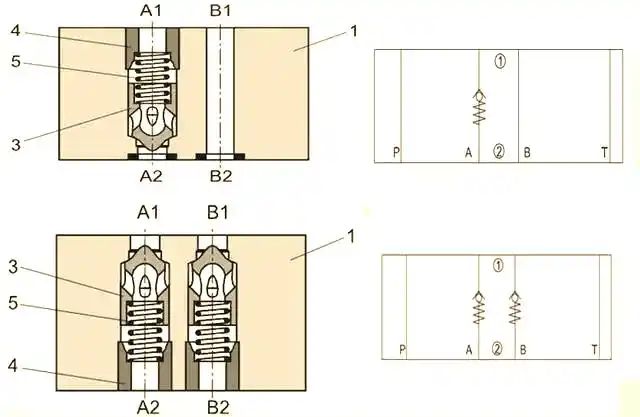
Next, let's look at the z1s superimposed one-way valve. This one-way valve is designed to be superimposed on the valves and is well suited for applications where multiple one-way valves are required. Its structure is compact and effectively saves space。
1. 4. One-way valve applications
One-way valves have extensive applications in hydraulic systems. It is usually required to have characteristics such as low-pressure, back-sealed, positive-flow resistance and mobility sensitivity. ** one-way valves are usually used to prevent the flow of fluids, to separate oil routes and to achieve pressure and back pressure, and play a key role in maintaining the safety of hydraulic systems. ** in practical applications, one-way valves are often used: first, they can be installed at the export of hydraulic pumps in order to prevent the reversal of fluids due to excessive system pressure, thereby protecting hydraulic pumps; secondly, they can effectively isolate unnecessary connections in oil routes; in addition, their excellent sealing makes it possible to act as an achiever of the shield function; in addition, one-way valves can be combined with other components, such as one-way throttles and one-way sequence valves, to achieve specific functions; and, lastly, single-way valves can also be used as back-pressure valves to achieve specific pressure control needs by using more rigid springs。
Introduction to the liquid control single-way valve
2. 1. Functions and functions of the liquid control one-way valve
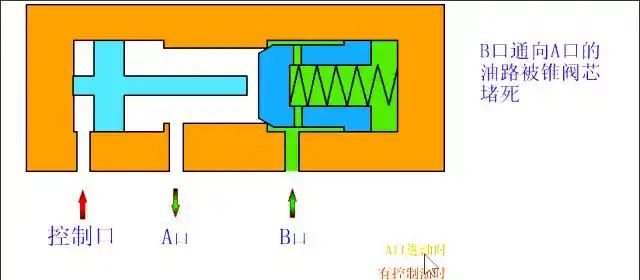
A liquid control one-way valve is a specially designed one-way valve that allows for reverse flow of fluids under specified conditions. The working principles are illustrated by the fact that by controlling pressure and flow in hydraulic systems, the liquid control one-way valves are able to achieve flexible control over fluid flow. The liquid-control one-way valve allows for reverse flow of fluids under certain conditions, with flexible control over the flow of fluids through control of pistons and control of oil vents。
2. 2. Liquidly controlled one-way valve products
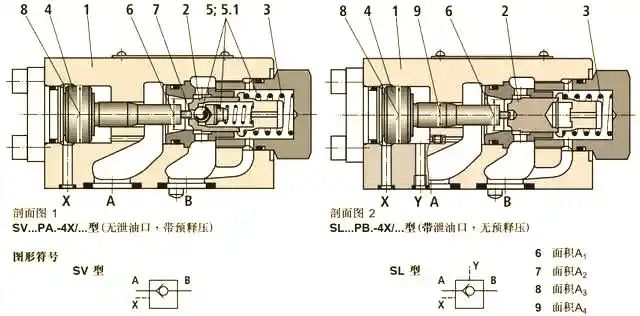
Now, let's get a look at the philosophy and symbols of the swiss sv and sl liquid one-way valves. Both valves use unique offload valve core designs, a delicate structure that effectively avoids excessive pressure control. In addition, the sl-type liquid control one-way valve went further by adding oil spills, thereby eliminating the adverse effects of a cavity pressure oil on control pressure。
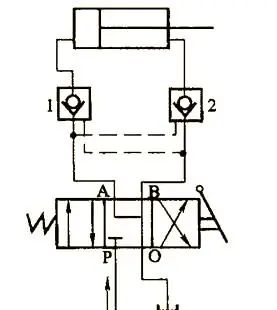
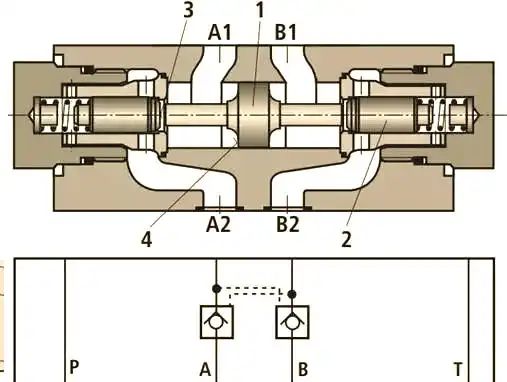
Two one-way liquid control valves can be combined into a two-way liquid control one-way valve, commonly referred to as hydraulic locks. This hydraulic lock plays an important role in mechanical equipment, especially in institutions that need to be locked. The following is an illustration of the z2s type hydraulic locks, which are designed in a superimposed structure。
2. 3. The application of a liquid control one-way valve
The one-way liquid valve plays a vital role in the hydraulic system, largely thanks to its excellent sealing performance at the cone core. ** the liquid control one-way valves are used to locate the tank, prevent the fall of heavy matter, co-push with the energy collectors, or even as a charge valve to ensure the safety of the system. ** in the scenario of preventing the fall of heavy matter, the liquid-controlled one-way valve ensures safety; it can be used in situations where pressure is required when working with the energy collector; and in cases where a tank requires large quantities of oil, it can even be used as a recharge valve。