With reference to resistance to longevity, many first respond with expensive health products, intensive gymnasium training, various web-based red breeding projects. Many would also set themselves a high threshold: to run five kilometres, to jump for half an hour and to devote a large amount of time to sports. When you're busy, you just give up, and you don't get to exercise at all。
In reality, there is a zero-cost, off-the-shelf movement, and a large number of crowd-tracking studies have confirmed that only 15 minutes of medium-intensity walk-off per day can yield clear procrastination gains. But most people just walk slow and waste this health dividend. Many walk every day, but they do not know the difference between slow walking and moving, and take time and have little resistance to decay。
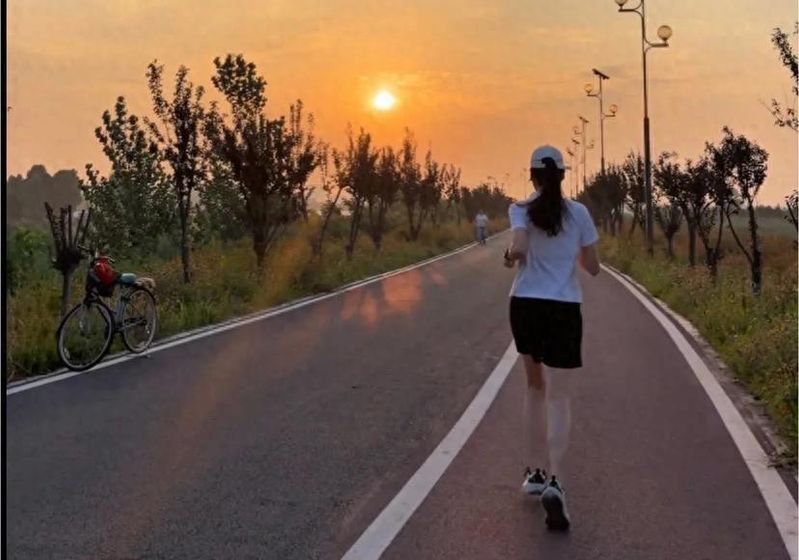
The concept is clearly distinguished here. Moving is a medium-intensity aerobic exercise, with simple criteria: speed at more than 100 paces per minute, slight body sweating, accelerated breathing, a little asthma, but still complete speech and no singing. It's normal to walk slowly and walk around, 60-80 paces per minute, with virtually no change in breathing, and it's a routine activity, which is always better than sitting, but with a very wide gap in resistance to longevity。
A long-term queue study published in authoritative medical journals followed by nearly 42,000 ordinary people found that the cumulative 15-minute medium-intensity movement (which is mainly about to run) per day, compared to the total inactive population, had a 14 per cent decrease in the risk of death and an average increase in life expectancy of three years. A 16-year-long follow-up study by van der bildt university, covering nearly 80,000 people, shows that walking in 15 minutes a day reduces the risk of death by 19 per cent, and that the risk of death is reduced by only 4 per cent for those who walk slowly for more than three hours a day。
There are also 410,000 samples from the british biobank, which specializes in the relationship between walking speed and cytological ageing marker particles. The size of the particle corresponds to the protective cap at the end of the chromosome, and the shorter the particle, representing the faster the rate of cell ageing, is the accepted biological age reference indicator. The study found that, with similar overall steps, the white-cell pellets that often leave the population are significantly longer and the rate of cell ageing is slower; it is difficult to achieve this protection simply by walking slowly over a long period of time. In other words, the quality of exercise is much more important than just walking。
A lot of people wonder, too, why go and walk so slowly, and get so far away from health effects? The core lies in the fact that the strength of the body is different, and that it is not sufficient to move。
First, really activate cpr. The heart rate increases very little at the time of slow walking and the burden on the heart remains almost unchanged; the heart rate increases reasonably at the time of departure, with more blood pumped per beating of the heart and effective exercise of the heart lung. Long-term adherence to improved vascular elasticity, reduced probability of hypertensive, hyperlipplasia and coronary heart disease, and reduced cardiovascular problems of high-prevalence in middle and old age, are also the most central sources of longevity。
Secondly, chronic inflammation of the body. An important push behind ageing is low chronic inflammation. As a result of the increase in age, the body is chronically suffering from mild inflammation, which accelerates the aging of the blood vessels and the depletion of cells, leading to multiple chronic diseases. The medium intensity of the pattern is moving and is capable of lowering the level of bodily inflammation, reducing oxidation stress damage, reducing the end particle wear and achieving anti-decomposition effects at the cell level. Slow walks are not sufficiently stimulating to regulate inflammation indicators。
Third, improve metabolism, protect muscles and blood sugar. A 15-minute-a-day walk can help to stabilize the blood sugar after eating. After 30 years of age, muscle loss occurs year after year, reduced muscle size accelerates ageing, leaving without force training, but keeping the lower limb muscle activity alive, reducing the rate of muscle loss, protecting the bone joints and reducing the risk of old age falling。
Fourth, improve emotional and brain state. Moving forward can promote brain genre dopamine, endorphine and ease anxiety and depression. At the same time, increased brain blood supply slows down cognitive decline and reduces the risk of old-age memory decline. Many people still feel tired after walking, and when they move, they tend to feel good。
There is a general error to be corrected: not as fast as possible, or as many steps as possible. In real life, many people are blindly pursuing 10,000 steps, 20,000 steps, walking slowly and with low-intensity activity in essence, with limited gains in survival, and others are struggling to move, sprinting, groaning, turning into a high-intensity movement, with a sharp increase in the knee, heart burden, and not suitable for the long-term persistence of ordinary people。
Effective standards for moving, remember: a little sweat, talk, not sing. This is the medium-strength zone best suited to the average human being, with no speed, no step。
The normal people's exercise, 15 minutes a day, and the fragmentation time
Fifteen minutes does not require a one-time walk and can be split. The latest who guidelines recognize that mobility can accumulate in fragmentation and can be factored into the duration of an effective sport at the end of 10 minutes. Worker and busy housekeepers can be completely separated。
Plan i: full time (suitable for evening, after dinner)
A single walk of 15 minutes at a pace of 100 to 120 paces per minute, with a slight sweat in the back. Take a break of half an hour before you go. Don't eat and walk so that you don't get sick。
Option ii: fragmentation (suitable to work)
The morning commuters get off at a stop and leave for 10 minutes, and the afternoon break goes down for 5 minutes, for a total of 15 minutes, with the same cumulative health benefits. There is no need to go exclusively to the park playground, and the pavement and the district road can be completed。
Elements of adjustment for different population groups
• young and middle-aged healthy people: maintaining standards and moving paces can be slowly increased to 20-30 minutes per day, with further gains。
• old and middle-aged people, bad knees, heavy weight: the pace is slowed as appropriate, based on a slight acceleration of breathing, not fastness, avoiding big steps, and shoes are selected for buffered sneakers. Artificial pain is immediately reduced or stopped。
• groups with basic heart and pulmonary diseases: do not come up directly and go。
We must avoid these four pits
One: the longer you walk, the better
Long delays in moving more can only consume a small amount of heat, with limited incentives for cardiopulmonary, inflammatory and pellets. Instead of walking for two or three hours without purpose, we should concentrate on 15 minutes of high-quality travel。
Zone 2: go away and replace all movement
It's a very good aerobic exercise, but it's not a substitute for force training. A key sign of human ageing is the loss of muscle, which can only be learned by walking. Conditions permitting, it would be preferable to have two more simple force trainings per week, such as deep crouching, static crouching against walls, ballistic belt exercises, aerobic combinations, and resistance to decay and longevity。
Zone three: looking forward to going back to old age
Moving away can slow ageing, reduce the risk of chronic diseases and prolong healthy life, but not reverse biological age. It is a long-term way of life, not a short-term specialty drug that needs to be sustained over the long term to be effective。
Zone four: i'm not feeling well. Let's go
Heartbreak, dizziness, pain in the joints, and rest immediately. Physical safety is paramount, and resistance to decay is based on non-harm。
What more details
1. Positions should be free of ecstasy, shoulder easing, arms moving naturally, feet flat, feet strangulation and knee impact reduced。
2. To wear suitable sneakers, not slippers, shoes for long periods of time and to protect the ankles。
3. Do not force out-of-the-house movement in hot and hot weather, which can be transformed into in-house footsteps。
4. Integration of the move into everyday life, not as a difficult task. Without the need for anxiety, five days a week, 15 minutes a day, is far more than most of the people who sit there。
Now many people are paying for a variety of anti-life products, ignoring the simplest way to go. We always thought it was complicated and costly to fight decay. A great deal of epidemiological research has taught us that fighting ageing, increasing healthy life, and at the forefront of interventions, is adequate sleep, balanced diet, and medium-intensity routines。
The greatest advantage of moving is that the threshold is low enough, free of charge, no space, and that men, women and children are able to work. It is often not an occasional high-intensity exercise, but rather a small daily habit that really opens up the gap between old and old。
Of course, sport is not almighty. The best value is to go with proper food, regular sleep and distance from alcohol and tobacco. The mere reliance on walking does not offset the physical damage caused by nighttime, heavy drinking。
Topic: do you walk slowly or do you deliberately speed up? How long is it going to take? Welcome to the comment area to share your habits, keep an eye on accounts, and continue to share in local health。