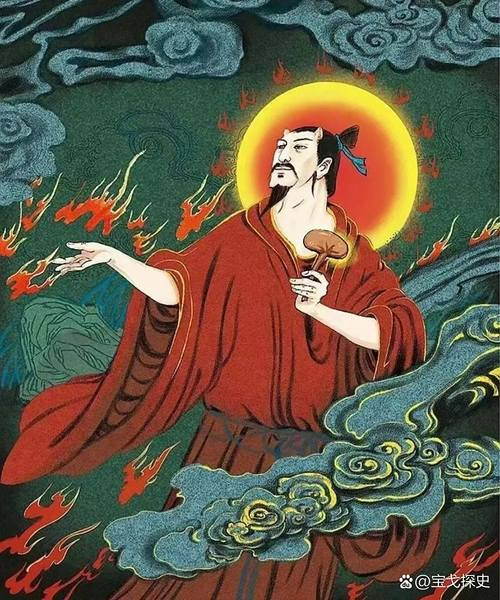
Summary: the initiar is an important myth of prehistoric times, the time of qin han and the time of the acrobatics, and enjoys the title of “agriculture originator”. In the literature of the former qin, it is documented that the angry was the representative of the era of agricultural civilization, while the inflammation emperor was the fireman with the religious nature of witchcraft. In handai, after liu's adjoining assembly and the structure of the latter, the inflammation emperor and the shinon became one. In the common people's belief, the indian has multiple hysterias and is an important god for agricultural harvests and daily ills. The myths of the inflamming emperor are widely heard in gan ji, shanxi party, shaanxi po chicken, henan igawa, hunan inflammation hills, hubei state, etc., and are a precious cultural memory of the chinese nation. This paper explores the spiritual nature of the angry emperor, tribal migration, civic beliefs and contemporary exhibitions, collates the collection of mythological literature and oral texts of the angry emperor, and clears and analyses the issues that remain controversial in the academic world. In addition, through field visits and comparisons of the culture of the sanctuary, shaanxi and hunan, the author presents a more comprehensive picture of the geographical character of the doctrine and its transmission. The text is divided into five parts: chapter i, introduction. These include, inter alia, the selection and significance of the topic, an overview of the study of the inflammation emperors in the country, the sources of information and the methodology of the study, and the definition of the subject of the study. Chapter ii, analysis of the god-like nature of the inflammation emperor, mainly the description of the god of fire, the god of second life, and the identity of the god of rain. The first is an analysis of the identity of the inflammation god, who in the spring and autumn was known as the firemaker by ancient names, such as pipes light and e, 17 years left, zhao zhao, and national language iv. By combing the cultural roots between the “five words” and the “firemen” status of the inflammation emperor, this subsection focuses on how the inflammation emperor, driven by official political and civic beliefs, is gradually being equated with “the great of the south” and eventually evolves into “the fire god”. Secondly, in the "agricultural god" section, the way in which the identity of the angry emperor and the shinyon are analysed and analysed is the way in which the posterior's promotion of the angry emperor is based on his "agricultural god" status. In terms of its agricultural merit, it is broadly composed of two aspects: the discovery of grain seeds, which teach people to cultivate, and the development of agriculture. And then there's a discussion of the god of rain of the inflammation, the sub-section of which is the unique practice of "rain prayer" in takahei long village in modern times. As an example of this, he has explored the religious, secular and local characteristics of local rituals, demonstrating the legacy of the practice of "sweeting for rain" and "growing for blood". Chapter iii, landscape analysis of the movement of the indian clans, focuses on the mapping of the area where the indian tribe operates. It is the long-standing battle between the academic elites, who have come to a common understanding of the terms of the “semicorns and the tyrannicals” but who have been confused in their search for the “single” and which the paper argues are not the same people, nor the same tribes, that the analysis of their ancestral lands should be separated from one another. The first section, which examines the heritage of the yandish and the shinyon, draws from the four perspectives of the similarity of the word “gang”, the overlap between the ginger and gill sources, the harmony of the ginger and gudhian communities, and the qin qin's ecological environment in the ancient era - - gingerwater, which belongs to the qinjin cultural circle, then concluded that “the range of the activities of the shinto farming community should be in the wilderness” through an analysis of “the work of the god, the sun of the shibuya mountain” and “the mountain” from “signal names” to “cultural names”. In section ii, the entry point is the “mount al-america”, which considers that the indians and the hindus eventually become a clan as a result of tribal wars, natural disasters, etc. The tyrannical tyrannical tyrannical tyrannical, and further exploring the relationship between the tyrannical tyrannical region of the tyrannical party, the tyrannical tyrannical tyrannical movement of the tyrannical tyrannical tribes has led to a change in the name of the tyrannical tyrannical mountain and the tyrannical tyrannical tyrannical tyrannical tyrannical mountain, which has changed its geographical location. Section iii begins with a presentation of the “big chicken chen” and “hannan young-yang”, respectively, in order to demonstrate the productive activities of the henan and shandong tribes, starting with the "little emperors' cultural legacy" of chen and ludi. Section iv focuses on the concoction of the process of “breaked in the sand”, and analyses, inter alia, the stereotyped process of “breaked in the tea village” between song, ming and chiang dynasty. Chapter iv, geographical comparison of the hades faith. This chapter is the subject of a study of the inflammation emperor's faith in the shanxi party, the shaanxi chicken, and the hunan inflammation hills, and seeks to characterize the belief of the emperor in different regions, namely, the “functionality of the inflammation emperor's faith in the temple monument” “the text of the mouth and the localism of the inflammation of the inflammation emperor's faith” “the plurality of the beliefs of the official and blood sacrifice.” through the study and exploration of the trinity of the monarchy, the social norms of the inflammation of the inflammation of the inflammation of the faith, which is embodied in the sanctuary of the sanctuary party, the civility, the multifunctionalization of the faith, the interaction between the oral texts of the shaanxi po chicken region, the practice of the "red by fire" and the inflammation of the emperor's faith, as well as the contribution of the hunan inflammation hill district officials to the creation of the regional culture of the southern inflammation empire (blood festival), the unification of the faith, and the power of the crown, among others, have been outlined. The trinity doctrine, with its distinct geographical colour, has become an important means of connecting local historical traditions to the memory of the common people. Chapter v, the interaction of contemporary inflammation myths with cultural landscapes. On a case-by-case basis, it focuses on contemporary expressions of the myths of the emperor in the industrialization of culture. The first section analyses three dimensions of the contemporary image of the inflammation emperor, namely the interpretation of his identity as the “gentleman”, the promotion of the “national spiritual symbol” and the construction of the identity of the inflammated emperor as the “gentle god”; and analyses the generation and pattern of the inflammation of the emperor's image through cross-referencing of the literature with popular oral texts. Section ii explores the interaction between the mythology and the cultural landscape in terms of mythology, the legacy of the landscape and the ritual of faith, considering that the landscape has an objective physical attribute and cultural attributes that are conferred upon it by the experience of human life. Landscape memory activation often requires living resources such as mythology and ritual rituals. In the third section, recommendations are made in response to the problems that exist in the industrial development of the injeel culture. The culture of xianxi gao ping is characterized by the commonality of both geographical characteristics and the national inflammation culture. The modeling of industrialization in the way resources are used, the mediocreization of cultural landscapes and the lag in productive conservation development have greatly diminished the economic value of the culture. Thus, the question of how to “produce the story of kohei's own emperor” and “corresponding public services” is a pressing issue in the process of industrializing the mountain. The paper focused on the excavation of living materials and attempted to describe the popular pattern of the myths of the inflaming emperor through an analysis of local oral legends, temple inscriptions, temple events, beliefs and customs. Each part seeks to use the issue as an entry point, either as a combo of past academic discussions, or as a new perspective on the relevant issues, or as an illustration of newly discovered local materials. This paper places the culture of the indian in the context of the subject of “ folklore” and focuses on the historical and cultural context and specific areas of survival of the indian culture, with a view to presenting the local historical traditions of the mythology and the state of faith of the contemporary people。