General information
Lithium batteries, an early invention by edison of lithium metal or lithium alloys as negative polar material, using non-hydrolysis solutions, operate as an oxidizing reaction of li+mno2=limno2. Lithium batteries are broadly divided into two types: lithium metal batteries and lithium ion batteries. Lithium metal batteries were previously referred to as single batteries, non-chargeable, (there are currently rechargeable lithium metal batteries), lithium ion batteries do not contain metallic lithium and can be charged as secondary batteries. Lithium batteries are widely used in computers, smart phones, electrical products, electric cars, industrial machinery, state-of-the-art technology, etc. In our lives。
1. What is lithium ion batteries
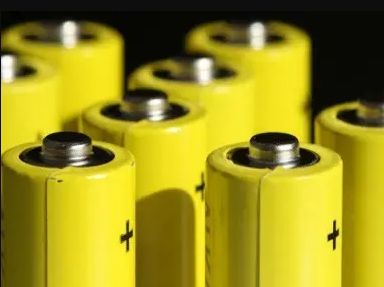
Lithium ion batteries: it is a secondary battery (charging battery) that works mainly on the movement of lithium ions between positive and negative polar poles. Li+ is sequestered and de-embraced between two electrodes during charge, and li+ is de-inhibited from the orthopolar level, and is in a lithium-rich state after the electrolyte is sequestered。
Our everyday smartphones and laptops contain lithium ion batteries. Lithium ion batteries are second batteries that can be charged and are not only small enough to quantify but also high enough to store electricity compared to other types of batteries。
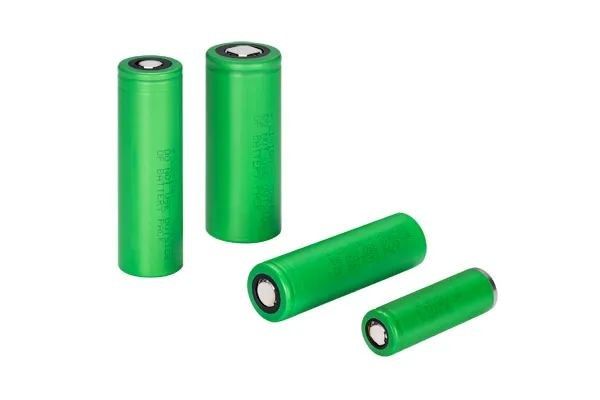
Lithium ion batteries in cylinders
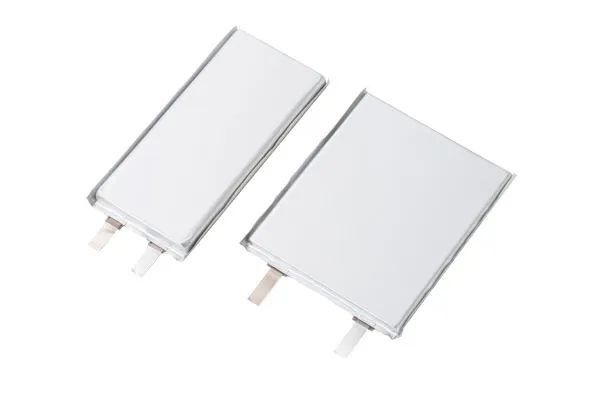
Cascade lithium ion batteries
2. Activation of lithium ion batteries
In addition to lithium ion batteries, there are other types of batteries, and in practice the underlying principles of battery generation are approximately the same。
Lithium ion cells have a large selection of positive polar materials, typically using lithium alloy metal oxides as positive polar materials, which are currently common in the market, as shown in the table below:
Normal materials
Chemical composition
Name of voltage
Structure
Energy density
Cycle life
Cost
Security
Lithium cobalt-acid (lco)
Licoo2
3. 7 v
Layer
Lithium manganeseate (lmo)
Li2mn2o4
3. 6 v
Pointy crystal
Lithium nickel acid (lno)
Linio2
3. 6 v
Layer
Lithium phosphate (lfp)
Lifepo4
3. 2 v
Olive stones
Three nickel cobalt aluminium (nca)
Linixcoyal (1-x-y)o2
3. 6 v
Layer
Three nickel cobalt-manganese (ncm)
Linixcoymn (1-x-y)o2
3. 6 v
Layer
Negative polar materials are mostly graphite, and lithium metal, lithium alloy, silicon carbon and oxide negative polar materials can be used for negative polar uses. Lithium ion batteries use non-hydrolysis。
Negative polar reaction: lithium ion disemboweled during discharge and lithium ion embedded during charge。
The batteries contain positive (synthetic) and negative (negative) electrodes using metal materials, and the substances (elytics) used to conduct electricity by ion are in between positive and negative poles. Metal electrodes are melted by electrolytics, divided into ion and electronics, and electrons generate currents from negative to positive poles, where they generate electricity。
The second lithium ion cell is recharged before it is used, with lithium ion being generated on the upper pole of the battery and the resulting lithium ion being transported through the diaphragm through the electrolytic to the negative end. As a negative polar carbon formation, it has a number of micro-pores, which are embedded in the micro-pore of the carbon layer with more lithium ions embedded and higher charge capacity. Similarly, when batteries are discharged (i. E., we use batteries), lithium ions embedded in a negative carbon layer are removed and moved back to normal through the diaphragm, while electrons are unable to travel through the diaphragm only through loads that are combined with lithium ions, and the more lithium ions are returned to the polar, the higher the discharge capacity。
Lithium ion batteries are the pre-active positive use of lithium-containing metal compounds and the negative use of carbon (graphite) capable of containing lithium. Through such a structure, electricity generation would not normally be generated by electrolyte melted electrodes, thus slowing the ageing of the cells themselves, saving more power and increasing the number of recharges. In addition, lithium is a very small and light substance, giving lithium ion batteries various advantages, such as small light quantification。
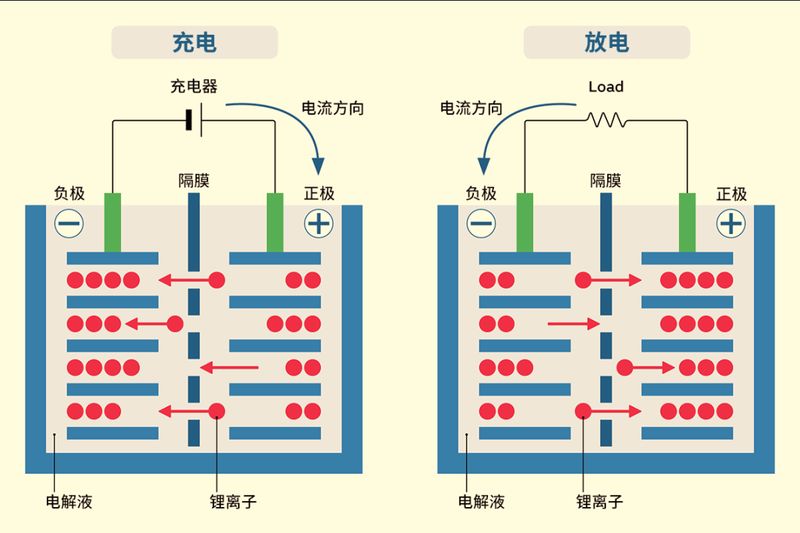
The method by which lithium ion batteries generate currents
3. Several common types of lithium ion batteries
Lithium ion batteries are divided into several categories depending on the metal material used in positive polar uses. The original metallic material used for the positive poles of lithium ion batteries was cobalt. Cobalt production, however, is almost as low as lithium and is also a rare metal, with high manufacturing costs, leading to the use of low-cost and environmentally low-burden materials such as manganese, nickel and iron. Lithium ion batteries are usually classified according to the material they use。
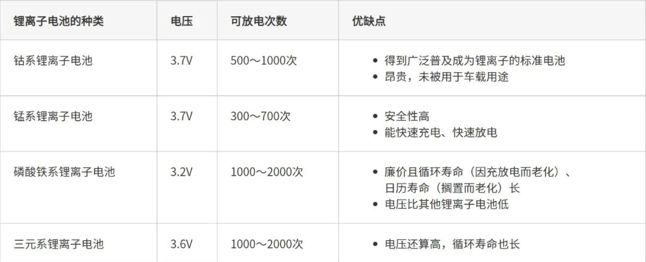
Type and characteristics of lithium ion batteries
Below are some of the characteristics of each category。
Lithium cobalt-acid ion batteries
Lithium cobalt-acid ion batteries are very much using lithium cobalt-acid, and lithium cobalt-acid synthesis processes are simple and user-friendly and are the first generation of commercial positive materials, with lithium ion batteries producing lithium cobalt-acid ion batteries at the earliest. Lithium cobalt-acid batteries are structurally stable and have a pressure density of more than three pieces of materials, are relatively high in capacity and integrated, but because they are rare metals, are expensive, have very high production costs and are toxic, and have poor safety performance, mainly for small and medium-sized cores, with early use in small electronic products such as laptops, smart phones and so forth, labelled as voltage 3. 7 v. Safety is difficult to ensure when used to make large power cells. In addition, lithium cobalt-acid lithium has a high theoretical capacity and is actually used only in half, as lithium ion is removed from lithium cobalt-acid materials during charging, and lithium ion is stable at less than 50 per cent and more than 50 per cent, and cobalt is dissolved to produce oxygen in electrolytic fluids, with serious security implications, resulting in a lithium cobalt-acid voltage limit of 4. 2 v。
Manganese lithium ion batteries
Lithium manganeseate ion cells. Lithium manganeseate is very highly used. The advantage is that voltage power is similar to that of cobalt-based lithium ion batteries, is safer and cheap to manufacture. The disadvantage is that low capacity, low pressure and low temperature performance, and manganese in charge may melt into electrolyte and reduce the life of batteries, mainly for more cost-sensitive products。
Lithium phosphate batteries and lithium phosphate batteries
The early start of the lithium phosphate and the more mature technological development is that the orthodox cell consists of lifepo4 materials from olive rock structures and the negative pole consists of carbon (graphite). An orderly structure of olive and stone is stable and difficult to break, even with internal heat and iron as a raw material, with the core advantage of low prices, environmentally friendly, high safety performance, better structural stability and circularity. The advantage of iron phosphate is that the lithium ion batteries are highly safe and have lower manufacturing costs than the manganese system. But the voltage is lower than the other lithium ion batteries. There are also shortcomings over low capacity, low temperature performance, low pressure, low current performance, etc. Although technologies such as ctp, nanomealization, ion mixing, conductive carbon caps are effective in helping phosphate lithium batteries to improve system integration efficiency, energy density, there is always a short energy density plate for phosphate lithium itself
Limnyfe1-ypo4) -- upgraded version of lithium phosphate. The lithium phosphate is the product of a mixture of lithium phosphate with lithium phosphate and is an orderly olive-stone structure with lithium phosphate. Phosphate lithium has the same low-cost, high-security properties as lithium phosphate, high-thermal stability, needles, overloads without self-burning, long life and safe from explosion risk, which can be described as the advantages of combining lithium phosphate with lithium phosphate and lithium phosphate, and can also compensate for the low energy density of lithium phosphate, and is therefore referred to as “an upgraded version of lithium phosphate”. Despite the advantages of manganese naphthanate as a practical new type of lithium cell and the fact that it will become even the cheapest power cell in the future, there are also shortcomings such as shorter cycling life and poor discharge capacity, while at the same time being at the stage of development due to process and equipment cost constraints。
Tripolar lithium ion batteries
Lithium ion batteries in the tri-channel system are designed to reduce the use of cobalt and are made of three types of materials: cobalt, nickel and manganese. At the same time, three material advantages have been combined: the nominal voltage for the preceding period, which for technical reasons was only 3. 5-3. 6 v, slightly lower than that of the cobalt and manganese systems, and limited in scope of use, but to date the nominal voltage of the batteries has reached 3. 7 v, which has reached or exceeded the capacity of lithium cobalt-acid batteries, and manganese batteries, as a result of the continuous improvement and structural development of the formulation. It is also possible to balance capacity and safety by adjusting the ratio of the three materials, which have better cycling performance than normal lithium cobalt-acid。
There are now three-dollar lithium batteries, mainly lithium ncm and lithium nca, mainly used by japanese and korean manufacturers, with high production requirements and costs. Aluminium can be used to increase the chemical stability of the battery cycle, as well as to increase the nickel content and achieve higher energy density. Currently, the 18650 batteries supplied to tesla are three-dollar ncas. With the increase in nickel content, the relative capacity of positive materials is increasing, but material stability is decreasing, but high energy density remains a trend for the future of the market。
Lithium-rich lithium ion batteries
Among the currently known positive materials, lithium-manganese-rich as a new generation of lithium orthodox materials with a discharge ratio of up to 300 mah/g, is about twice as high as the current commercial application of orthodox materials such as lithium phosphate and triutin. Because of the large quantities of manganese elements used in the material, prices are low compared to those of licoo2 and triple. Therefore, lithium-rich manganese-based orthodox materials are considered an ideal option for a new generation of high-energy density lithium-powered batteries. However, lithium-manganese-rich materials are still less than desirable: first-time efficiency, multiplier performance, cyclic stability, and the gradual decline of voltage during the cycle, which largely limits the commercialization of lithium-rich manganese-based orthodox materials, which still makes large-scale industrialization of lithium-rich manganese-based materials difficult。
4. Distinction between lead-acid and lithium ion batteries
In addition to lithium ion batteries, there are several rechargeable batteries. Among these, lead-acid batteries, which were used over a hundred years ago, continue to be used in the development of new types of batteries, such as lithium ion batteries, for backup power, storage of power cells, start-up power, power power, etc。
Both positive and negative materials for lead batteries are made from lead and its oxides, and electrolyte is a sulphate solution, making manufacture cheaper than lithium ion batteries. However, because lead weighs more heavily than other metals, the storage batteries weigh themselves. In addition, lead-acid batteries can be recycled much less frequently than lithium batteries, with a single core voltage of up to 2v, with memory effects and severe self-charges. At the same time, lead-acid batteries are highly contaminated with the environment。
Despite these shortcomings, the low price of lead batteries, as well as mature technology and greater safety, has allowed new energy reserves to save batteries, communications backup and ups uninterrupted power supply, car-starter bottles (usually 12v lead-acid batteries in small vehicles and 24v lead-acid batteries in large vehicles), electric bicycles and special low-speed vehicle power cells, among others, to be heavily used。
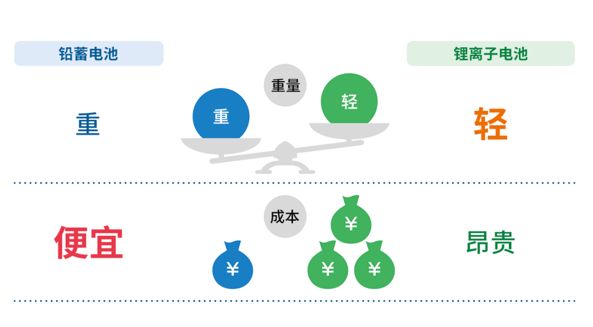
Comparison of lead and lithium ion batteries
5. Areas in which lithium ion batteries are used

As early as 1991, sony released the first commercial lithium ion batteries in human history, and the company created a whole new industry when it loaded several lithium-cobalt-lithium lithium cells into its latest ccd-tr1 camera。
Since then, market demand has grown with the rapid spread of mobile phones and digital products, the availability of electronic equipment and so on。
Lithium ion batteries are now being used extensively in all aspects of our lives, such as smartphones, laptops and electric cars and electric bicycles。
6. How safe is lithium ion batteries
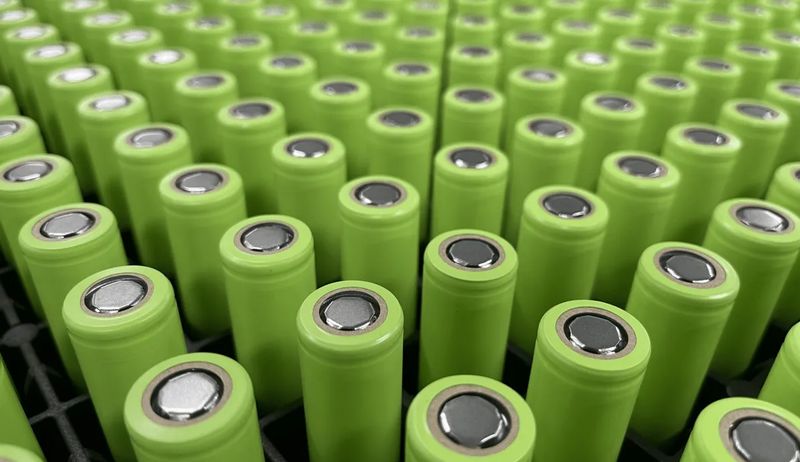
Lithium ion batteries can be described as high-energy storage tanks, with greater safety considerations than other secondary batteries using aqueous solutions。
Lithium elements have a highly active chemical properties, with lithium ion batteries having a high energy level, several times the number of secondary batteries such as nickel cadmium, nickel hydrogen, which, if hit, collide, heat out of control, release high heat and cause combustion. Also, the solvent of lithium ion cells electrolyte is hydrocarbons, prone to strong oxidation, reaction-induced heat resulting in the release of batteries, and is more susceptible to dangerous situations such as fire, combustion and explosion。
Lithium ion cells can easily cause chemical side-responses within the batteries when they are overcharged, overcharged or overflowed; an increase in this side reaction can seriously affect the cell's performance and service life and can generate large amounts of gases that can cause a safety problem following a rapid increase in pressure within the batteries and an explosion of fire。
Although lithium ion batteries have a number of dangerous hazards, under certain conditions of use and the application of certain measures, the occurrence of secondary and violent reactions within the core can be effectively controlled and their use secured。
At the manufacturing end, we should select materials with higher safety coefficients, including positive polar materials, negative polar materials, diaphragms with strong resistance to puncture, and chemically stable electrolytic fluids
At the same time, manufacturing processes should be upgraded to avoid impurities being mixed into poor production environments
The core structure is designed to incorporate the characteristics of the different materials, with additional safety valves and insulation protections, and at the end of the lithium battery, with battery protection panels such as high temperature monitoring。
The safety of lithium ion batteries will become more manageable as design and process levels improve。