Black muer, also known as mucus, ear, luminous ear or cloud, belongs to the fungus community, the larvae, the streptos, the mucus, and the mucus. This diet, which is not only unique in taste, but is also dubbed as a “polymer in genre”, has a high nutritional value among vegetables, second only to meat, eggs, fish and beans。
Main biological characteristics
(i) morphological characteristics
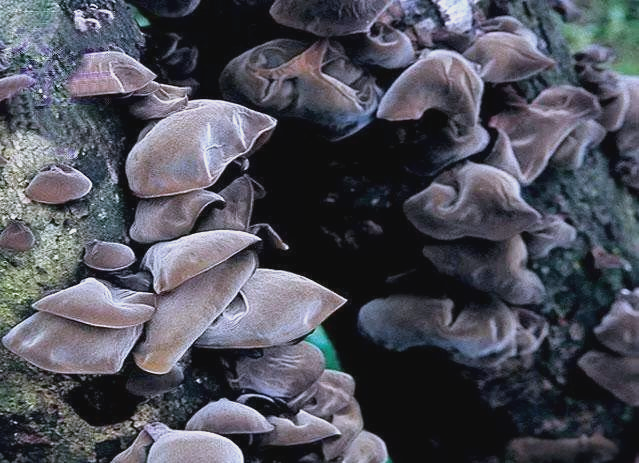
Black muer, which is a fungus that displays a translucent and taneous appearance, has some flexibility. The diameter is usually between 5 and 6 centimetres, or even between 10 and 12 centimetres. In the process of growth, the form of the black wood ear evolves from its early ear, cup form to a leaf and petal form, with possibly smooth or pulsive wrinkles. It is worth noting that the subdermal layer is located on the lower surface of the sub-entity, with brown and brown colours becoming orange, dark brown or dark as the drying process occurs. On the other hand, the upper surface of the nuclei is brown to black, and it has short hair and no nuclei。
(ii) nutritional characteristics
The growth of black wood is dependent on specific nutritional needs, mainly carbohydrates and nitrogen-containing substances, with small inorganic salts. These nutrients provide the necessary growth support for black muir。
1. Carbon sources
Carbon sources are the main sources of energy needed during black wood's growth. The mescophagus of the black molluscs can use a variety of carbon sources, including glucose, sugar cane, malt sugar, starch and cellulose. However, these nutrients must be dissolved in order to be effectively absorbed by muscular cord. During cultivation, mystics first use soluble carbohydrates in culture and decompose complex carbohydrates such as cellulose and carbohydrates in wood crumbs into soluble sugar through genre enzymes for further use. Common sources of carbon include broad-leaf sawdust, maize cores, cotton seed shells and sugar cane slag。
2. Nitrogen sources
Nitrogen-containing substances are essential for the protomas composition of black-molecular cells. Nitrogen sources that can be used in black wood are diverse, such as proteins, amino acids, urea, ammonium salts and nitrates. In cultivation practice, the required nitrogen source is usually provided by the addition of wheat rims。
3. Mineral elements
The growth of the black molluscs also requires the participation of mineral elements such as calcium, phosphorus, potassium, iron and magnesium, which are important components of proteins and enzymes. While the demand for these elements is small, it is essential. These elements are usually present in wood crumbs, but minerals such as plaster and potassium dihydrophosphate may be added in appropriate quantities to ensure adequate supply during planting。
(iii) environmental conditions
And then we're going to look at the environmental conditions that black wood ears need to grow。
Temperature
Temperatures have a significant impact on the growth rate, yield and mass of the black moor. Black molybdenum is a medium-temperature fungus whose filaments grow at temperatures of 5°c to 35°c, but at optimal growth temperatures of 22°c to 28°c. Although growing faster at 28°c to 32°c, wood ears tend to age and affect quality. At the same time, the sub-entities of the black moor can be formed and grown within a temperature range of 15°c to 30°c, with the same optimum growth conditions of 22°c to 28°c, when the earpiece is large, thick and of high quality. If the temperature exceeds 28°c, the woody ear meat will be thin and yellow, and its quality will decline. In the temperature range of 15°c to 20°c, however, although wood is thick, black and of better quality, growth is slow and does not contribute to high productivity. When temperatures are below 15°c, sub-entity formation is difficult。
2. Humidity (water)
Water is an essential factor in the growth of the black ear. During growth and development, both muscular filaments and sub-entities require an adequate water supply, but demand varies. In general, the amount of water in the culture should be between 60 and 65 per cent when the fungus grow and develop. At the sub-entity formation stage, the maximum water content of the culture increased to 70 to 75 per cent, while the relative humidity of the air remained between 85 and 95 per cent. Owing to the adhesive properties of the wooden ear ear, which absorbs water in the air and expands development, the moisture environment is critical for the growth of the ear ear. When moisture is below 80 per cent, the growth rate of the earpiece is significantly slower; when it is below 70 per cent, the earpiece is difficult to form, affecting production and quality。
3. Light
The growth of nebula filaments does not require light, which in fact inhibits its growth. However, the formation of the sub-entity requires light. In an environment of total darkness, black wood cannot form a sub-entity. When the light is insufficient, the sub-entity is deformed. Ear buds need some direct sunlight in order to grow robust earpieces. It has been proven that when the ear field receives an appropriate amount of direct light, the resulting wooden ear is thick and dark. There is a lack of direct light in the ear field, and the output of wooden ears does not appear to be strong enough because of their thinness, colour and elasticity. While the black wood ear is resistant to greater direct light, appropriate humidity is also essential. Otherwise, earpieces will cease to grow as a result of contraction and dryness, thereby affecting production。
Air
Black muer is a good fungus that requires sufficient oxygen to sustain its growth and development. In the process of baptism, if there is poor ventilation, the fungus is easily grown. When the sub-entity develops, if oxygen is not available enough and co2 concentrations are too high, it inhibits the development of the sub-entity, leading to the loss of normal earps and the disruption of the original baseing. It is therefore essential to maintain air flow from the ear field (or the fungus chamber) in order to ensure that the black ear has sufficient oxygen for normal growth and development。
5. Alkylity (ph)
Black molybdenum is most suitable for growth in a micro acidic environment with ph values ranging from 5. 5 to 6. 5. The ph should first be moved to the side of the slightly alkaline when mixing the nutrients, and the ph would be the most appropriate after the infection。
Ii. Technical aspects of cultivation and management
(i) common formulations
Formulas of 73 per cent corncracker, 5 per cent wheat aluminum, 1 per cent sugar, 1 per cent plaster and 20 per cent cotton seed crust are used, while ensuring a moderate water content rate for nutrients。
60-65 per cent。
Fresh and non-stereogenic raw materials should be selected for preparation of materials. Particular attention should be paid to the origin of wood crumbs and to the choice of broad-leaf tree species. In the case of maize cores, it is required to tan them in the sun for one to two days and then crush them with a shred of soybeans to the size of maize grains, with care not to be stylish to ensure that the aerobics of the culture are not affected。
This is followed by process processes, including blending, bagging, sterilization, vaccination, fungi management, bedmaking, seedling, open-air management, harvesting and sunburning. These steps require careful operation to ensure that black wood ears are healthyly grown and produce high-quality earps。
1. Combination links are critical and need to ensure even mixing to maintain water content at about 65 per cent。
2. During bagging, hand pressure should be applied to the material on the side to ensure consistency of looseness on and off the bag. The packaging of original bacterium bags is carried out through such steps as filling, compaction surfaces, cavity, rods, covered cotton, paper cover and adhesive bands, while the bacterium bag is slightly different. Please note that the fungus bag should be sterilised on the same day to avoid the growth of the fungi。
3. Under the usual method of sterilization, the boiler shall be prepared in advance and ensure that it is approximately 10 cm away from the level of the pot. During sterilization, sacks should be covered and appropriate loading should be selected according to the size of the bag. The fungus of 17 cm x 33 cm can be mounted in iron baskets or in steam pans, while the fungus of 16 cm x 52 cm shall be placed in an overlay of the word “#” in the drawer and maintain a line spacing of 3 cm to facilitate air flow. The temperature is maintained for 12 hours after 100 degrees in the bag. When sterilization is completed, when the temperature of the bag is reduced to 60 degrees, the bag should be released and sent to the vaccination room for cooling。
The inoculation period is to be performed when the temperature of the bag is reduced to below 30°c to ensure sterile operation. The concrete steps are to place cooled bacterium bags and 75 per cent alcohol-sterilized planting bottles in vaccination boxes, followed by fumigation using potassium permanganate and formaldehyde. During the vaccination, alcohol lamps were lit, plant plants were broken with fungicide saplings, bottles were pointed to the pocket in the sterile areas, and the bacteria were spread evenly on the inside of the bag, forming thin layers to promote the rapid emergence of blackwood ecstasy and the preferential occupation of the surface, thereby inhibiting fungus infestation. Approximately 30 bags per bottle of level iii can be vaccinated。
The key to microbacterial management is to place post-inoculation kits on the post-sterilized growth shelf, with care to maintain appropriate space. At an early stage, the fungus should be placed in a straight-on bag when they do not go deep into the culture; once they reach into the culture, they can be replaced by lay-down and care should be taken to adjust the stacking number. At the same time, the temperature of the culture room has to be adjusted according to the different stages: maintenance of a lower temperature in the front period to facilitate the return of mybs to growth; medium-term increase in the temperature to increase the rate of fungi growth; and later reduction of the temperature to cultivate a strong fungus. In addition, control of the humidity, light and ventilation of the culture room is required to ensure normal metabolism and healthy growth of the fungus。
Six, make a bed, select an open area that is flat, near the water source, well drained and clear of the wind. For clay-weighted plots, a bed of 5 cm high and 90 cm wide is made, with a drain between the bed and the bed. Once completed, heavy water was poured and 500 times the methyl tobuzin solution sprayed for disinfection。
Seven, tracing, after 40 to 50 days of culture, mycelium is covered in a bag. When mybs are packed, 10 to 15 days continue to be developed, allowing mybs to fully absorb nutrients and improve their resilience. During this period, the culture room should maintain a shade of light and properly reduce humidity in order to prevent the early occurrence of ear buds and the ageing of mycelium. A well-developed bacterium bag can be transported to the site, while care is taken to treat the bacterium-infected bag separately。
8. Open-air management when the site is covered with a membrane, the fungus are set up straight (16 cm x 52 cm of fungus to be removed) and placed in 20 bags per square metre at a distance of 10 cm to ensure that the ears have sufficient growth space and good ventilation. At the same time, water-jet belts are laid on the sidewalks and time-sprays are carried out using dedicated water-jet facilities such as micro-jets. The principle of “dry, wet, dry and wet rotation” should be maintained throughout the management period in order to accommodate the drought-resilient nature of the black wood ear. Under suitable humidity, ear buds and ear blades are able to resume growth, thus ensuring the health and high yield of the black moor。
9 - timing is the best time to pick when there's a white shampoo in the back of a black ear, and when it's eight years old. Failure to do so would affect the quality and productivity of the earpieces, waiting for them to stretch too long or to curl up. When picking, blades should be used to cut under the eardrum to ensure that they are clean and intact without sawdust。
Ten, drying techniques after picking black wood need to be laid in time. During the drying process, the earpieces shall be seen to be upward and the earkey shall be directed down to facilitate the evaporation of the water. For large doves of black wood, the earpieces shall be torn open and laid in a single form. Leaching should be done using a net, maintaining up-to-down air flow, avoiding mid-turns and ensuring one-time drying。
Iii. Common issues and treatment
The identification of the planting period is a key element in the cultivation of the black moor. Black muir, which is a medium-temperature fungus, can be produced twice a year in north china. Specifically, the first black-mule kits could be produced in mid-february, beginning in mid-april and ending in mid-july. The second batch, on the other hand, should be produced in the second half of may, in the second half of august and ended in the second half of november. In addition, care needs to be taken to balance and control the water content between 60 and 65 per cent to ensure the normal growth of mybs and avoid the breeding of fungi. One hour after the mixing is completed, the bags are to be suffocated and the same day's mix is to be made up to prevent acid production. In developing bacteria, care must also be taken to maintain appropriate temperature and humidity conditions and to avoid bacterial contamination。
1. The culture room must be kept clean and dry, and air moisture should be kept below 70 per cent。
2. The culture room should avoid sunlight and maintain a dark environment。
3. Before entering the bag, the culture room shall be completely disinfected and fumigated with formaldehyde and potassium permanganate, with 10 ml of formaldehyde and 5 g of potassium per cubic metre space, or with other disinfectants。
4. Once bacterial infections are detected, they should be removed immediately in order to prevent further transmission。
Possible reasons for the high rate of contamination include: inappropriate choice of varieties or degradation of bacterial species; poor environmental health, incomplete inoculation or low temperature at the initial stage of the inoculation; high wetness of the culture room and high temperature leading to baking of the bag; burning of the bag due to water entering the bag when the ear is poured out during the hot season; incomplete sterilization of the plant site and delays in removing the bacterium bag examination; excessive water content of the bag and inappropriate adjustment of the acid alkalinity。
Reasons for the slow growth of the fungus may include inappropriate choice of species or degradation of the fungus; poor ventilation due to overload; poor ventilation; and low temperatures。
The causes of fungi are usually associated with the formation of excessive temperatures, excessive layers, excessive seed density and poor ventilation。
During seedlings, care needs to be taken to maintain appropriate temperature and humidity conditions and good ventilation。
(1) ventilation is essential. In the event of poor ear-wire ventilation, which results in high wetness, micro-employers are able to regenerate the fungus, thereby hindering their normal growth and even leading to their degradation。
(2) care should be taken, in the process of cultivation, to control the size of the earpiece and to avoid its overweight. Because earpieces are too easy to bind to each other, even in the case of bed breaks, thus affecting their normal growth。
(3) in order to ensure the quality of the black ear and to prevent the soil from tarnishing the earpieces, the problem could be addressed through membrane-laying measures。