Pear sprouts are an important beginning of the annual growth cycle of fruit trees, during which they gradually recover from the state of hibernation, with the growth of the buds, the emergence of new hairs, and the simultaneous advancement of the bouquets, which have a decisive impact on the direction of the trees throughout the year, the rate of flowering fruit and the quality of fruit production. Science, through its embryonic management measures, can build a strong growth base for pear trees, protect against early adverse environmental and pests and ensure that production goals are successfully achieved. The following is a detailed description of key management techniques for pear gestation, from the four core dimensions of soil management, water fertilisation control, plastic cutting, and green pest control。
I. Soil fine-tuning management: building a solid nutrient absorption base
Soils are fundamental to the growth and development of pear trees, and the gestationary state of the soil directly affects the vitality of the roots and the efficiency of nutrient absorption. The central objective of soil management at this stage is to improve soil structure, increase permeability, stabilize temperature and create the right conditions for root causes。
First, deep-soil cultivation and laxation are required. After winter, the cold and cold melts, the soil is prone to slabs, cracks, etc., not only affecting the breathing of the roots, but may also cause water to evaporate too quickly. The whole garden should be deep-drived before budning (after the soil is unfrozen until the bud swells), at depths of 20-30 cm, and areas close to the trunk base can be ploughed properly, avoiding damage to the main and thick sides. In the deep tillage process, corroded organic fertilizers (e. G., goat dung, chicken dung, straw composting, etc.) can be mixed with 2000 to 3,000 kg per acre, combined with 50 kg of calcium perphosphate and 30 kg of potassium sulphate, combined with organic fatting, both to improve the structure of the soil mass, increase the organic content of the soil and provide a strong and balanced nutrient supply to the embryonic tree. For soil-heavy orchards, an additional amount of suitable river sand or pearl rock can be inserted to further increase soil permeability, while sandy soils need to increase organic fertilizer and soil water-preservative fertility。
Second, soil cover and protection. Upon deep tillage, tree cover is made in a timely manner, with the option of organic cover of 10-15 cm thick, such as straw, raspberry and corn core, with coverage centred on the trunk, extending outward to the tree canopy line. In addition to reducing soil moisture evaporation, maintaining soil moisture stability and avoiding germination due to drought, organic cover can decomposition and decomposition at a later stage, increasing soil organicity and improving soil physicolysis. At the same time, the cover regulates the temperature of the soil, avoids freezing or heat effects on the root systems from excessive fluctuations in spring temperatures and provides stable environmental conditions for normal growth of the root systems. For orchards without irrigation conditions, soil cover is a key measure to protect against drought and can be effective in improving the resilience of budding trees。
In addition, weeds from orchards and branches need to be cleaned up in a timely manner. Temperatures have recovered during the bud, and weeds have begun to develop, competing with pear trees for moisture, nutrients and influencing tree growth. Weeds in orchards should be completely removed, in particular around the plate, using either artificial or mechanical weeding, avoiding competition between weeds and tree bodies. At the same time, it cleans up the leaves, disease, figs, etc. In orchards, centralizes them for deep burial or burning, reduces the breeding grounds for winter diseases and pests, and reduces the risk of incubation。
Scientific water fertilization regulation: precision supply growth demand
Pear sprouts consume large amounts of moisture and nutrients to meet the needs of bud growth, new growth and flowering. At the heart of water fertilisation management at this stage is “appropriate, timely, accurate” to avoid the problem of insufficiency of water which leads to slow growth and weakening of trees, as well as excessive water fertilization which causes problems such as growth and poor flowering。
(i) water management
Pear trees are sensitive to moisture and soil content is appropriate to maintain 60-70 per cent of the maximum water holding in the field. When the soil is unfrozen and in the event of a dry weather, irrigation should be carried out in a timely manner to ensure a normal growth of the bud. Irrigation can be carried out by drip irrigation, spraying or gutter irrigation, where drip irrigation and spraying can accurately control water volumes, avoid soil water accumulation and reduce the risk of oxygen-deficit decay at root, which is the preferred irrigation method. When the ditch is flooded, shallow trenches can be dug at the canopy drip line and the soil can be irrigated in time to prevent evaporation. Care needs to be taken to avoid heavy water flooding, which leads to soil sheeting, gaseous deterioration and influences root growth。
In the event of sustained rainfall in the bud, orchard drains should be removed in time to remove water from the fields and reduce soil moisture. Soil water accumulation can lead to oxygen deficiency and inhibition of respiratory effects, which in turn affects nutrient absorption and, in serious cases, to decomposition of the roots, precipitation and even decomposition of the bud. Therefore, proper drainage is as important as irrigation management, and soil moisture needs to be stabilized by flexible adaptation to weather conditions。
(ii) nutrient management
Fertilisation in the bud should be based on fast-activated nitrogen fertilizer, with a suitable dose of phosphorus and potassium fertilizer, with the aim of promoting the growth of buds and new growth, while providing nutrient support for lumbering. The timing of fertilization should be chosen before the bulge expands (usually in the middle of march), at which point the root system begins to operate and is able to absorb nutrients quickly。
Fertilization will need to be determined in combination with factors such as age, direction, production target, etc. Young trees (1 to 3 years old) are weaker and need less fertility, with 15 to 20 kg urea per acre, 10 to 15 kg ammonium phosphate and 5 to 10 kg potassium sulphate per acre; and adult trees (more than 4 years old) require a higher fertility of 25 to 30 kg urea per acre, 15 to 20 kg ammonium phosphate and 10 to 15 kg potassium sulphate per acre. Nitrogen fattening can be reduced appropriately, phosphorus and potassium fattening can be increased to prevent new breeders from growing, while weak orchards can increase nitrogen fattening appropriately to promote restoration。
Fertilizers may be applied in the form of ditches, caves or tillage. When the gutter is applied, a cyclopedia or gutter with a depth of 15-20 cm and a width of 20-30 cm is dug in the tree canopy, so that the fertilizer is spread in the gutter and mixed with the soil, and the cavity is split around the tree canopy to dig in four to six caves with a depth of 15-20 cm, which can reduce fertilizer waste and increase nutrient utilization. Fertilizers should be irrigated in a timely manner, facilitating the dissolution of fertilizers and facilitating the absorption of roots. In addition, fertilisation can be combined with fertilisation of the leaf, application of 0. 3% urea solution + 0. 2% potassium phosphate solution every 7 to 10 days, and two to three successive sprayings, which can quickly supplement tree nutrients, promote new growth and improve the quality of buds。
Iii. Integrative shearing: optimizing tree canopy structure and nutrient distribution
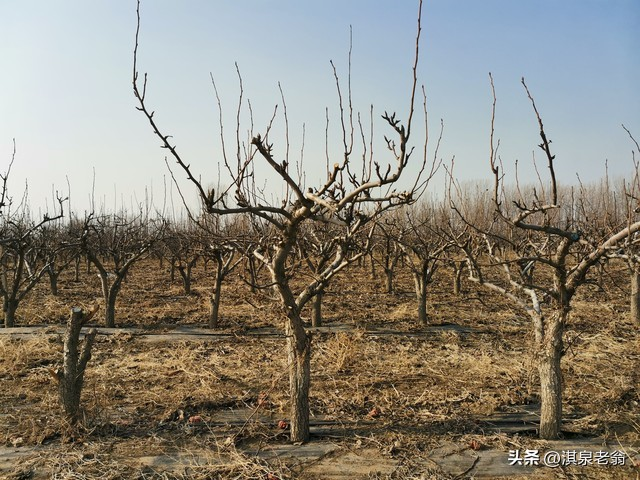
Pear sprouts are a critical period for integration and cutting. They allow for the reorganisation of the canopy, the improvement of ventilation, the rational distribution of nutrients, the promotion of the separation of buds and the formation of result branches, and the improvement of the yield and quality of fruit trees. Cutting should be based on the principles of “striking by tree, styling by branch” and should be based on the characteristics of the pear tree, its age, its direction, etc。
(i) young tree trim
The core objective of early-age tree cutting is to develop sound tree coronary skeletons and promote rapid growth of trees and early ability to produce results. For 1 - 2-year-old trees, emphasis should be placed on the development of the backbone and branch, with a normally dry height of 60 - 80 cm, the selection of 3 - 4 strong and well-positioned branches above the established dry height as the main branch, with the main branch and the main branch being controlled at 45 - 60 degrees, and the rest of the branches being properly detached or cut short as supplementary branches. In the case of three-year-old larvae, emphasis is placed on the development of side branches, with strong and suitably positioned branches chosen on the main branch as side branches, with the side branches and the main branch being controlled at 60-70 degrees, forming trees such as “main stem strangulation” or “happy”. Cutting should be primarily light, avoiding over-refining leading to a weakening of the tree, a moderate short cut of the main branch and the extension branch, promoting new growth and the expansion of the tree canopy, and a slow or light cut of the supporting branch to promote the cleavage。
(ii) age result tree trimmed
The core objectives of the end-of-age tree cut are to maintain the stability of the tree canopy structure, to update the branches of the outcome, to reconcile growth with results, and to extend the outcome years. First, there is the elimination of twigs, cross branches, overlapping branches, pest branches, etc., and the improvement of the canopy ventilation conditions and the reduction of nutrient consumption. In the case of growing branches, they may be slow or circumcised to facilitate the fracturing of flowers; in the case of growing and weakening branches, they may be transcribed to promote new growth and to update the outcome branches. Second, the result branches should be finely trimmed, the strong ones retained and the weak ones removed. For those that have been the result groups for many years, they should be updated in a timely manner, and new ones should be nurtured to ensure that there are sufficient results branches each year. In addition, the height and width of the tree canopy need to be controlled to avoid excessive canopy leading to poor ventilation, with retortation and reduction of the canopy height for excessive branches, and dilution or short-cuting of the canopy to control the canopy width。
(iii) motion of care
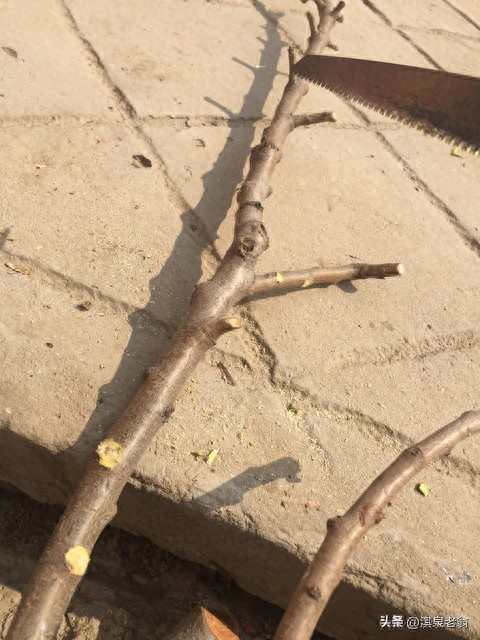
Shearing should be done using sharp shearing tools, such as shears and saws, to ensure that shears are flat, to avoid tearing branches and to influence the healing of wounds. For cuttings greater than 1 cm in diameter, the wound healing agent should be painted in time to prevent infection. The order of cutouts should be based on the principle of “first-down, first-down, first-out, first-out, first-out-side” to ensure that the cut is even and avoids coronary bias. In addition, embryonic cutting should be carried out after the bud has developed, to facilitate the identification of buds and leaves, to improve the accuracy of the trimping and to avoid the fall in yields caused by the miscuting of buds。
Iv. Green prevention and control of pests and pests: building early barriers
Pear sprouts are a critical period for pest and disease control, when they begin to recover after winter, causing harm to buds, fresh feet, buds, etc. If not dealt with in a timely manner, they can lead to death of buds, new atrophysics and the fall of buds, which seriously affect the growth and outcomes of pear trees. At this stage, pest control should be based on the principle of “preventive and integrated management”, using a combination of agricultural, physical, biological and chemical control to achieve green control and reduce pesticide residues。
(i) agricultural control
Agricultural control is the foundation for green pest prevention and control, which reduces the incidence of pests and diseases by improving the orchard's ecological environment, increasing the resistance of trees. In addition to cleaning orchard weeds, falling leaves, diseased fruit, etc., as mentioned earlier, the management of the tree body should be strengthened, with a view to improving the strength of the tree and enhancing its own resistance to insects through rational fertilization, watering and cutting. At the same time, the intensity of orchard cultivation has been rationalized, ventilation has been improved, the humidity of orchards has been reduced and the environmental conditions in which pests and diseases are found have been reduced。
(ii) physical control
Physical control is an environmentally sound and safe method of combating diseases and pests in their infancy. For pests such as aphids and pheasants, yellow sticky boards, 20-30 pieces per acre, can be used as bait to use yellowity of pests; for pests such as pear lice, tape can be wrapped around the trunk to prevent pests from reaching the tree. In addition, the lighting of pests can be used to reduce the number of pest populations by installing frequency-fibration headlamps in orchards, with 1-2 sets of pests per acre, booby traps, etc。
(iii) biological control
Biocontrol is environmentally sound and sustainable using beneficial organisms or their metabolites for pest control. Insects such as aphids, grasshoppers, etc., can be released in the orchards during the embryonic period; pests such as aphids, pheasants, etc., can also be sprayed with biopesticides such as sprouts, platinum, etc.; and pests such as pollinosis and black spots, as well as aphids, pears, etc. Biocontrol should be sensitive to the time and concentration of use, avoiding mixing with chemical pesticides and affecting the effectiveness of prevention。
(iv) chemical control
Chemical control is an important means of pest control, but the use of pesticides should be strictly controlled, efficient, low-toxic and low-residency pesticides selected, and the principle of “pharmaceutical treatment, timely use” followed. In the pre-emergence period, emphasis is placed on diseases such as pear black star disease, pear powder disease, pear rust disease, etc., and on pests such as aphids, pear lice, pheasants and shellworms。
In the case of diseases, a bordeaux (1:2,200) or thiomers (3-5 degrees) can be sprayed once in the gestationary swelling period to disinfect the whole garden and kill the winter disease; after the onset of the new sprouts, entropylium, peptol and other fungicides can be sprayed once every 10-15 days, 2-3 times continuously to prevent the disease. For pests, insecticides such as aphids and aphids may be sprayed at the onset of the insect, antiaphids, pears, etc.; antifluents such as amphibian and mites can be sprayed, and insecticides such as thorone and thorium can be sprayed to combat shellworms. The application of pesticides should be balanced so as to ensure that pesticides are present both inside and outside the tree canopy and on the other side of the leaf, so as to increase the effectiveness of the response; at the same time, safe intervals for pesticide use should be strictly observed to avoid harm to human health caused by pesticide residues。