


“economics is not about money, but about human behavior.”
Manquin uses ten principles to reveal that behind all economic phenomena is human choice in scarce conditions。

As the world's best-selling economics textbook, mangon's economics doctrine has built the basic framework for understanding the modern economy with extremely clear structures and living cases. Core values: provide a set of thinking tools for analysing real world economic problems, rather than a dry theoretical pile。

The ten principles of economics: a framework for understanding the world
1. How people make decisions (individual behaviour)
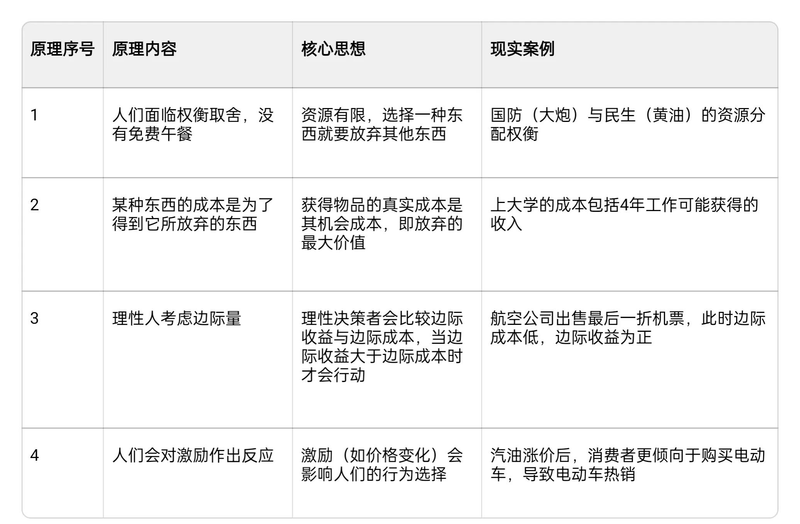
2. How people deal with each other (interactive behaviour)
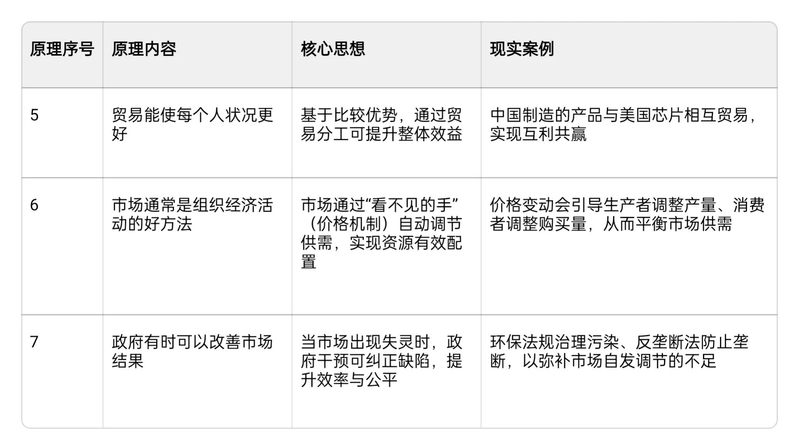
3. How the overall economy works (macrosystems)

Supply and demand models: analytical tools for forecasting market changes
1. Theorem of demand: prices and demand
Impact factors: income, preferences, prices of alternatives, expectations
• case: iphone price reduction surge (move along the demand curve)
2. Theories of supply: prices and volumes
• impact factors: technology, input prices, policies, expectations
• case: increase in the price of pork to increase the supply of farmers (move along the supply curve)
3. Market balance: invisible hand regulation
4. Resilient theory: quantitative response
:: demand elasticity: high elasticity of luxury goods (price change of 1 per cent > 1 per cent)
• supply elasticity: low capital-intensive elasticity (failure to increase rapidly)
Macroeconomics: understanding key concepts of the economic cycle
1. Three macroeconomic indicators
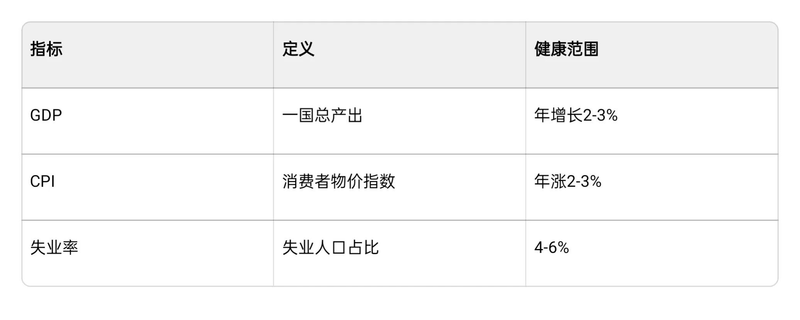
2. Long-term growth: four determinants of productivity
- material capital (machine/equipment)
- human capital (education/skill)
- natural resources (land/mines)
- technological knowledge (innovation/management)
3. Short-term fluctuations: total demand - total supply model
• recession period: insufficient aggregate demand to reduce labour cuts
:: overheating: excessive aggregate demand and rising inflation
• policy instruments: monetary policy (interest rates), fiscal policy (taxes/expenditures)
Iv. Factual application of economic thinking
1. Personal decision-making landscape
:: career choices: comparing expected income (opportunity costs)
:: investment finance: trade-off between risk and return (incentive response)
• consumer decision-making: consider marginal effects (number of cups of tea
2. Business analysis landscape
• pricing strategy: flexible pricing based on demand (luxury goods vs necessities)
• market entry: analysis of supply and demand gaps (blue sea market)
Policy responses: prejudicing policy implications (environmental regulations and costs)
Public policy understanding
• minimum wage: to help low-income people vs causes unemployment
• tax policy: efficiency losses (unnecessary losses) and equity rights balance
• trade protection: protection of domestic industry vs consumer interests
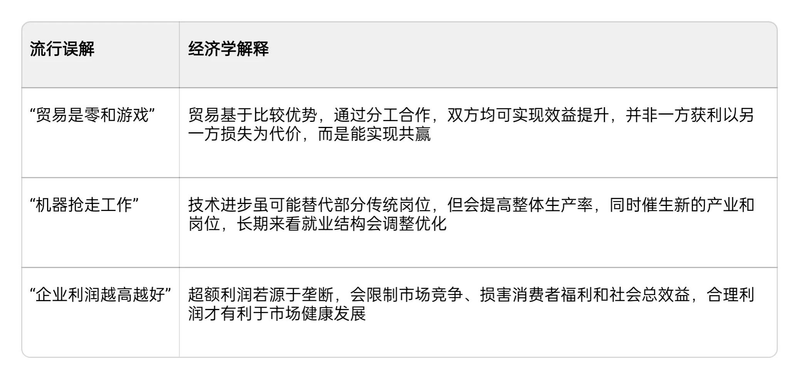
V. Common economic error correction

Conclusion: economics is the guide to life
“economics will not give you all the answers, but will teach you to ask the right questions.”
The ultimate value of the book -- it provides a simplified framework for analysing complex worlds:
From individual choice to national policy
:: from market pricing to international trade
• from short-term fluctuations to long-term growth

When you master economics
You got it
Seeing the nature of the phenomenon
Think lens。
#economics # manquin # economics thinking # supply and demand theory # macroeconomics
Watch me, look at the world in economics
The core cautions: not to forget the hard curve and formula, but to understand the logic behind it — that is the true meaning of economic thinking。



