


Vibration disks, a small equipment that appears to be insignificant on the automated production line, are key to achieving automatic, orderly and accurate materialization of the parts. Its core rationale is to use high-frequency microvibration generated by electromagnetic vibrations, to drive parts to climb, filter and direct in specially designed spiral orbits, leading to a uniform attitude to be sent to the next process, which greatly enhances production efficiency and automation. In short, it is "vibration drive, orbital sequencing, orientation output"。
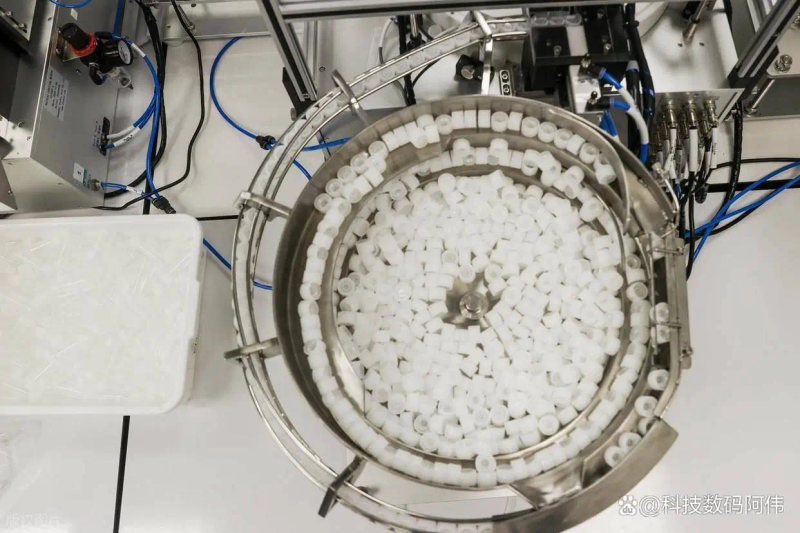
Are you curious how countless tiny pieces of spare parts in those highly automated factories were sent to the next process in a smooth and coherent manner? Behind this is often the absence of an unheard “decent” — vibrating disc. Don't look at it as simple, it's got a lot of design in it. Today, we're here to talk about how the vibrating disk works。
Where does the vibration come from
The power source of the vibrating disc usually comes from an electromagnetic vibrator inside its base。
Electromagnetic and cortex (or spring group): the base of the vibrating disk is fitted with an electromagnetic wire ring and a corrugated cortex (or a group of elastic tilted springs)。
Driving of a passing current: when the controller enters the electro-magnetic wire loop into a contemporary current (or pulsed direct current) adjusted by the whole current and pulse, the electromagnet produces a cyclicalally changing magnetic field。
Periodic adsorption and release: this changing magnetic field will cyclically attract the cortex (or deformation of the spring group) and when the current weakens or disappears, the cortex returns to the effect of the spring. This process is repeated repeatedly at very high frequencies (usually multiples of the working frequency, such as 50 hz or 100 hz)。
Direct vibration: due to the tilt installation or special structural design of springs, this high-frequency suction and release action would result in a small but fast, slightly upward and forward-slanted back-up vibration for the entire vibrating disc (mainly the plate component). This vibration is directed, it has a small vertical and a horizontal mass。
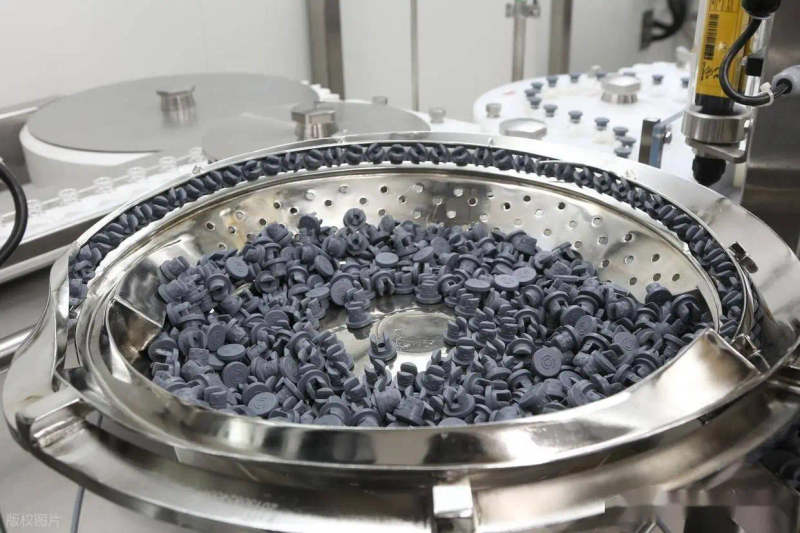
How does the spare parts “crawl up the stairs”? - the direction of the spiral orbit
The core part of the vibrating disk is a cylindrical or conical plate with a spiraled orbit for the inner wall processing。
Micropaste: when the vibrating disc vibrates, the parts within the plate are slightly "throwing" up and moving a little distance up the front, and then dropping。
Crawl: as vibrations are continuous, the parts go up in a little bit along the spiral orbit. Imagine how you sift things, sort of like, but more regular and controlled。
How to ensure that the parts are “behaved” - orientation and selection wisdom
It is not enough to move the parts up, and automated production requires that the parts be organized in a specific attitude. This depends on a variety of sophisticated orientation and screening agencies in the spiral orbit。
Orbital cross-section design: the width, altitude and cross-section shape of the orbit will be designed according to the particular shape of the component. For example, parts of certain shapes can only stay in orbit in a certain position。
Filter structure:
Blocks and limits: the block is placed at a specific position in the orbit, and if the parts are not at the right attitude (e. G. Too high, too wide), they are blocked or dropped from the orbit to the bottom of the plate。
Gaps and holes: using the shape characteristics of the parts themselves, such as a dent or bump in a given direction, the orbit will design the corresponding gap or bump, only the parts with the right attitude will pass and the wrong attitude will jam or fall。
Air-blowing aids: for some light-weight or mechanically difficult-structured components, the use of air-blowing devices is sometimes accompanied by the blowing of air from a given angle and the blowing down of parts with an incorrect attitude。
Flipping institutions: some designs allow parts to be flipped at specific locations to achieve desired postures。
Final orientation: after this series of “levels”, the parts that can reach the end of the orbit are organized in a consistent attitude。
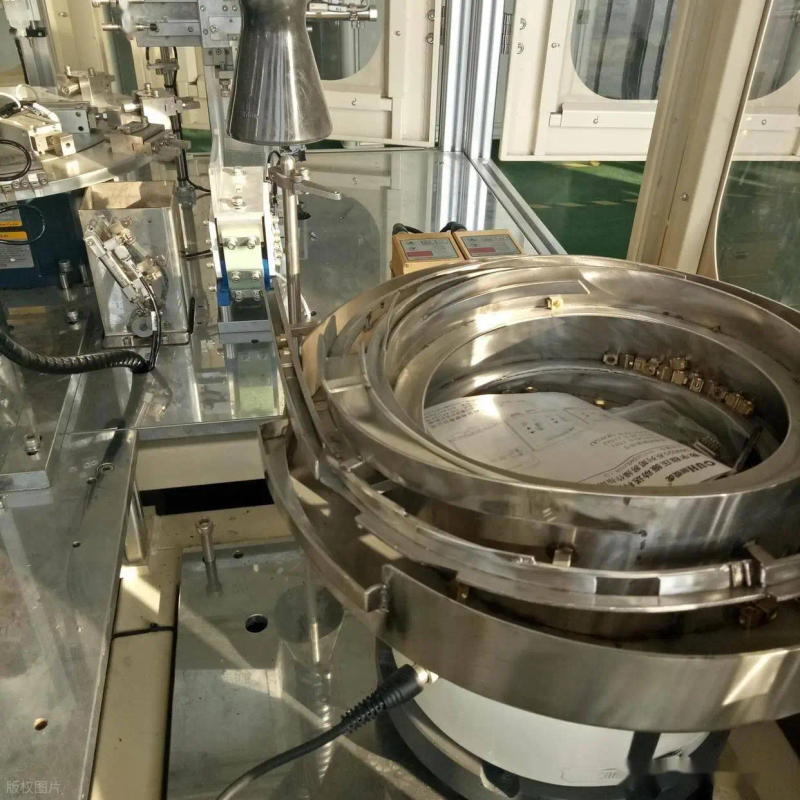
Iv. Sequenced output, docking production lines
When the parts are lined up for export to the spiral orbit, they can be transported in a smooth manner to the next process, for example, through a straight-line vibrating device, or directly by mechanical hands, into the assembly machine, etc。
Overview of the main components of the vibrating disk:
(a) pumping (discretion plate): parts with spiral orbit。
(b) substrate (underseason): supporting plume, which contains electromagnetic vibrates and tremors。
Controller: the vibration frequency and range of the vibrating disc to control the upper material speed of the parts。
Targeted institutions: where the essence is, integrated in spiral orbits, used to screen and organize part postures。
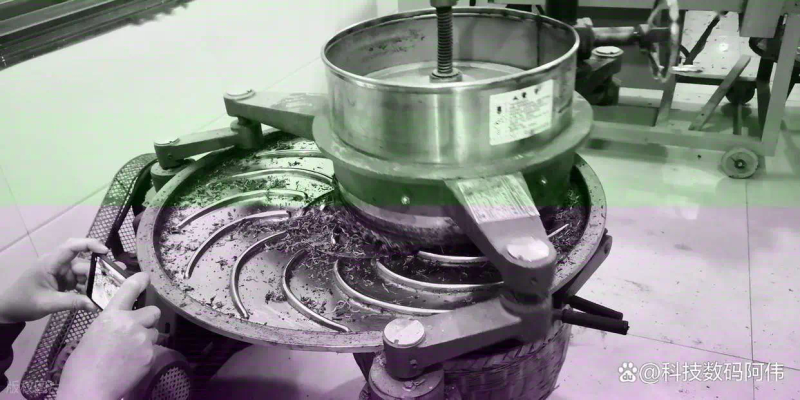
Why can't automated production turn on the vibrating disk
Increased efficiency: continuous automatic feeding, well above manual speed。
Guarantee accuracy: the output parts are uniform in attitude and subsequent process errors are reduced。
Cost reduction: replacement of manual materials and savings in human costs。
Adaptive: by replacing the disks of different designs, the components can be adapted to various shapes and sizes。
Use small tip:
Part matching: not all parts are suitable for vibrating discs, and the selection takes into account the shape, size, weight, material, etc. Of the parts。
Regular maintenance: keep the plate clean, check if the tights are loose and ensure that the electromagnetic heat is spread well。
Correct debugging: control parameters (voltage, frequency) require precise debugging according to the velocity of the parts and materials。
Summary:
The working method of the vibrating disk is, in simple terms, "electromagnetic vibration, slanting motion, orbital screening, orientation output". Through a sophisticated combination of mechanical design and electromagnetic principles, it transforms unstructured parts into structured “reserves”, providing a solid basis for efficient and stable operation of modern automated production lines. This little device, which brings together the intelligence of engineers, is a true "behind the scene"!



