Since the birth of the coin, the “false currency” has also been born, as if it were a shadow. From two and a half bahts of private casting, to theft, to the “803” counterfeit currency cases a few years ago, there were numerous and repeated cases. Successive governments have spared no effort in the fight against counterfeit currency and have often sacrificed their lives to severe punishment. However, throughout history, the fraudsters are still the successors. Europe and the united states are all over the world, with all sorts of public and private counterfeit currency. The famous british counterfeit currency incident in world war ii and the north-south printing of government notes during the united states civil war were aimed at disrupting the financial order of the other side。
Indeed, “false currency” already existed in ancient greek times. In the age of ancient greece, there were two kinds of so-called “false currency”, one of which was counterfeited by foreign countries, which sometimes contained silver components that were no less than the so-called authentic. For example, thanks to the colour of the athens silver coin, which has been widely recognized in the mediterranean, the eastern mediterranean region had large-scale counterfeiting of the athens silver coin, from syria, phoenix, egypt and even far to the baktriya region of central asia. In the near 300 years since the fourth century bc, the mediterranean rim has also made large-scale counterfeit money for the alexander empire, especially in the black sea region. In addition, some nomadic tribes have forged coins close to the greekized state, such as those of the arab and persian regions of the sérgio empire, and those of the skite and sogodiana peoples of the kingdom of bucketria. The other is a genuine counterfeit currency. Such coins are filled in second place, using base metals as kernels and containing silver or gold skins on the outer layer. Such coins are often referred to as “fourée” and are used to counterfeit more valuable coins, such as stade or four drachmas. They are usually mixed in real currency, and it would be difficult to identify them quickly if not for the appearance of gold and silver layers。
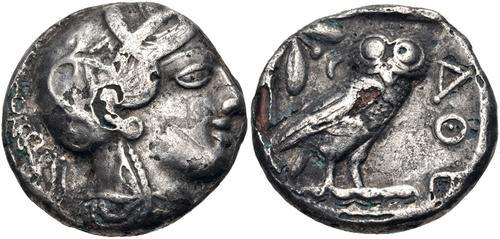
In the ancient greek era, both the classical literature and the physical production of soil, this kind of counterfeit currency is common. According to the information received, a counterfeit currency for the outsourcing of amber gold tablets had appeared in the kingdom of ludia as early as the seventh century bc. Hirodod recorded that samos had forged a collection of counterfeit currency, bribed it with a gold-coated lead currency, and lied to sparta officers to free the latter. According to the inscriptions, athens in the 4th century b. C. Has an official who specializes in the identification, testing of counterfeit currency, and the imitation of foreign currency. This indicates that counterfeit currency is now in the mediterranean region. Essentially, as long as the imitation is properly coloured, it does not prevent market circulation, but the counterfeit currency of base metals, which is material, disrupts market order. As a result, the ancient athens government took a different approach to the two coins. According to the same motto, athens has taken a non-recognition attitude towards better-looking foreign imitations, i. E. Official non-acceptance of foreign imitations, but they are still available in the market. The act provides for a distinction to be made between counterfeits and bad currency, i. E., i. E., i. E., i. E., i. E., mere return and confiscation of both counterfeit and ill currency. Similarly, according to the motto of lezpo island, if a foundry shows less than a coin, the person in charge will be executed. It is evident that ancient greek cities and towns have taken extremely harsh punitive measures against the creation of counterfeit currency。
But there is also a literature showing that this “false currency” was also issued by the authorities during the ancient greek era, often accompanied by serious political, military or financial crises. For example, after the loss of the entire army of the athens navy in the war on the sheep river, the athens citizens ' assembly adopted a proposal by carco dionisos to urgently issue coins for use as coins. However, according to current archaeological evidence, it is not pure copper coins that were issued in athens at the end of the fifth century b. C., but rather counterfeit coins like those described above — silver coins. These coins were identical in shape to the four drachma silver coins at the time, with a single layer of silver wrapped in the outer layer. Most of the money in the pack is extremely sophisticated, and some of the coin's surface remains intact today. These coins should be the result of successive wars in athens, the depletion of finances and the depletion of silver and silver. At the time of the collapse, athens would be able to pass only in coins of copper, which would serve as an emergency proxy for the four drachmas, to cover the huge fiscal deficit and military expenditures. Such measures, although extraordinary, have, according to ancient literature, been condemned in different ways by the athensians for their suboptimal and disguised looting. In the frog of aristofen, the difference between the new coin (coins of silver) was condemned in a comparable way, as was the loss of the next world and the unendingness of the hearts. In the citizens ' congress women, the inhabitants of athens also expressed their dissatisfaction with the use of copper in silver: a citizen was damaged by the accumulation of new coins (coins of silver) which not only made him “gold” but also refused to accept them。
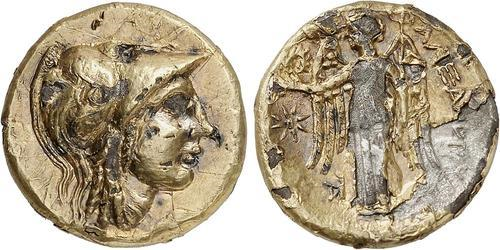
Similarly, aristotle has documented similar things: in the first half of the fourth century b. C., general timotéos of athens marched on alatus to forge coins for lack of silver. As a result, sergeant athens complained, and the tycoon persuaded people to explain that merchants could accept the replacement of silver coins (i. E. Copper coins made by tycoon). In the end, the merchants brought by timotéos, who were able to change the coins, took them to tilder and exchanged the corresponding silver coins. It has also been documented that the shiraz chief dionisius has also issued tin coins at a time of shortage of silver. In the course of fighting the garthians, pedica also issued a coin of copper and tin on an ad hoc basis to be paid for silver. However, these three types of coins are not currently retained in kind, but only documented。
There are no exceptions, and we still see similar tin “false currency”. According to the latest evidence, this “false currency” was also issued in baktria. There was a silver bank in the country of king helio chris's coin, which was extremely fine and no different in size from the king's silver coin, but only 11 grams (normally 16 grams) were observed, and its appearance was also covered with silver skin, while the kernel was copper nickel alloy. The background to the issuance of this “false currency” is unknown because of the history of the kingdom of baktria and the loss of all the history of king helio chris. However, recalling the historical background of the issuance of “false currency” in athens, it is assumed that helio chris was also caught up in a serious financial or military crisis. This “false currency” is a strong example of this assumption。
Although the world of ancient greece has seen a proliferation of “false currency”, it has been documented that some of the official “false currency” issued on a provisional basis has not only a time limit, but also a defined range of circulation. For example, in the case of petika, it is well documented that they can only circulate within the framework of the pécero regime. As a result, these interim means of resolving crises of all kinds have gradually enabled “false currency” to function as a proxy currency, making it one of the pioneers of modern credit currencies。