Technically speaking, there are two broad categories:
First: ppg pv pulse method
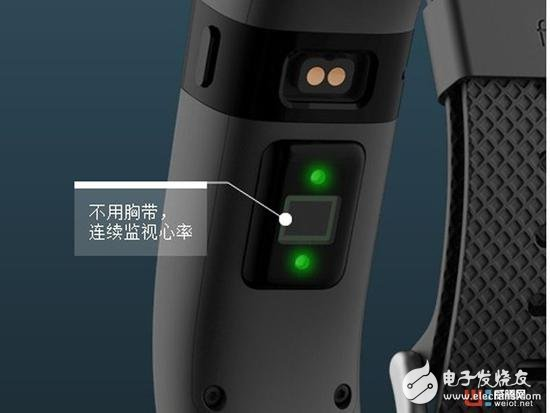
In short, it's a reflection, using a pulse change in the perforation rate in the blood, converted into a telecommunications number, using software algorithms, which correspond to the heart rate。
620)this. Width=620; "syle=cursor:point"/
Products represented on the market: fitbit charge
When the beam of a certain wavelength is irradiated to the skin surface of the pointer, the beam will be transmitted to the pv receiver by transceiving or reflecting, and the light intensity detected by the detector will be reduced as a result of fingering, absorption decay of the skin muscle and blood of the end. The absorption of light, such as skin, muscle tissues, is constant throughout the blood cycle, while the blood in the skin, the volume of which is dynamically altered by heart action. The maximum peripheral blood capacity is also highest when the heart is constricted, with the least light intensity detected. On the other hand, when the heart is constricted, the maximum light intensity is detected, resulting in a pulsive change in the light strength received by the light receiver。
Then there must be someone who wants to ask why green leds are common
Because the absorption rate of green light is the largest in the face of red liquids such as blood, it is more accurate for data judgement。
When a user's heart beats, more blood flows through the user's wrist, and the greater the absorption of green light. There is a decrease in blood flow at the heart beat gap, leading to a decrease in the absorption of green light。
For example, if the luminous value of handring is 100, skin muscle tissue absorbs constant 10, blood absorbs total 15, reflecting 100-10*2-15 = 65, then arterial blood comes in, red cells have increased oxygen, blood is absorbed to 2, and that reflects 50
It will then remain in the 65-50-65-50-65-50-50-50-65-50-50-50-50-50-50-50... Your heart rate is calculated by calculating how many pulse changes per second。
The rationale of this method is also its shortcomings, if there is a lot of sweat in the bracelet and skin? That would be inaccurate。
If your values change this way, 65-50-65-50-65-50-66-56-51-62-50-65 etc., this can also force the machine。
In general, this method of measuring static pulses and normal rules-based movements (runs, etc.) is still more accurate, but for irregular movements, such as football plumeballs, the hypothetical values described, for example, would jump and decrease slightly. But it's a few different values, and i think i'm good enough for a non-professional。
Second: cardiac telecommunications, similar to ecg
It's a little like the ekg you made at the hospital. The difference is that hospitals need electrodes on their hearts, feet and wrists and need to measure more data, while wristwatches do not need that much data, and the heart rate alone is sufficient。
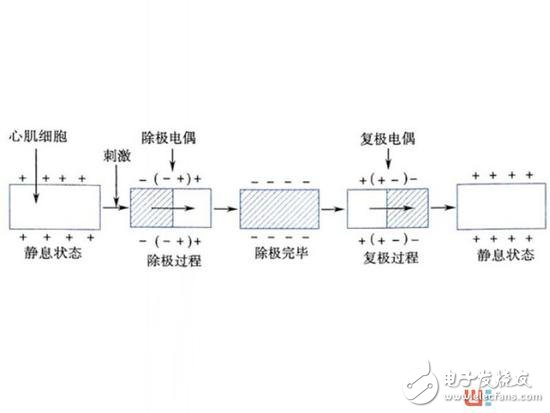
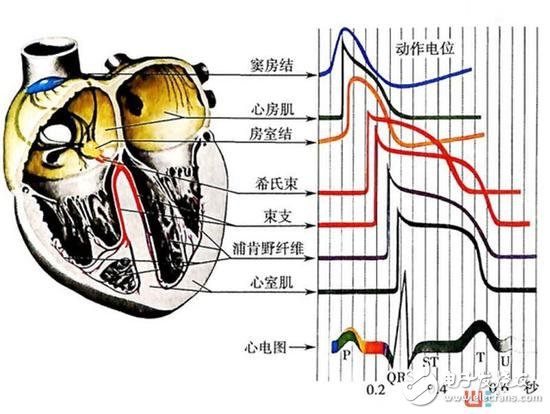
In simple terms, tissues and body fluids around the heart can conduct electricity, so that the human body can be seen as a volume conductor with a long, wide and thick space. The heart is like a power source, and the sum of numerous changes in the electrons of myocardial cells can be transmitted and reflected in the body chart. There is an electrical difference between many parts of the surface, and there are many points where there is no electricity equivalent. The changes in electrodes collected, processed by algorithms, can restore many values, of which the heart rate can be restored。
620)this. Width=620; "syle=cursor:point"/
620)this. Width=620; "syle=cursor:point"/
Every heartbeat, there are small changes in the electrodes on the human surface, and these changes are captured and the frequency of heart rate beats can be reduced by algorithms. As far as i know, inside the bracelet, it's like jawbong up 3 uses electrocardiology, and most of the rest is photovoltaic. Example:

620)this. Width=620; "syle=cursor:point"/