Status and challenges of liquid cooling technologies
Liquid cold technology, which significantly improves the dissipation performance of electronic equipment through efficient heat transfer, is considered to be a leader in the field of future dispersion. Liquid cooling technologies, as the lead in the future dissipation field, are gradually changing the dispersion of electronic equipment. In today's rapidly changing technological landscape, the increasing integration and miniaturization of electronic devices, with the attendant increase in heat flow density, has exacerbated the overheating of devices. Given the direct impact of the working temperature of electronic devices on their useful life and stability, efficient heat dispersion measures are particularly important. Liquid coolers, with high dispersive heat efficiency, rapid dissipation speed, low noise and small volume, occupy a wide range of market space in the electricity and electronics sector and demonstrate great application potential. It is therefore particularly urgent to develop systems for testing the performance of liquid chillers that can achieve high accuracy control of temperature and flow. But what is liquid cold? Who is it? In fact, the core component of the liquid cooling technology is a seemingly ordinary copper pipe, thermal tube. Next, let's explore the mystery of the hot tubing。
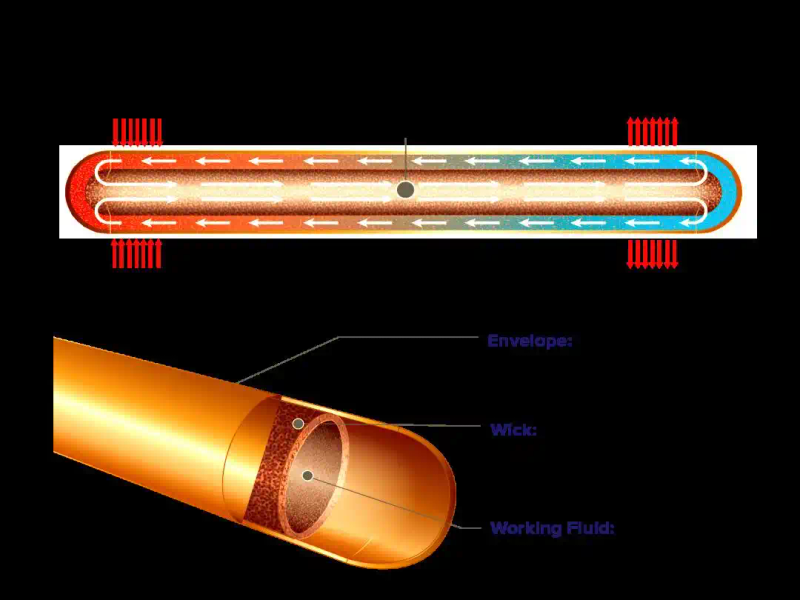
Thermal tube combines thermal conductor with the dissimilar principles to achieve efficient heat circulation through cavity. Thermal tubes, the core component of this heat transfer device, allow for efficient heat transfer between the two solid interfaces, through a clever combination of thermal conductor and phase variations。
02 history of thermal tubes
Early heat tube research
Although the idea of the heat tube was introduced in the nineteenth century, it did not begin to receive widespread attention until the 1960s. The history of gravity thermal tubes dates back to the steam age. At that time, angel march perkins and his son loftus perkins invented “perkins tube”, a design that played an important role in the engine boilers and work ovens. In 1942, r. S. Gaugler of general motors introduced and applied for a patent, although it did not attract widespread concern. It was only in 1963 that george grover independently developed such heat tubes at the national laboratory in los alamos and, for the first time, used the term “thermal tube” to describe them, that such efficient heat transfer equipment began to gain prominence。
Modern application and development
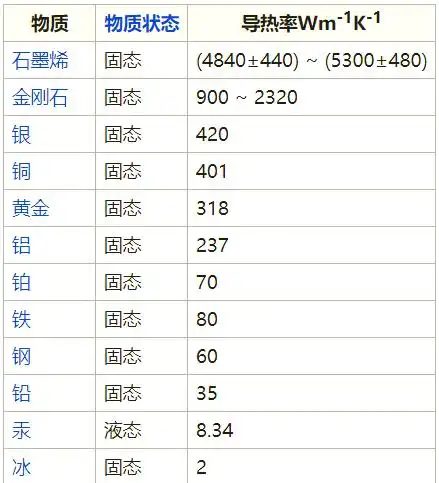
Thermal tubes are widely used in space and electronic equipment and demonstrate the superiority of high thermal conductivity. Thermal tubes used in laptop computers are sintered to form a multi-pore-suction core structure. This heat tube played a key role in nasa's development in the 1960s. As spacecraft are exposed to direct solar radiation on one side of space, temperatures rise, while sunlight on the other side is not irradiated and temperatures decrease, which poses a threat to the stable operation of spacecraft. The catheter tube is an ideal option for balancing the surface temperature of a spacecraft by virtue of its light mass, high thermal flux and zero power consumption characteristics, and still allows the flow of liquids through cavity in a zero-gravity environment. In practice, thermal conductors used in electronic equipment range from 1,500 to 50,000 w/(m) and are significantly higher than thermal conductors for solid copper and solid aluminium。
03 thermal tube application in different environments
[electronic equipment and spacecraft]
The use of heat tubes in electronic equipment to achieve stable dispersion, especially on spacecraft, addresses the challenges posed by temperature fluctuations. The choice of internal fluids in the heat tube is essential as it directly affects the efficiency of the work of the heat tube. Thermal tubes perform unique functions through internal fluid transformation, and it is therefore essential to ensure that both the gas phase and the liquid phase are present within the working temperature range. When ambient temperatures are lower than working temperatures, liquids cannot evaporate to gases; when ambient temperatures are higher than working temperatures, thermal tubes are filled with gas, affecting condensation. Excessive or low ambient temperatures can lead to heat catheters relying solely on the walls of the tube, which is no different from general metal heat and does not allow for the full performance of the tubes。
[extreme environmental application]
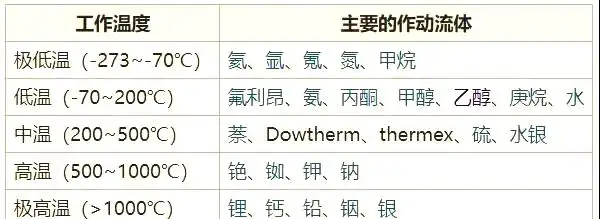
In extremely low or high temperatures, thermal tubes select specific work fluids to maintain efficient heat transfer. At very low temperatures, e. G. 2-4k, helium is often used as a working fluid for thermal tubes. In high temperature environments, such as 523-923k, 873-1473k or even 2000-3000k, mercury, sodium or thallium may be selected as a work fluid. For room temperature applications, thermal tubes usually use ammonia (213 ~373 k), methanol (283 ~ 403 k), ethanol (273 ~ 403 k) or water (298 ~ 573 k) as a work fluid. In particular, copper/water thermal tubes are constantly operating at a temperature range of 20 - 150°c。
04 thermal tube technology in other areas
Application in a nuclear reactor
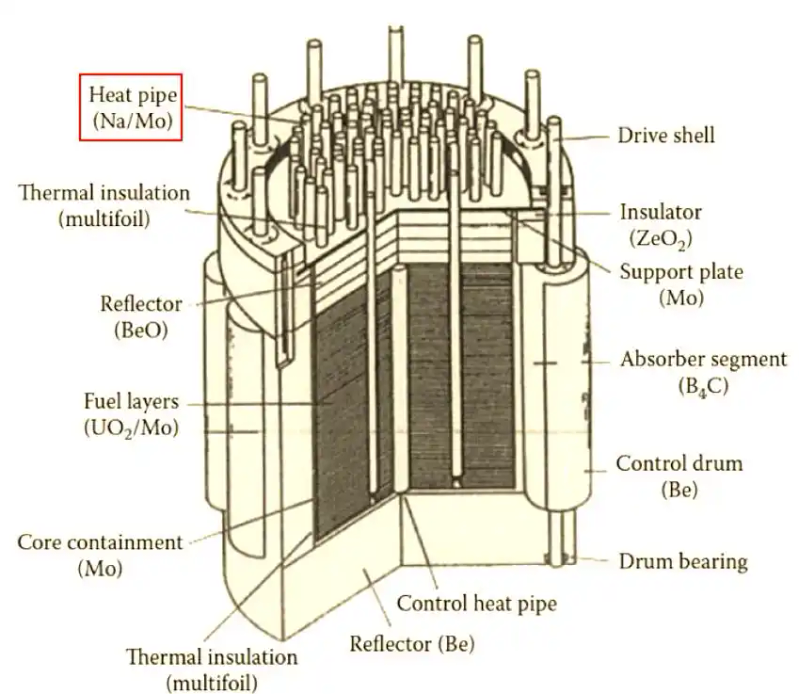
Thermal tubes provide efficient heat transfer in nuclear reactors to ensure the stable operation of equipment. Thermal tube technology not only displays superiority in extremely low or high temperatures, but is also widely applied within reactors. For example, sodium / molybdenum heat tubes are often used in this special environment to ensure stable operation and efficient heat transfer of reactors. Thermal tubes can withstand temperature changes under extreme conditions while maintaining their superior conductivity and providing strong support for reactor security and stability。
The application of tundra
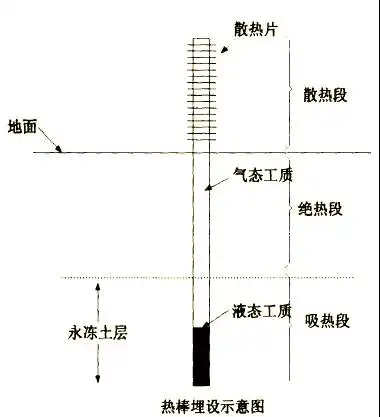
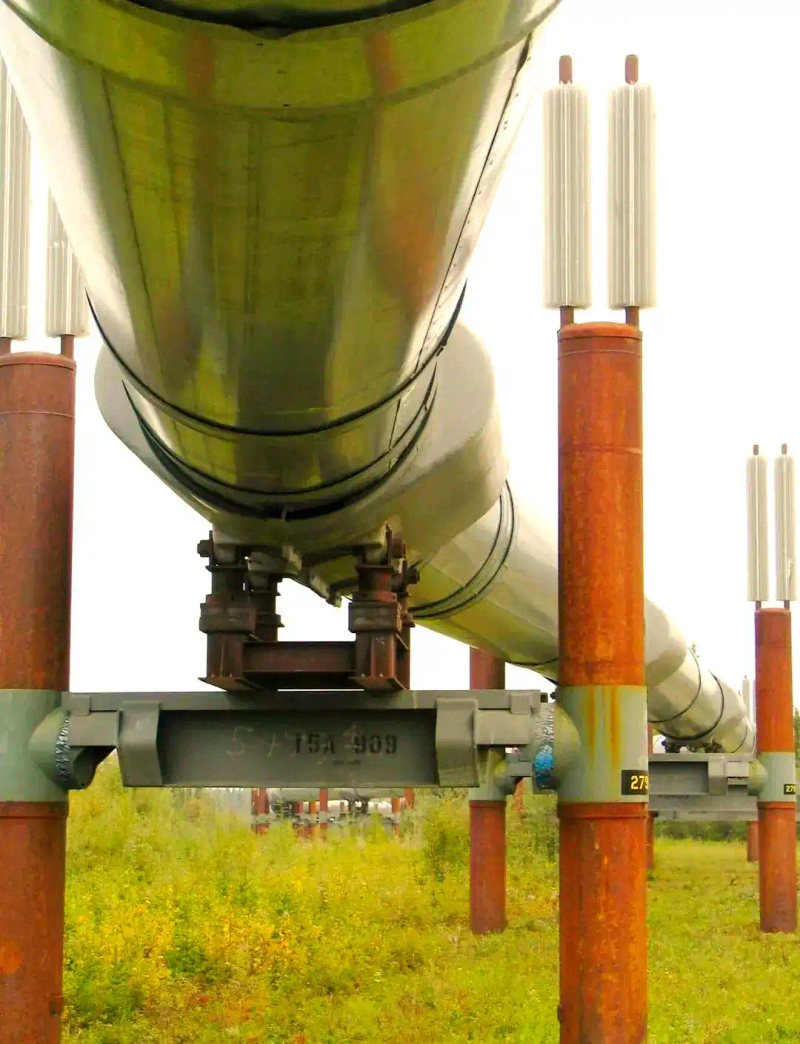
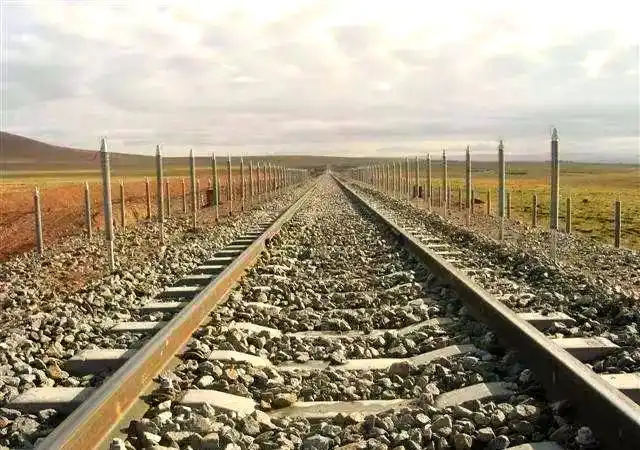
The coreless gravity thermal tube was used to maintain the stability of the frozen soil and prevent ground-based damage in the construction of the qingxi railway. Thermal tube technology also plays an important role in the tundra fever. Frozen soil, as a special soil or rock layer, at temperatures below 0°c and exhibiting morphological characteristics of frozen molars. Because the water density is greater than the ice, the water content of the frozen soil expands during winter ice, while the volume shrinks during summer melts. This seasonal expansion and contraction pose a threat to the buildings on the frozen soil and could lead to ground-based destruction and security incidents. In order to maintain the stability of the frozen soil and to prevent it from melting, thermal tube technology has been ably applied. Thermal pipeline technology has played a key role in the construction of our country's cheishan railway. The gray rods on both sides of the railways are thermal tubes. Unlike the plating in laptops and spacecraft, which have a hairy back flow, the routing is based on a coreless gravity heat tube。
05 future exploration and outlook
Geothermal and liquid cooling technologies
The advantages of lct in high-density computing environments are increasingly highlighted and are being explored for geothermal energy extraction. Further, the use of hypergravity heat tubes to extract geothermal energy is being explored with a view to providing indoor warmth during winter. As the technology of liquid cooling and dissipation continues to advance, its excellent dissipation performance is gradually gaining advantage in the computer field, especially in high-density computing environments such as libraries and electronic classrooms, where its low noise, high-efficiency dissemination and energy-saving properties will be used more fully。