1 the strategic alliance theory and the application of political law 1205 hongsha 121070243 (23rd) i. Interpretation of the concept of strategic alliance (i) the definition of strategic alliance was first proposed by the united states ceo of dec jane hopeland and the manager roger nagel in the context of the rapid development of economic integration, science and technology in the world, which, in their view, refers to a loose model of cooperation between two or more firms with a reciprocal operating power with a common strategic interest in order to achieve the strategic objectives of common ownership of markets, common use of resources, such as various agreements or contracts, where advantages are complementary or have long-term advantages, risk sharing, production factor levels, two-way or multiple flows. Many management scholars have different understandings and views of strategic alliances, but we can sum up the definition of strategic alliances as "two or more independent organizations to achieve each other's goals."
A long-term or short-term partnership for strategic purposes.” while such cooperation is an action taken by enterprises to meet the needs of survival or long-term development, with clear strategic intent and objectives, the partnership itself is not necessarily long-term stability. (ii) strategic alliances are an effective way of overcoming barriers to new market entry at a low cost; strategic alliances also avoid overly large sanctions against firms by antimonopoly laws, all of which are a direct incentive for strategic alliances. Organizing the accumulation of business knowledge assets through continuous theoretical learning is business
3. An important reason for choosing cooperation rather than market transactions is that organizational learning theory is one of the indirect drivers of strategic alliances; and that resource-based alliance dynamics, driven by strategic gaps, the theoretical interpretation of value chains and the interpretation of network theory have contributed to the creation and development of strategic alliances. (iii) strategic alliances are characterized by flexibility and efficiency. At present, with the development of network technology, strategic alliances are making greater use of the network, so that strategic alliances have the characteristics of network organizations. The process of forming a strategic alliance is simple and easy to dissolve; it brings together core resources, so it can function efficiently and accomplish tasks. However, strategic alliances are also characterized by two non-negligible characteristics, namely, the blurring of borders and loose relations. Because the strategic alliance formed a contract of interest
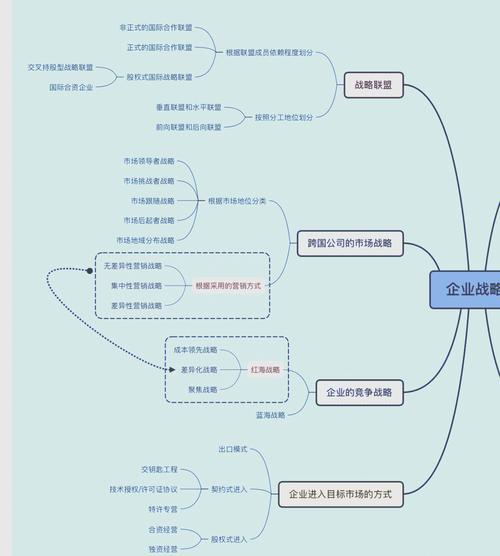
4. Unlike traditional enterprises, which have a clear hierarchy and boundaries, their cooperation is based on a consultative approach. Antimonopoly from the government also threatens the development of strategic alliances. (iv) the types and forms of strategic alliances are analysed from different research perspectives, and strategic alliances are divided into different types. From the point of view of governance structures, it can be divided into equity and contractual alliances; from the point of view of value chains, it can be divided into horizontal, vertical and mixed alliances; and from the formality of cooperation can be divided into entity and virtual alliances. Strategic alliances take the form of joint ventures, research agreements, branding, franchising and mutual equity. Different businesses or organizations have different development backgrounds and face different strategies, so when choosing partners, you have to choose a suitable form of common development in which to build a reasonable organizational relationship
5. Enhanced cooperation and communication. (v) the role and significance of strategic alliances can help enterprises achieve their strategic objectives by sharing resources and maximizing their efficient use at a cost. For an enterprise to grow, it needs to set a strategic goal, and it has all kinds of well-developed resources, and it can use strategic alliances to choose its own partners according to its needs, thereby maximizing the use of existing resources to achieve the corporate strategic goal. Research and development is the most important area of strategic alliances, so the establishment of strategic alliances can facilitate research and development. By building strategic alliances, enterprises can share the risks of technological development and increase the likelihood of successful research and development. Through strategic alliances, inter-firm capacity complementarities can help enterprises improve their core competitiveness. The alliance achieves the respective value chain rings of the enterprise
The cooperation between the six and the section shifts the focus of value creation from intra-facility to external relationships across the boundaries of enterprise organization. By working together, they have strengthened their core competitive advantages, strengthened their lead in the industry, and also helped consumers. Strategic alliances can also prevent excessive competition and reduce risk. By creating strategic alliances, firms can work together to promote development, help to avoid intense competition in the market, and this initiative to work with competitors and become friends is more conducive to the development of an enterprise. Strategic alliances can achieve strategic diversity. The resources available to an enterprise determine the range of business activities that the enterprise can undertake, and the complexity of the business environment dictates that the enterprise adapts in a variety of ways to the demands of complexity. Second strategic alliance
7. A coalition between general motors and toyota motors of japan (i) and toyota motors of japan (gm) was founded on 16 september 1908, and since william durrant created general motors of the united states, it was founded by david berk in 1907, and has grown and grown over the years, with general motors at the top of the united states automobile industry. In the early 1980s, the american automobile industry was in a serious recession, with high energy prices and changes in consumer preferences leading to a huge demand for high-quality oil-saving mini-cars. Gm immediately invested heavily in scaling up research and development, but with little revenue. Okichiro toyota, created in 1933 at the toyota autoweaving mechanism, and in 1937 the autoweaving mechanism of toyota was officially established by the autoweaving agency
Stand up and set up toyota automobile industries. Toyota motors, japan's most powerful car division, was the world's most cost-competitive producer in the automobile industry at the time, with experience in the production of mini-cars and the first toyota management model. However, toyota’s exports to the united states are subject to strict export limits, and to seek access to the united states market, toyota’s base is required to be transferred to the united states. (ii) the creation of the general company for strategic alliances is aimed at improving the production techniques and workshop management of mini-cars in order to adapt to new consumer demand and increase company sales. What toyota motors needs is access to the united states market to make up for the limited demand and sales in japan, so that japanese cars can take over the united states market. If the two parties work together, they both benefit. So the two parties signed an agreement in 1983
Through the form of a strategic joint venture, co-financed a new joint venture car manufacturing company in california, united states. Toyota motors, japan, enters the u. S. Production with the technology of small cars and unique management models, and general motors provides them with the environment and marketing channels in the u. S. (iii) the benefits of strategic alliances have been rapid, and this cooperation has brought significant results to both sides, with the successful introduction of high-technology and management models by gm, which have enhanced its competitiveness in the area of small and medium-sized vehicles, and its rapid growth. Toyota, on the other hand, has successfully entered the united states market through joint ventures and acquired experience in auto production in the united states, making up for a lack of overseas operations. Both have emerged from the old crisis, achieved complementarities, shared resources, gained what they wanted, and developed companies. Fight
10. There is a solid foundation. The inspiration for strategic alliances further advances theoretical innovation, creating an institutional environment conducive to the growth of business alliances, in which firms can be truly independent market players, and face increased market competitive pressures, creating business alliances, and creating efficient forms of business alliances. Strengthening business organization and management innovation. In today's information age, business organizations can only innovate and change in a market environment that is so rapidly evolving, and the increasing role of information networking technologies in business operations is an important technological support for strategic corporate alliances, innovations in business management techniques, a combination of organizational structures, and the role of strategic alliances in business operations. Further refinement of the internal operating mechanisms of existing business collaborative alliances. There is a lack of capacity to nurture and improve the core competitiveness of enterprises
11, it is difficult for one enterprise to form strategic alliances with others. Better cross-cultural management should be accompanied by the promotion of enterprise informatization and knowledge, and timely information exchange and gap communication through adequate communication and respect, which is the guarantee of the smooth operation of the alliance. Increased awareness of cooperation and a shift from competition to cooperation are key. Both corporate and government management should focus more on the effectiveness of cooperation, and the city of guang buddha is a good strategic alliance that has brought rapid economic development to mount fuo while addressing a range of land conflicts and environmental threats facing cities in guangzhou. This kind of cooperation between the panjom triangle region, the long triangle, and kying jintang in hoang bay should be promoted to achieve sustainable development. Only by strengthening such cooperation strategies in the regions will our economy be on a path of correction. Three