Exposure, which refers to the process of forcing oxygen from air to liquid, is intended to obtain sufficient dissolved oxygen. In addition, suspensions within the mixing pool prevent sedimentation and enhance the purpose of exposure of organic matter to microorganisms and dissolved oxygen. This ensures the oxidation of organic matter in sewage by microbial organisms in the pool under conditions of sufficient dissolved oxygen。
When treating sewage biochemically, exposure is usually a high operating cost* and exposure equipment has been upgraded, and today we are talking about the advantages and disadvantages of various devices。
The usual pronunciation of bpoo for engineering techniques should have been pronunciated, in the following words: once exposed to the cold, it came from monko-tsuko: “although there is life-saving things in the world, one day of violence (“storm” and “exposure”), 10 days of cold, even if there is no living.” it means that, although it's an easy plant, it can't grow for a day, and it can't grow for 10 days." it's less time to be hard, less time to be weak, less time to be patient. English: aeration. Exposureors should also pay more attention to their long-term performance than to temporary work。
More exposure equipment types currently applied
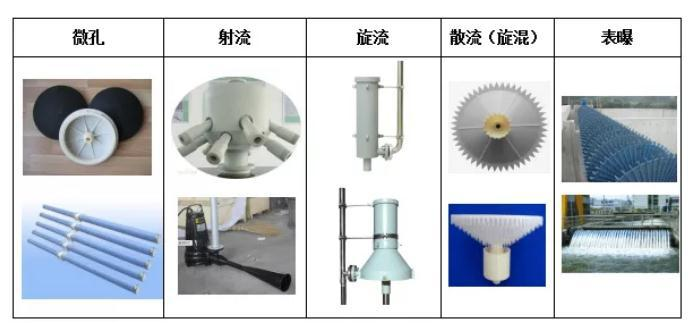
Yes: micro-pores (discretionary and tube), currents, swings (single nozzles and double nozzles), spreads, surface exposure。
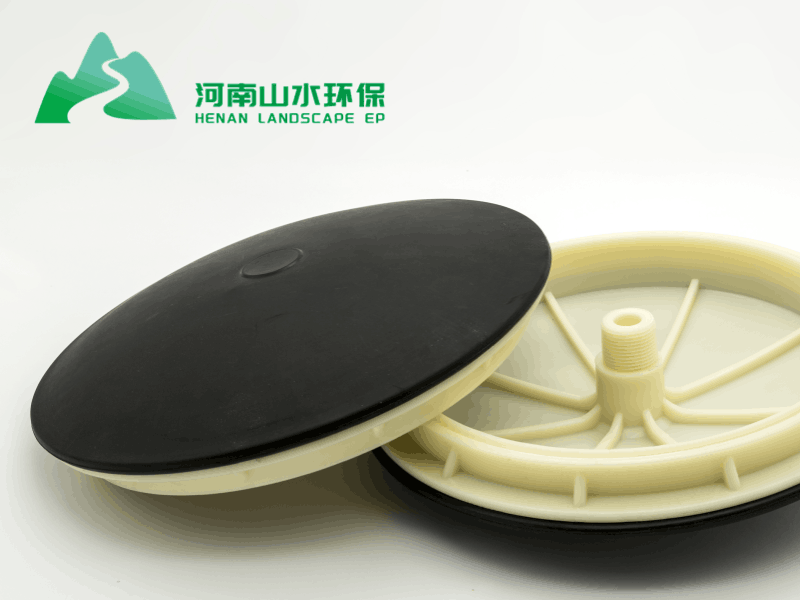
Micro-pore-exposurers, the principle of which is to squeeze air, escape from the micro-pore of the rubber membranes and form small bubbles that spread into the water. Oxygen utilization can reach more than 30 per cent of 6 m clean water. But it's impermeable and has a short lifespan. Micro-pore-exposurers can increase wind pressure and energy consumption after a certain period of time is spent as a result of mud-blocking, and the use of oxygen can be drastically reduced after damage, requiring timely replacement。
Ejects, based on the principle of cycling water volts absorbing the air and, after mixing in the cavity, ejecting in the direction of the nozzle. It is an exposure process that was applied to industrial wastewater earlier and has advantages such as large service areas that are not easily blocked. The utilization of oxygen in 6 metres of clean water is about 15-21 per cent. Energy is more expensive because of the need for additional recycle pumps. In calcium-containing wastewater, nozzles are prone to blockage。
Turbos, which are based on high-speed jets, are cut by mushroom head after mixing with sewage in the barrel to form a small bubble and to form a low-pressure suction pool bottom sludge. Rotation flows are a new exposure process that has emerged in recent years, with a 6-metre clean oxygen utilization rate of about 18-25 per cent. In recent years, large-scale applications have been initiated in the area of industrial waste water, as it can be installed without interruption, with a life expectancy of more than 10 years。
Diffusion exposure, umbrella shape, oxygen utilization of about 8-12 per cent. The principles are similar to the current, which crashes into the sawn teeth and cuts, but are becoming less and less used because of the dispersion of the current, weak impact, weak cutting, larger bubbles, low oxygen utilization, high energy consumption and no mixing。
Table exposure, as a result of the centrifugal ejection and lifting of the leaves, water is being thrown into the surface of the water and thus brought into the air; the oxidation pool type, which applies to shallow water, is having a poor effect of oxygenation during water depth, and is becoming less exposed to the use of the new project as the soil is stretched and water depth increases。
List compares three common forms of exposure
From the above comparison, the respective strengths and weaknesses of the three exposure processes and the applicable scenarios are clear. The unstoppable installation of the flow is a major advantage, avoiding both the loss of the shutdown and the costs of silting, as well as the risk of safety accidents associated with replacement. Life expectancy of more than 10 years and exemption from inspection can also significantly reduce the labour costs of sewage stations。
Energy consumption. While there is a significant difference between the utilization of thawing and microperoxide, the use of microperoxide is declining, while the flow is stable, while the long-term energy consumption of the two is essentially the same, given the small alpha value of the thawing (a decrease in the use of oxygen in the exposure unit from fresh water to sewage). Through practical application case testing, the energy consumption of new micro-pores** was about 15 per cent lower than the double-nozzle flow in the year, and has been flat since the second year. Micro-pores are reduced if oxygen utilization is not replaced in a timely manner after the breakout of the blockage, so that some retrofitting cases also show more energy saving than micro-poholes。
The wind is low and the wind pressure is stable, facilitating the smooth operation of wind machines, especially when they are magnetic or airborne. In the case of a garden sewage plant, which is 7 metres deep, and four years after using a micro-hole, wind pressure rises to 90 kpa, energy consumption rises and the volume of wind is declining, with a new wind machine having to be bought in the form of 100 kpa, while wind pressure can be stabilized within 80 kpa in the long term。
The amount of wind wind required is not much different from that required for the current, which usually saves energy from the current compared to the current。
As land is strained and without expansion, higher water depths and sludge concentrations are often required to increase the treatment of sewage, and the demand for air exposures to congestion and wind resistance to stability increases the trend towards the use of swings. The following focuses on the flow of exposure。
Oxygen utilization of cyclone exposed gases
Turbo-exposure technology, introduced in japan, is currently imported in its original form and is being developed for domestic production after the purchase of japan,** and is more modelled and of variable quality。
The use of oxygen varies significantly between brands of spin-off exposure. A comparison of 18 per cent and 22 per cent, respectively, by oxygen utilization, which appears to be only 4 per cent short and the difference in actual demand of wind is close to 20 per cent, implying a difference in energy consumption of nearly 20 per cent (the correct formula should be 18/22 = 80 per cent). This difference also directly results in the compliance of the soluble oxygen when wind is at a critical mass. The purchase of cyclone-exposers allows manufacturers to provide national testing reports for drainage equipment detection centres to prove the oxygen use of the product。
The oxygen utilization rate of the double nozzle voltage exposure unit is usually about 15 per cent higher than the single nozzle. There are significant differences in the utilization of oxygen for single-breathing cyclones, mainly as a result of the frequency with which bubbles are cut and the length of time spent in water. The difference in the utilization of oxygen in the single-nozzle stream of exposure to gases from different brands is due mainly to whether the nozzles are deciphered and whether the cutting of the head is carried out strictly according to hydrodynamics。
The material for the rotor
The common materials for the rotor gas are abs, pa66, high molecular composites. Pa66 is better than abs and pure pa66 is better than pa66+bite. Some manufacturers add fibreglass to pa66 when they make it for easy apostasy, which increases the hardness but increases surface friction coefficients and makes it easier to mulch. High-molecular materials have certain r & d thresholds and are more expensive in terms of raw materials, but have performance characteristics such as incomparable self-lubrication, slurry resistance, grinding resistance, shock resistance, acid-resistant washing, and water insinuation, with some manufacturers headed by heytaires more than in recent years having begun to apply high-molecular materials to rotors。
High-heavy wastewater and calcium-containing waste-water-exposers selected for attention
High-heavy and calcium-containing effluents, with single-nozzle rotor exposures, are also subject to long-term blockage, mainly because of the cross-section structure in the single nozzle and the ease with which the material is desolate. This type of waste water, a double-nozzle irradiator that is suitable for high-molecular materials, has the ability to lubricate itself against gutter, and the double-nozzle irradiator has no cross-section barriers and is not easily clogged. Thirdly, the cones of the double nozzle spiral form a tumble effect, which is more resistant to the slurry, and more capable of preventing sedimentation。
Rpg installation
Inadequate installation can seriously affect the life of the flow. A side-influencing exposed person, with two straight poles to be used between the integrator and the vertical tube, to ensure that the winding tube is not self-resorted. * the preferred entry tube is a formed, thicker exposed gas to prevent a loose screw or a break in the windpipe under a long-term high frequency vibration. Exposures and pipes are usually welded early outside the pool, and during manual handling or use of cranes to lift up, care ** cannot be put to one end of exposure. Deeper reservoirs, the tube must be thick enough to prevent disturbance. The vertical and transistor connections can be slashed and fixed to prevent break-ups。