(former title: the rationale for relay protection and fourth nature)
I. Rationale for relay protection
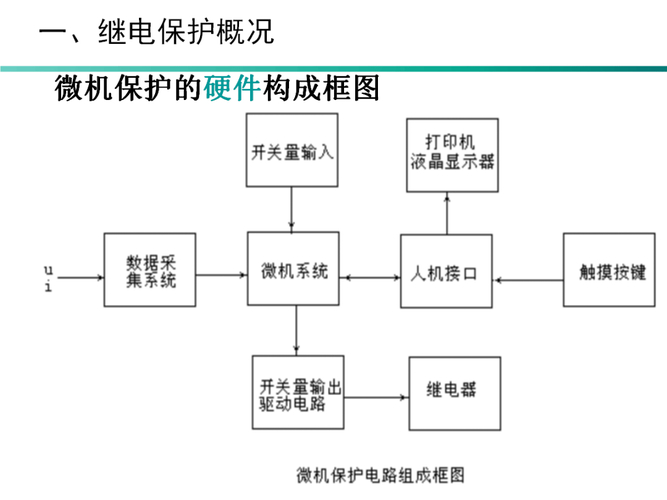
Inheritance protection consists mainly of changes in electrical volumes (electrical currents, voltage, power, frequency, etc.) when short circuits or abnormalities occur using elements of the electrical system, which constitute the rationale for relay protective actions, as well as other physical volumes, such as the increase in the speed or pressure of large quantities of gas and oil flows that accompany the failure of the transformer tank. In most cases, regardless of the physical volume of the reaction, the relay protective devices include the measurement component (and the value adjustment component), the logical part, and the executive part。
(i) parameters (e. G. Current, voltage, power factor angles) in the operation of the electrical system are clearly different in terms of normal operation and failure. Relay protection devices are used to determine the nature and extent of electrical system failure on the basis of reflection and detection, and to react and process it accordingly (e. G. To send warning signals or to cause breakers to jump)。
(ii) analysis of the rationale for relay protection
1. Sampling module
It consists of one or more sensors, such as currents, voltage intersensors, that are physically (parameters) in operation of a protected electrical system that are electrically isolated and converted into a signal in a relay protection device that is more acceptable to the identification unit。
2. Comparative identification module
This includes the given unit, where the signal from the sampling unit is compared with the given signal, so as to allow the signal from the lower processing unit. The comparative identification unit (normal, abnormal or faulty) can consist of four current relays, two for fast break protection and the other two for excess current protection. The consolidation value of current relays is the given unit, and the current loop of current relays receives current signals from the sampling unit (e. G. The current sensor). When the current signal reaches the current fixation value, the current relays act to signal, through their points, to the lower processing unit, the final release of the breaker; if the current signal is smaller than the fixed value, the current relays do not act and the signal to the lower unit does not move. Recognizes the "disconnection" of the signal and the "overflow" information is transmitted to the next module for processing。
3. Processing module
The signal from the comparative identification unit is accepted and is processed according to the requirements of the comparative identification unit to determine whether the protective device should be actionable according to the size, nature, sequence of occurrence of the comparative chain output; consisting of time relays, intermediate relays, etc. Electricity protection: fast-cut -- intermediate relay action, passing through, time relay action。
Implementation module
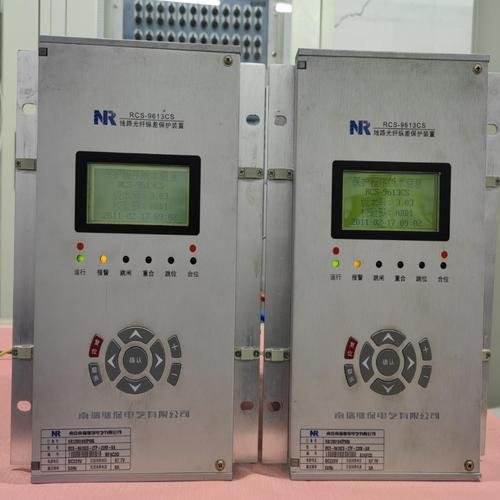
The trouble management is implemented through the implementation module. The implementation module is generally divided into two categories: acoustics, light signal relays (e. G., flutes, bells, flash lights, etc.) and a breaker's operating unit, which divides the breaker。
5. Control and operation of power sources
Relay protection units require their own independent communication or direct current power, and the power of the power is increased or reduced by the amount of the controlled equipment; the exchange voltage is typically 220 volts and 110 v; see gb50053-2013 20kv and the following norms for transformers。
Ii. The four types of relay protection
Technically, relay protection of movement by jumping should generally meet four basic requirements: selectivity, speed, sensitivity and reliability。
(i) reliability
This means that when the action is protected, it should not be motionless, i. E. It can neither be moved by mistake nor resisted, and it is the malfunctioning device or circuit that ensures that it is removed。
(ii) sensitivity
When metal short circuits occur within the protected area of the equipment or line, the protective device shall have the necessary sensitivity factor. I'm sure if there's trouble, i'll get rid of it。
Refers to the ability to react to malfunctions within the prescribed protection. Protection devices to meet sensitivity requirements should be able to react sensitively and correctly in case of failure within the zone, regardless of the location of the short-circuit point or the type of short-circuit。
In general, sensitivity is measured by sensitivity coefficients and is expressed as klm。
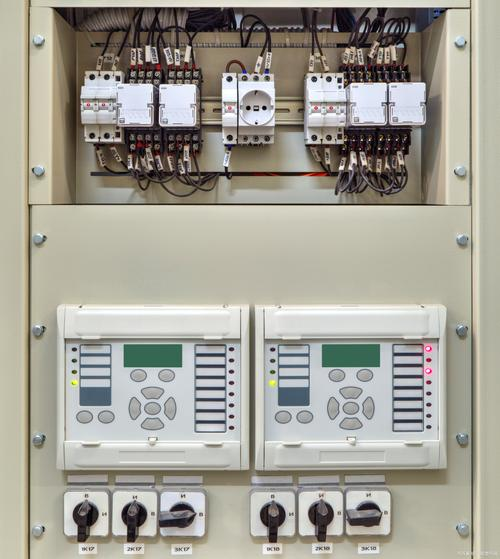
The smallest and maximum calculation values for failure parameters are calculated on the basis of the most adverse mode of operation actually possible, type of failure and short-circuit points。
The requirements of klm for various types of protection are specified in the technical instructions for relay protection and safety automatic devices gb/t 14285-2016。
(iii) selection
Means that the failure is first addressed by the failure equipment or the circuit itself, and only when the failure equipment or circuit itself is protected or the circuit breaker is denied, is allowed by the adjacent equipment, route protection or the breaker failure. Avoiding widespread power outages。
Selectivity means that, in the event of a failure of the power system, the protective device only removes the fault element and keeps the non-facing element operational in order to minimize the power outage。
Selectivity is that the failure point is within the zone and not outside. When the main protection is not moving, the near or distant backup is used to remove the failure, resulting in a minimal power outage. It should be used as a matter of priority because of the relatively good long-range back-up protection (receiving refusals arising from malfunctions such as protective dls, secondary circuits and direct current power sources)。
(iv) speed
Means that protective devices should be able to remove short-circuit failure as soon as possible. The aim is to improve system stability, mitigate damage to malfunctioning equipment and circuits, reduce the range of failure waves and improve the effects of automatic re-joinders and back-up power or backup equipment。
Quick cut. Improve system stability; reduce user time at low voltage; reduce damage to malfunctioning elements and avoid further deterioration。
The average protection time is 0. 06 to 0. 12s, the fastest being 0. 01 to 0. 04s。
The average circuit breaker operated 0. 06 to 0. 15s, the fastest of which was 0. 02 to 0. 06s。
The basic task of electrical follow-up protection is to automatically remove the malfunctioning equipment from the system in the shortest possible time and in the smallest possible area when the power system is malfunctioning or abnormally conditioned, or to signal the removal by duty personnel of the causes of the abnormal condition in order to mitigate or avoid damage to the equipment and the effects on the provision of electricity in the adjacent area。
These four basic requirements are the basis for the design, configuration and maintenance of relay protection and for the analysis and evaluation of relay protection. These four basic requirements are interlinked, but often contradictory. In practice, therefore, it is necessary to reconcile the structure of the grid and the nature of the users。
Iii. Quinquennial order
(i) reliability
(ii) sensitivity
(iii) selection
(iv) speed。
Iv. Territories
(i) sensitivity and reliability are contradictory。
Protection action values cannot be set too high if they are to satisfy sensitivity. But protection may be unreliable if it is too low. For example, when overloading, it is protected when disturbed。
(ii) selectivity and speed are contradictory。
Electricity protection is typically divided into three-part protections, three of which have a problem of co-ordination, which is complemented by differences in protection planting and timing. This would require time to avoid cross-cutting issues such as a period of protection time of 200 ms, two of which would normally take 500 ms, and a period of failure of action of two, with 500 ms not meeting the speed requirement。