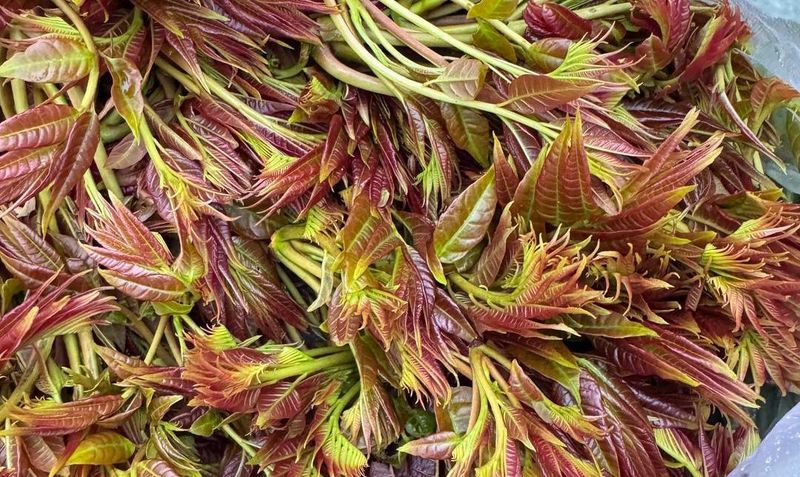
Bananas in the highlands of east africa play an important role in the livelihoods of millions of small farmers in the great lakes region. In uganda, bananas are the main staple food for more than 10 million people, and about 75 per cent of farmers grow bananas。
Uganda has at least 60-70 tons of fw/ha/year of achievable production, but some interrelated socio-economic, abiotic and biological constraints have led to much lower actual production of farmers ' fields. Providing reliable data on the actual production of bananas, their variability and the most important constraints should be the focus of research if production is to increase。
Currently, such data are scarce in the literature, partly because estimates of farm yields are very challenging: highly variable cycle duration and plant density, overlapping growth cycles and year-round harvests complicate the development of standardized yield estimation methods。
In order to obtain reliable estimates of production and to understand the factors that determine production, we believe that it is important to identify production components that are easily measurable and to provide clear agreements for calculating production. In addition, studies of variability and interrelationships between production components help to understand which production components are most important in determining production。
Many of these production components may be relevant to some extent. For example, density experiments conducted in rwanda under low input conditions in a variety of agroecology have shown that high density results in longer cycles and lower beams。
The experiment was carried out on the newly established banana plantations and each mat was maintained with three suctions, which may not reflect the conditions of the mature farmers ' plantations. To date, there has been no detailed study of the variability of production components, their interrelationships and their impact on farmers ' managed banana production in the highlands of east africa。
The objectives and assumptions of this study are: 1) to determine which production components are most important in determining production; 2) assess how these production components are interrelated; 3) test assumptions about the impact of several biological and non-living factors on farmers ' field yields。
We studied the variability of the production composition and assessed the correlation between the production components. According to the above-mentioned literature, we assume that banana production and re-emergence of agricultural land are positively affected by application of fertilizers, fertilizers and coverings, high rainfall and high soil potassium the levels are also positive, with banana ears in the valley fields being heavier and more productive than mountain peaks and slopes。
1. Methodological 1. 1. Location of research and data collection
The study was conducted in two locations. One in the west and the other in south-west uganda. Both sites are located in the main banana-producing areas of uganda. At each location, two subdistricts are selected randomly for data collection. The study analysed two complementary data sets from selected sub-districts。
We use a beam survey to supplement and compare the results of the yield monitoring survey on the weighting factors. The weighting survey also included soil nutrient content in all banana fields. Both surveys were conducted in two districts in western uganda and two in south-western uganda. Three of the four subdistricts overlap between the two surveys。
1. 1. 1. Goodness monitoring
From july 2019 to june 2021, banana growth and production was monitored in 4 of 45 farms. A total of 118 banana fields were monitored each month. We will call the period from july 2019 to june 2020 “year 1”, and the period from july 2020 to june 2021 “year 2” for monitoring the rate of return。
The observation unit is a banana mat. We have selected ten mats for each field, designed to represent the diversity of mats in the field, while avoiding particularly dynamic or stunted mats, or mats located in a unique position in the field, such as those close to garbage or manure。
Production calculations
In this paper, unless otherwise stated, whenever we refer to production, we refer to production in tonnes fw/ha/year. In the absence of a standard agreement for the assessment of farmers ' field yields, several methods of yield calculation were compared, known as m1 to m4。
This comparison allows us to choose the most reliable method based on the comparison of the four methods and their practical applicability in farmers ' fields. Add the fresh weight of all the strings harvested from the mat in a given year。
2. 1. Statistical analysis 2. 1. 1. Interrelation of the virtuous elements
The correlation of the good-rate components was studied using the good-rate monitoring data set. We have considered the following production components: annual output per pad, mat density, beam weight, cycle duration, number of straws per pad, number of beams/teams/year, number of bellows/ha/year。
Outcome 3. 1. Production estimates and production components
In western and south-west uganda, the medians were 1 and 31 tonnes/ha/year, respectively, and in the second year, 38 tonnes/ha/year and 36 tonnes/ha/year, respectively. In different years and locations, the 95th percentile is 66 tonnes/ha/year。
Production changes in subdistricts are greater than between subdistricts and years. The median annual output per pad is between 20 and 45 kg/year, while the average yield per pad is one or two beams. The median beam weight is between 20 and 30 kg, with wide variations within counties。
3. 2. Interrelation of the virtuous component
Production is strongly linked to the annual production and average beams per pad, and to the medium intensity between the mat and the beams per hectare. Thus, the role of the beams in determining production is less important than the weight of the beams。
3. 3. Production changes
Farmer field yields increase with increased coverage and decrease with increased bxw incidence. However, fertilization has affected the decline in bxw-infested production。
None of the explanatory variables interact significantly with the county area. During the two-year monitoring period, the average coverage of each field ranged from 0 to nearly 2. 5 cm, and the average coverage of more than half the field exceeded 1 cm。
Discussion 4. 1. Production estimates
The medians for western and south-west uganda were 31 tonnes and 32 tonnes/ha/year for the first year, and 38 tonnes/ha/year and 36 tonnes/ha/year for the second year, respectively。
One limitation of our data sets is the lack of data on “crop reduction”, which makes it impossible to compare yield estimation methods with absolute benchmarks. Moreover, in our research, the lack of field repetition for yield estimates may lead to exaggerated estimates of field changes。
This means that the “real” change in the rate of return may be smaller than our results suggest, and our 95th percentile yield estimate may overestimate the real maximum yield. However, this warning also applies to a few other studies on the production of bananas from farmers ' fields。
It is important to design best sampling strategies and to determine minimum sample sizes in order to conduct reliable mat density assessments. Finally, further modelling studies should aim at revealing potential yields under limited water and water and nutrient constraints。
Based on our findings, we conclude that a one-time survey of estimated production per kilogram/ha/year would not produce a reliable estimate of production. In the dryer sub-county, the weight of the beam is reduced with the increase in mat density, thus confusing the effect of higher mat density on output
4. 2. Factors affecting banana production
Our research has shown that bxw is an important reduction factor in uganda's two main banana-producing areas. Bxw is a bacterial disease that affects all known highlands bananas in east africa. The distribution of the disease is spatially clustered and temporally variable, and this spatial and temporal cluster can explain why we found clear evidence that bxw was a factor affecting production, which was not found in previous farm studies。
The application of manure has a significant positive impact on the osmosis, as shown by the results of the groove survey. However, in the concentration of production monitoring data, the impact of manure on the weight and yield is less clear. The comparison of results between the two data sets can be explained by the fact that past fertilizer application was taken into account in the weighting survey, which was not the case in the yield monitoring survey。
The lack of consistent discovery of the effects of faeces and their interaction with fertilizers highlights the need for further experiments on different combinations of faeces and fertilizers. In addition, the demand for excreta is inadequate and the use of fertilizers to supplement excreta may be environmentally and economically beneficial compared to the use of excreta only。
We have found that the effects of the interaction between the subdistricts, the mat density and the cumulative rainfall are heavy. In agroecologicals, the relationship between mat density and weight varies, and they believe that the optimal density is higher in areas with higher rainfall and higher soil fertility。
At the research site with the largest rainfall, our statistical model predicts that weights are not significantly affected by increased rainfall or changes in mat density. This may explain why rwimi sub-county has a much larger mat density than other sub-countys。
Conclusions
The aim of the study is to explore which production components are most important in determining the production of bananas in farmers ' fields, to provide reliable yield estimates and to understand which agronomic factors have a clear impact on the production of the two main banana-producing areas in uganda。
We have also explored various production estimation methods and identified readily measurable production components. It is important to understand how these factors affect farmers ' field yields, as farmers ' management practices are more diverse than those that can be tested in experiments。
In western and south-west uganda, the median output was 31 tonnes/ha/year and 38 tonnes/ha/year, respectively, in the first year and 38 tonnes/year, respectively, in the second year. Hectares/year, which is higher than the previously reported median number of monolithics, is still recommended at up to half the value of monolithics。
We find that different methods of yield estimation lead to significant differences in results. The production is most relevant to the production components “commitment”, “alerts per mat” and “annual production per pad”。
Our results show that optimal density depends on rainfall and agroecology, but also on farmers ' objectives, as the oscillation drops sharply with the increase in mat density. It is stronger than reyre district, which, in our study, is the dryest and the wettest, respectively。
The results on the effects of application of fertilizers and coverings on ears and yields are uncertain. In the absence of bxw, bxw is a major production reduction factor, with a positive impact on production and beaming over a period of 24 months。