Economic reporter zhou yi, beijing, 21st century
On 29 december, the national institute for development studies of beijing university launched its first business start-up day and organized the 14th renze business school and 2nd session of the e23 forum on the theme “china economy 2025”。
According to the experts present, in the fourth quarter of 2024, our GDP growth will be at a rate of 5. 0 per cent-5. 2 per cent, leading to a growth target of around 5 per cent for the year. With regard to monetary policy, there has been a renewed reference to “moderate easing”, a shift in the tone of fiscal policy from “positive” to “more active” and a greater degree of policy, with adjustments in implementation, tone and timing, which are expected to produce results。
Projected GDP growth of 5. 0 per cent - 5. 2 per cent in the fourth quarter
According to data published by the national institute of statistics, the country's gross domestic product (GDP) stood at $94,97. 46 billion in the first three quarters of 2024, representing an increase of 4. 8 per cent in constant prices. In the first quarter, GDP grew by 5. 3 per cent over the same period, by 4. 7 per cent during the second quarter and by 4. 6 per cent during the third quarter。
“the economic growth target of about 5 per cent is expected to be achieved by 2024, based on GDP growth data for the first three quarters and underlying data for october/november. "statisticians are known as constitutional spring. He indicated that while GDP growth had fallen in the first three quarters, the second quarter had fallen more sharply, the third quarter had declined, and the fourth quarter was expected to grow by 5. 0 to 5. 2 per cent, with the rate rising again。
From a production point of view, xu guangcheng indicates that the value added of the second sector is expected to increase by about 4. 9 per cent in the fourth quarter, with the rate of recovery. Of these, industrial value added is projected to increase by about 5. 4 per cent over the same period, with the rate of increase rebounding; construction value added is expected to increase by about 3 per cent over the same period. The third-sector value addition is expected to grow by about 6. 0 per cent in the fourth quarter, and modern services will continue to grow at a relatively rapid pace and will be a central driver of services development。
From a demand perspective, according to a constitutional analysis, based on the october/november growth in total retail sales of social consumer goods, final consumption spending is expected to rebound in the fourth quarter and the contribution of consumer demand to economic growth will also rise. The contribution of investment demand to economic growth is likely to continue to fall in the fourth quarter, and the pull-back on economic growth remains insufficient. The better performance of net export demand, in turn, will make an important contribution to economic growth, which is expected to increase further in the fourth quarter。
From the income point of view, it is believed that, with the recovery in economic growth, a nominal and real increase in the cumulative disposable income of the population is expected to pick up in the fourth quarter. The rate of increase in the profits of industrial enterprises has declined more rapidly, but there is greater variation between industries. In industries above scale, higher-end manufacturing and intelligent-related industries showed a more rapid increase in profits, with some traditional industries performing poorly。
From a price point of view, xu guangcheng argued that the price increase in the consumer sector in the first three quarters had risen at a lower level and was expected to fall in the fourth quarter. The first half of the year saw a narrow downward trend in the ppi and an expansion in the second half of the year。
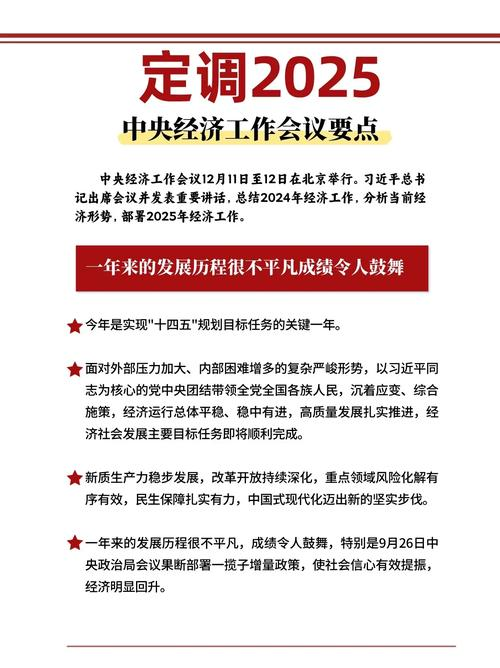
Turning to the outlook for the economic situation in 2025, the constitutional spring noted that the task of expanding domestic demand in all its dimensions was paramount. In particular, there was a need to focus on promoting consumption, which had strong internal dynamics, and the central economic work conference had launched an initiative to boost consumption. On the other hand, there is considerable room for investment, and there is a clear need for continued investment at the central economic work conference, mainly through greater support for the “two-fold” project and for urban renewal。
In terms of policy instruments, monetary policy has been re-oriented from “moderate easing” to “more active” fiscal policy. In response, xu guang chun stated: “in summary, the policies of the meetings of the political directorate and the central economic work conference have been more robust and have been adjusted in terms of policy tasks, implementation, tone and timing, with the desired results.”
Debt swaps need to be real and effective
Data published by the ministry of finance show that, in the first 11 months of 2024, the national general public budget revenue decreased by 0. 6 per cent per annum, of which the national tax revenue decreased by 3. 9 per cent per annum; non-tax revenue increased by 17 per cent per annum. From january to november, the budget revenue of the national governmental fund decreased by 18. 4 per cent over the same period, of which state land tenure generated 22. 4 per cent over the same period。
In response to the current fiscal performance, the north power development school professor of economics and the director of the china public finance research centre, li li li li, pointed out that, in recent years, the fiscal situation had yet to improve as a result of the slowdown in economic growth and the impact of the epidemic, owing to several factors: first, lower local economic growth, which had led to lower government revenues; secondly, falling real estate prices, which had led to a marked decline in land concessions; thirdly, the rapid rise in hidden local government debt, high debt servicing pressures and the flow of additional credit to urban investment platforms; and fourthly, increased spending on basic human security, guaranteed wages and secure operations。
According to li li li, the financial resources available at the local level are stretched, the lack of expenditure to support economic construction affects the implementation of growth-enhancing policies and can easily create a vicious circle, and fiscal and monetary policies need to be accompanied by countercyclical adjustments。
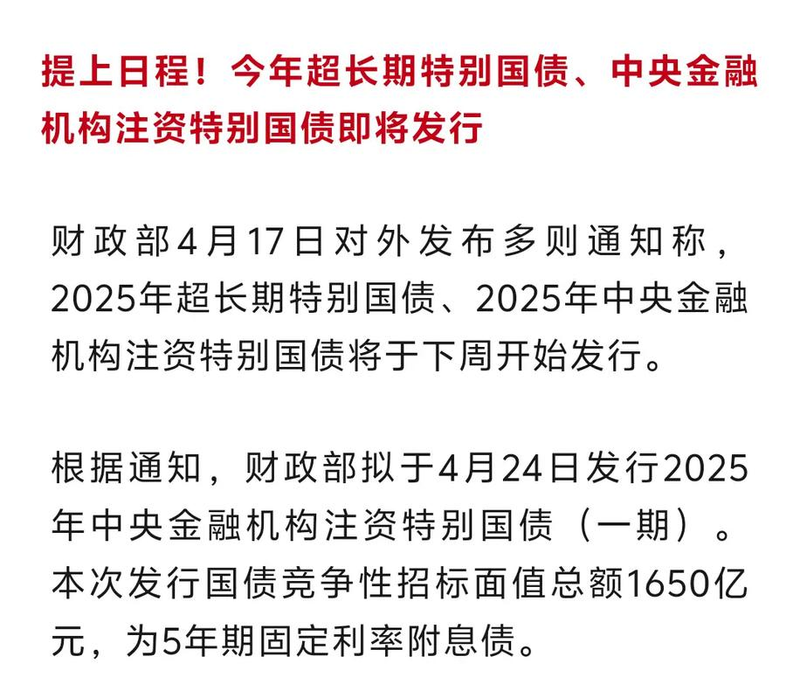
The recent central economic work conference had called for a more active fiscal policy. Increase the fiscal deficit rate to ensure that fiscal policy is sustained and strengthened. Increased intensity of fiscal spending and improved security in the focus areas. Increased issuance of extra-long-term special national debt and continued support for the implementation of the “two” project and the “two new” policy. Increased use of local government-specific bond issues, expansion of the field of investment and use of project capital. Optimizing the structure of fiscal spending and improving the efficiency of the use of funds, with a greater focus on people's livelihoods, consumption and growth, and the bottom line of the “3s” at the grassroots level。
Li ling cai suggested that, from the point of view of fiscal sustainability, there were potential problems in replacing market credit with government credit and local credit with central credit, which could discourage local and corporate motivation as economic agents. There is therefore a need to explore how to maintain economic dynamism while strengthening central credit and strengthening government credit。
At the same time, li li li li has pointed out that, in the current financial situation, debt expansion is necessary in the short term, but that this short-term and effective initiative is not sustainable, that debt servicing pressures will pose problems in the medium to long term and that debt swaps alone will not be sufficient and will require real and effective debt conversion. He suggested that careful consideration should be given to debt restructuring and bankruptcy, and that economic dynamism could be demonstrated only if the persistent pressure on interest payments was removed and economic agents were brought into play。
Finally, li li li has also talked about the possibility of pushing more government resources to the market and advancing structural reforms, which could also ease government pressure to allow the market to assume part of its public functions。
Keep as open as possible
At the forum, the president of the north power development agency, the director of the south-south institute and the director of the digital finance research centre, huang huiping, shared his recent research on industrial evolution in the country's economy's volatility。
Research shows that over the past three decades, our economic growth has shifted from a labour-intensive industry to a capital-intensive industry, while infrastructure and real estate have contributed most significantly to economic growth in all sectors, while others, while contributing to the economy, have been generally moderate。
As our real estate industry enters a new stage of development, what will be the next step in driving economic growth
In response, huang yiping pointed out that the new generation of information technologies, represented by artificial intelligence, and the strategic and emerging industries, represented by new energy vehicles, represented the new quality of productivity, and the most important measure of these new dynamics of the economy was the ability to increase full factor productivity. This requires not only innovative development of new and emerging industries, but also the adaptation of traditional industries with new technologies and management concepts, thereby increasing the productivity of traditional industries。
In addition, huang yiping spoke in particular of the need for greater innovation in developing new dynamic energy in the economy. He indicated that, as the country continued to expand its high level of openness to the outside world, it would be more attractive to global high-end manufacturing. In addition, our country has a large number of creative entrepreneurs and industrial workers with full industrial chains and supply chains that allow for high-end design and high-end manufacturing. Our innovative capacity will face new challenges in the process of developing the catch-up economy and approaching the global technological frontier。
Wong xiaoping pointed out that improving innovation capacity would not only increase research and development inputs, but also focus on translating innovation inputs into innovative practices that could be applied on the ground, creating new dynamics that could drive economic growth. For example, the protection of intellectual property rights, support for private enterprises, openness, etc. In that connection, he stressed that, despite the difficulties and challenges of maintaining openness in the current world change, in the face of the wave of counter-globalization, it was important to maintain as much openness as possible, in addition to self-reliance and self-innovation。